
The war in the Middle East is triggering an increasingly bitter dispute in the trans-Atlantic alliance, as the U.S. and its allies diverge over whether the conflict is inadvertently strengthening Russia, which Europe sees as a greater threat than Iran.
German Chancellor Friedrich Merz became the latest European leader to criticize the Trump administration on Friday, taking issue with the U.S. decision to temporarily lift Russian sanctions to ease pressure on oil prices.
“We consider the loosening of sanctions, for whatever reason, to be wrong,” Merz told reporters Friday. The tone was a shift for Merz, who has been one of Europe’s more conciliatory leaders toward President Trump and initially expressed some support for the attack on Iran. That has changed as Moscow has emerged as a clear beneficiary of the war.
The conflict, which has sent oil prices surging past $100 a barrel, has revived Russian energy revenues. European governments, meanwhile, are facing rising energy costs, disrupted supply chains and delays in vital U.S.-made weapons.
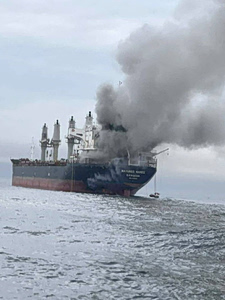
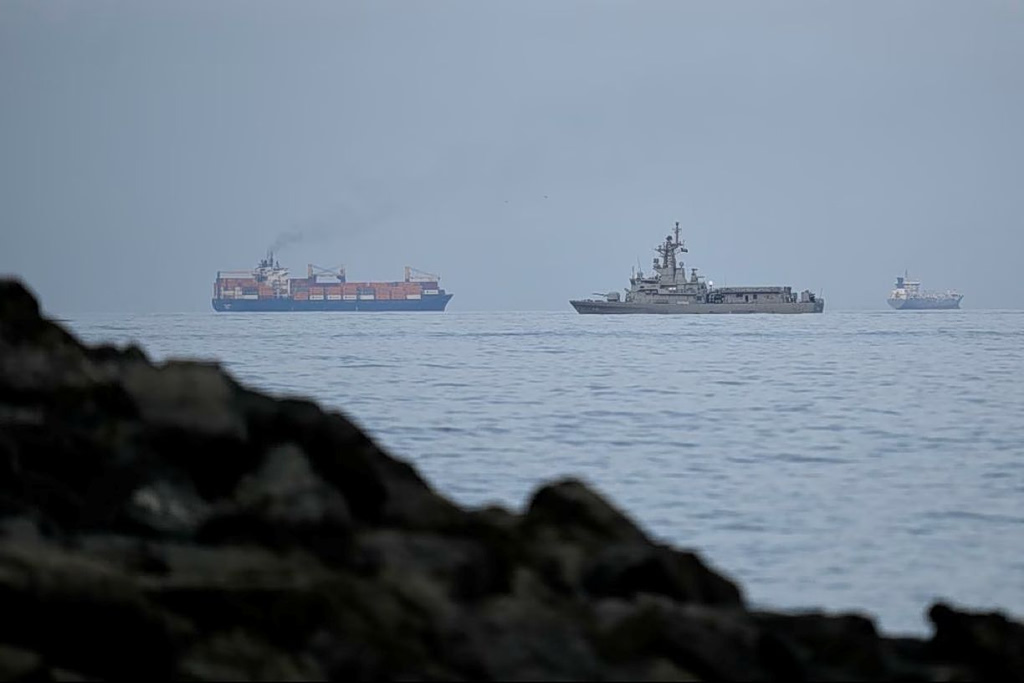
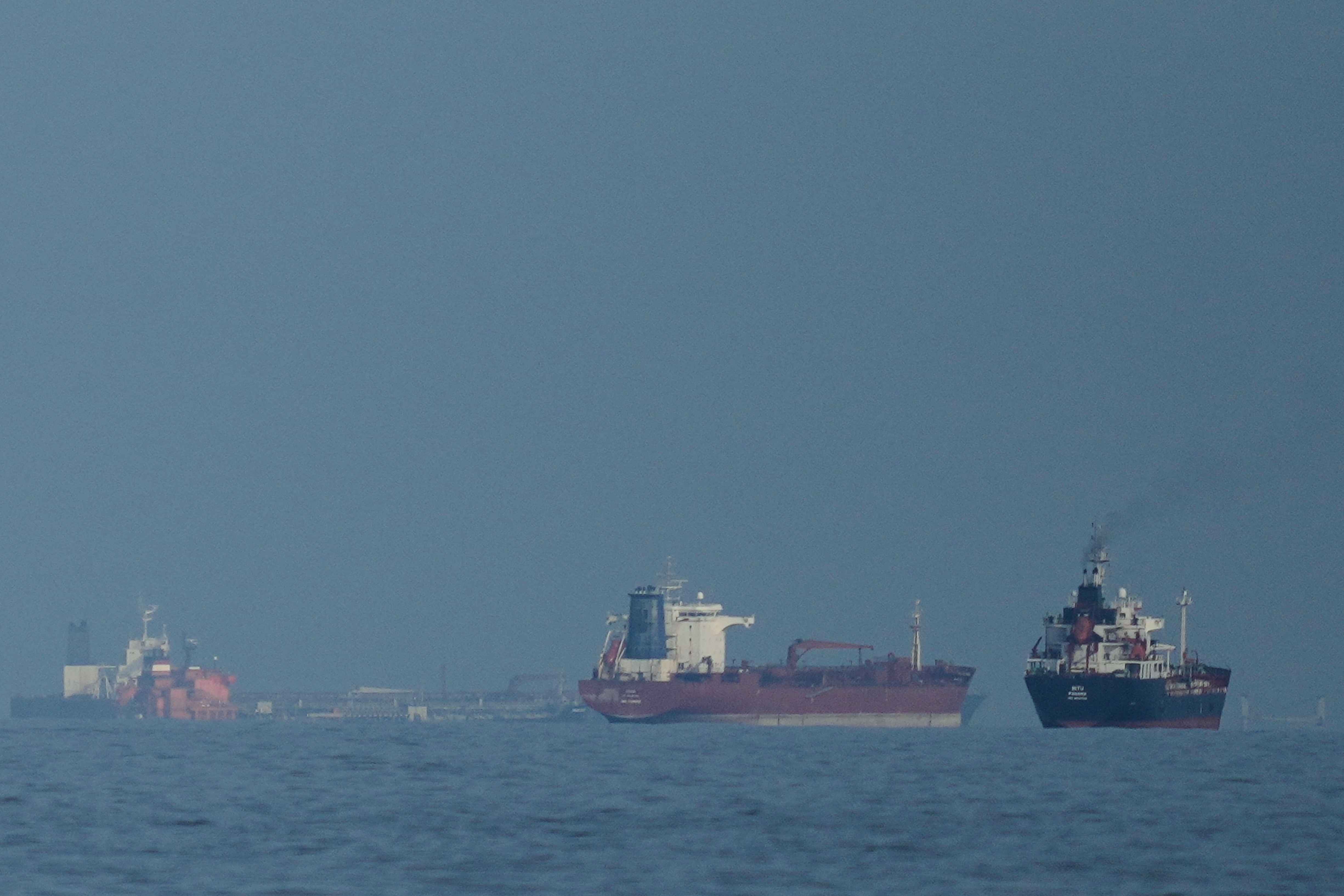
Iran has essentially shut the Strait of Hormuz, a narrow passage between Oman and Iran where a fifth of the world’s oil transits. French President Emmanuel Macron called his Iranian counterpart, Masoud Pezeshkian, on Sunday to press for reopening of the Strait.
Merz said leaders of the Group of Seven industrialized nations held a call before Trump’s announcement, and that all except Trump agreed it would be wrong to lift sanctions designed to slash Russia’s revenues and force it to negotiate an end to its invasion of Ukraine.
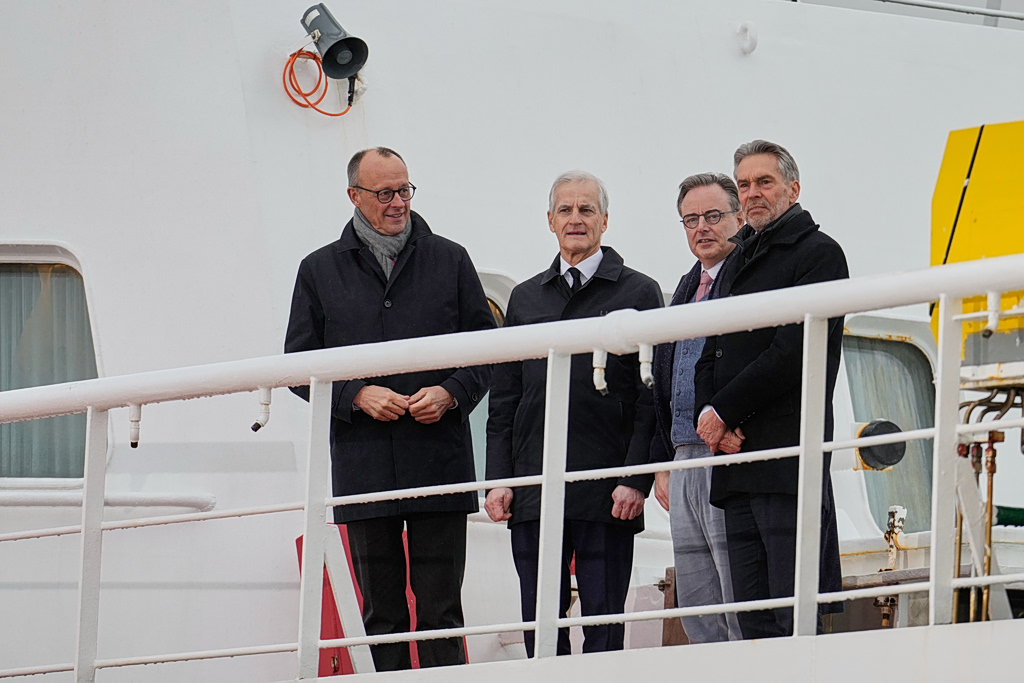
Left to right, German Chancellor Friedrich Merz, Norway’s Prime Minister Jonas Gahr Store, Belgian Prime Minister Bart de Weve, and Prime Minister of the Netherlands Dick Schoof, tour a multi-purpose vessel “Neuwerk” during the North Sea Summit in Hamburg, Germany, where the North Sea coastal states aim to strengthen cross-border cooperation in the expansion of offshore wind energy and hydrogen infrastructure on Monday, January 26, 2026. (AP Photo/Martin Meissner)
“I would like to know the motives behind this decision of the American government,” Merz said of the sanctions relief. The problem in oil markets isn’t a shortage of supply but that war-related anxiety is driving prices higher, he said.
Treasury Secretary Scott Bessent said the move, which allows countries to purchase Russian oil that is already at sea, was designed to increase the global reach of the existing supply. The temporary measure is set to expire April 11.
“This narrowly tailored, short-term measure applies only to oil already in transit and will not provide significant financial benefit to the Russian government, which derives the majority of its energy revenue from taxes assessed at the point of extraction,” he said.
Aides to Merz noted that the unprecedented decision to release 400 million barrels from the strategic reserves of the U.S. and its allies had failed to halt the surge in oil prices.
“Above all, the question remains: When will this war end, and what strategy will be used to bring it to an end? These questions, too, have not truly been answered,” said Merz.
The European Union said it wouldn’t suspend sanctions against Russia and condemned Washington’s move.
The U.K., America’s closest military partner, also refused to follow Washington in suspending Russian oil sanctions. Prime Minister Keir Starmer and his Spanish counterpart, Pedro Sanchez, have criticized the war. Starmer has called the war illegal and said the U.S. lacks a “viable, thought-through plan.” Spain has even restricted the use of a key Mediterranean naval base by U.S. forces participating in operations against Iran.
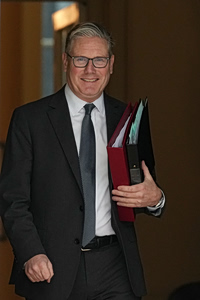
Britain’s Prime Minister Keir Starmer leaves 10 Downing Street to attend the weekly Prime Ministers’ Questions session in parliament in London, Wednesday, March 11, 2026. (AP Photo/Frank Augstein)
The criticism has drawn ridicule from Trump. “This isn’t Winston Churchill we’re dealing with,” he said of Starmer earlier this month.
European officials believed that years of sanctions were finally tightening the squeeze on the Kremlin’s oil revenues. The Iran war has upended those hopes. Some analysts estimate that Moscow now earns $150 million a day from oil sales.
Ukrainian President Volodymyr Zelensky said Friday that the decision by the U.S. could give Russia about $10 billion for the war. It “certainly does not help peace,” he said.
“Europeans were not ready to believe that the trans-Atlantic relationship no longer matters, but now they should wake up and start believing it,” said Ivan Krastev, a fellow with the Institute for Human Sciences in Vienna.
But as the U.S. and its Gulf allies burn through stockpiles of munitions in the war with Iran, European governments fear they will be pushed to the back of the queue for fresh deliveries.
Western officials also fear the conflict has raised the risk of terrorist attacks by Iran and its allied militias, such as Hezbollah and Hamas. They are also concerned it could trigger a new wave of refugees.
By most measures, the European Union has failed the Iran test, said Mujtaba Rahman, an analyst with Eurasia Group. The EU “did not offer a forceful response, has been unable to protect European interests and had no say in prewar diplomacy or in military operations,” he said.
But U.S. naval forces are becoming overstretched in the Persian Gulf, and Washington may soon be forced to seek European help in areas such as minesweeping, naval air defense and the protection of shipping lanes. Europe’s response is likely to be hostile, he said.
So far, even the most vocal opponents of the war, such as Spain, have promptly heeded NATO calls to provide assets such as warships to protect allies affected by Iran’s missile attacks, including Turkey and Cyprus.
The American and Israeli campaign against Iran may one day enter strategy textbooks as a cascade of miscalculations, said Slawomir Debski, a lecturer in strategy at the College of Europe in Natolin. Such mistakes become more likely when Washington refuses to consult its allies, he said.
“Americans have accumulated remarkable strategic experience in just 250 years, but they would likely be even more effective if they treated Europe not primarily as a source of sentiment or alliance ritual, but as a reservoir of hard-earned strategic knowledge,” Debski said.
Bojan Pancevski is The Wall Street Journal’s chief European political correspondent, covering European and global affairs. He produces major investigations, agenda-setting scoops, analyses of politics and diplomacy, and deeply reported features about extraordinary people and events.
His recent writing has focused on the Russian aggression in Ukraine, the Kremlin’s clandestine operations in Europe and the escalating shadow war of espionage and sabotage between Russia and the West.
He was previously the Journal’s Germany correspondent, covering many of the same issues while also writing about the politics, society and influence of Europe’s largest economy on the world.
In almost two decades of dispatches and reporting from across Europe and beyond, Bojan has covered every major story on the continent: the financial crisis that engulfed the Eurozone, the wars in Ukraine, multiple migration crises, Britain’s departure from the European Union, Russia’s use of assassination against the regime’s opponents, the rise of Islamist terror and the political upheaval across Europe.
He co-authored a bestselling book about the crimes of Josef Fritzl, an investigation into one of the most extraordinary criminal cases in contemporary European history.
His work has been nominated for a number of prestigious awards. He was part of the teams that won the William Worthy Award of the Overseas Press Club, the British Journalism Award for Breaking News, and the New York Press Club Award for Special Event Reporting. Bojan is the only foreign recipient of the Werner Holzer Award, an accolade honoring the body of work of German foreign correspondents. He was part of the WSJ team of Pulitzer Prize finalists for International Reporting in 2025.
He is fluent in several European languages, including German and Russian
Max Colchester is U.K. correspondent at The Wall Street Journal, writing about British poli