
TAIPEI—The people of Taiwan carry out their lives under the threat of typhoons, earthquakes, tsunamis and military invasion. So this June, when a Facebook post by U.S. officials urged the Taiwan public to “pack your Go Bag and be ready for anything,” the theme went viral.
Online sales of evacuation kits multiplied, stores set up displays of survival gear and influencers dropped videos showing what to include. But Taiwanese leaders have struggled to persuade the public to prepare for the worst. The government last month issued a newly updated crisis-response handbook featuring a go-bag packing list, with extra check boxes for the elderly, babies and pets.
Not everyone in Taiwan is disaster-ready. The Wall Street Journal visited some who have made crisis prep a way of life—and quizzed them about what they have packed and why.
Yuki Huang, Khian-khian Huang and Wendy Shie
For Yuki Huang and her children, survival prep is educational: Her family participates in a rural home-schooling group where outdoor expeditions are part of the curriculum.
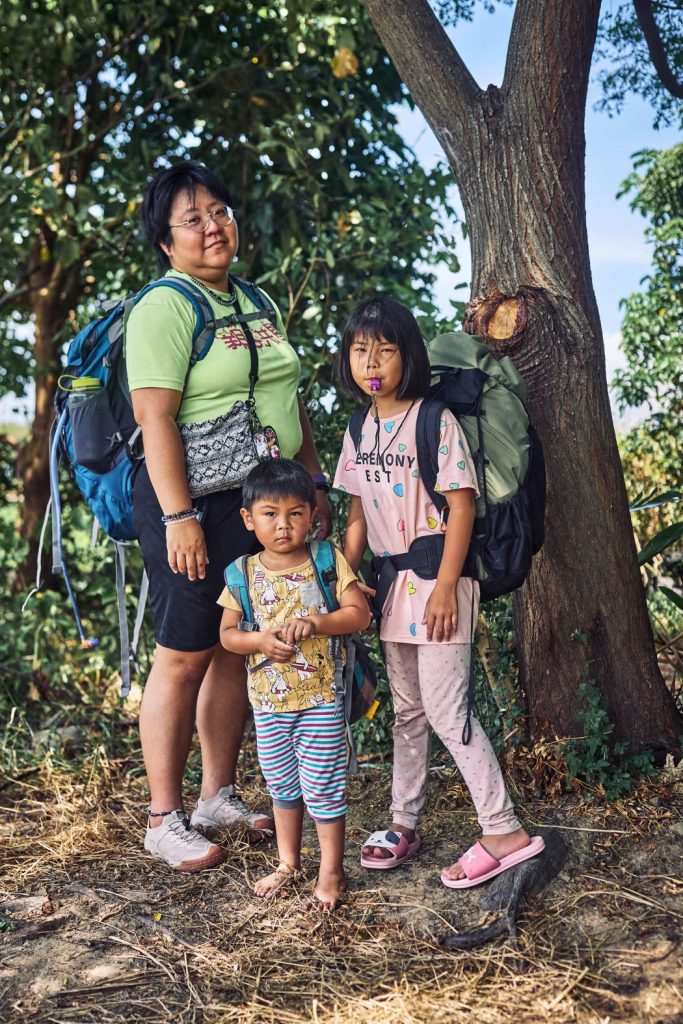
Yuki Huang with her son Khian-khian, daughter Wendy and the bags they packed. Photography by An Rong Xu for WSJ
A civil-defense course two years ago helped Huang connect the dots between planning for a trek and preparing for an emergency evacuation.
Her must-haves: an emergency blanket to keep warm and a LifeStraw, which filters water as you drink.
Huang, 38, has discussed with her children how to handle various emergencies, including what to do if they run out of food and water in the mountains, and where to take cover during an earthquake.
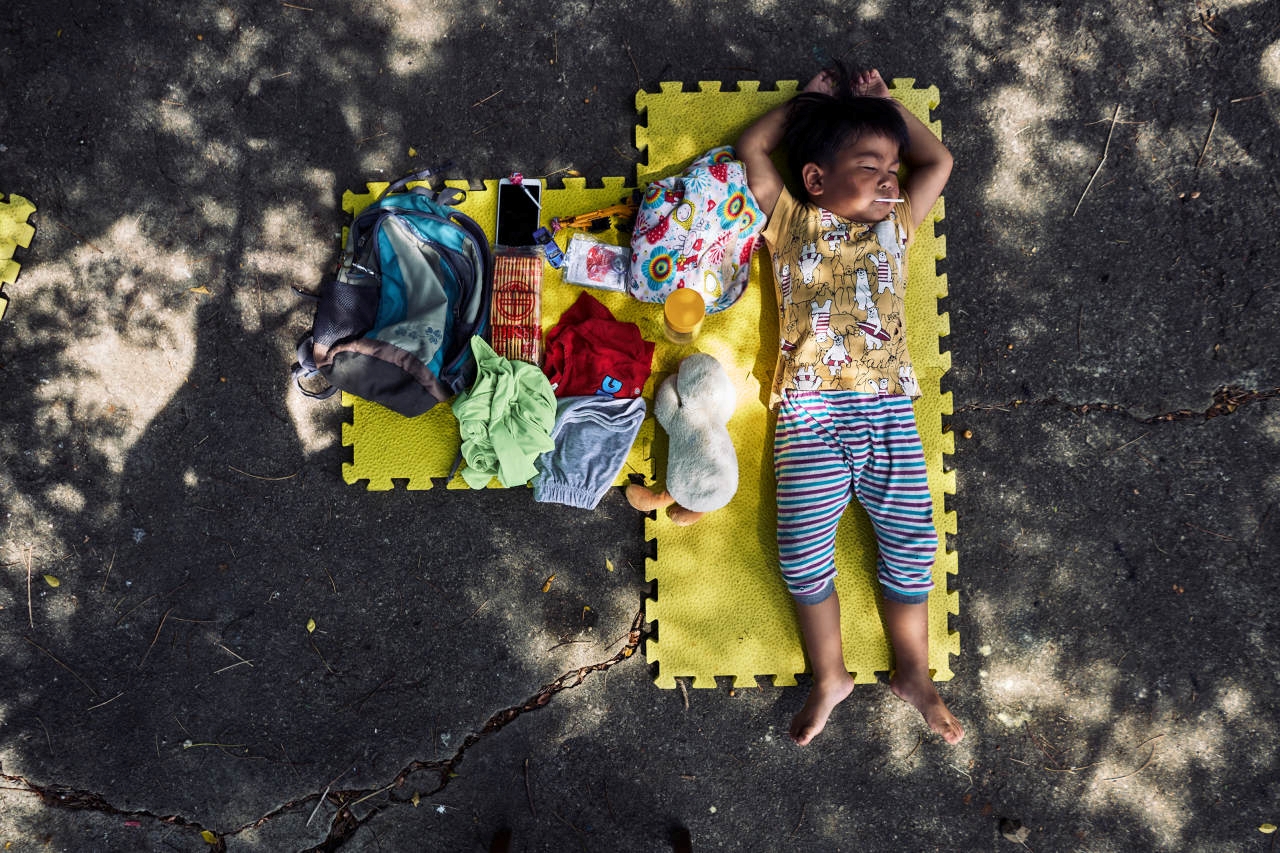
Her youngest son, 4-year-old Khian-khian, is too small to carry much, but insists on toting his best friend, a stuffed toy duck, Yaya.
“I want to hug it when I sleep,” Khian-khian said.
Ting-ho Lai
Ting-ho Lai became a “prepper” this spring, she said, when one of her two cats was diagnosed with diabetes. If China and Taiwan go to war , she found herself thinking, the cats, both 11 years old, could be left alone, suffer and die.
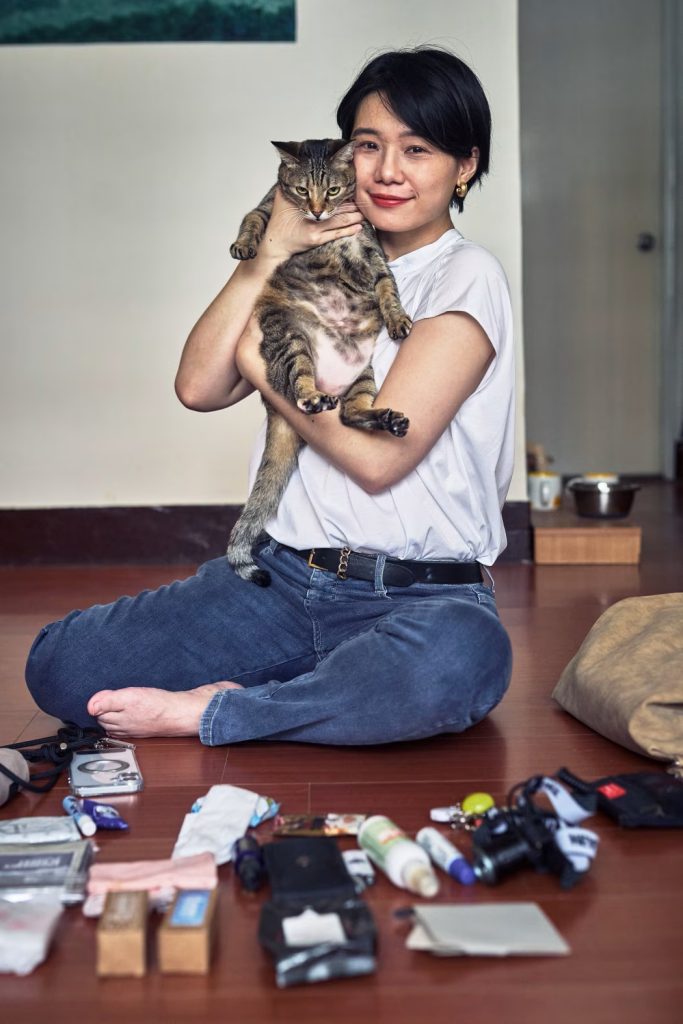
Lai said she has integrated disaster readiness into her daily lifestyle.
Photography by An Rong Xu for WSJ
Her vet’s advice: “To protect your cats, you have to make sure you stay alive first.”
Lai began studying disaster-response guidelines from around the world and organized discussion groups on how to prepare for a conflict with China. She also stocked up on bottled water, canned food and pet supplies.
Lai, a 32-year-old fashion consultant, carries an everyday bag that she said is both practical and suits her personal style. She said it is important to integrate disaster preparations into her daily life without turning herself into a “hardcore military type.”
She also tries not to buy Chinese products. “Every time I buy something made in China, I think, ‘My money is going to help them make another bullet to use on us,’ ” she said.
Lai is planning with the year 2027 in mind after reading that U.S. officials said Chinese leader Xi Jinping wants his armed forces to be ready by that year to seize Taiwan. Preparing for a potential invasion has been mentally exhausting. “This is a long fight,” she said.
As for the pets: Lai has come to recognize that cats don’t have to be taught survival skills. Although she won’t be able to provide medication if she is gone, she has prepared her home with hideaways for her cats and a screen door that they can open themselves if they need to escape.
Yen Chin-chih
Yen Chin-chih began preparing for disasters more than 25 years ago after living through one of Taiwan’s worst—the 1999 earthquake that killed more than 2,400 people.
She still panics every time her building shakes. “My back goes numb and I rush out of my room,” said Yen, who is 60, pointing to the spot by an interior wall, beneath a cross, where she takes cover.
But it would take a fire or a missile strike to get her to flee the 600-square-foot apartment she shares with her mother. Instead, Yen keeps enough supplies to stay put for two months.
Water bottles are stacked in the kitchen and tucked under her mother’s bed; closets are packed with canned and shelf-stable foods, some marked to last until 2054. She has radios and backup phones, power banks, generators and solar panels. Her apartment is equipped with radiation detectors, air-quality monitors and emergency lights.
Yen keeps a spreadsheet to track expiration dates, expenses, stockpiled calories and where everything is.
After Russia invaded Ukraine in 2022, she feared that a Chinese invasion of Taiwan would follow. “How could I not be nervous?” Yen said.
Yen carries an everyday bag for a few supplies for what she considers a worst-case scenario, such as a terrorist attack at a train station.
While Yen believes in most cases she and her mother would be safest at home, she does keep a well-stocked go bag. But her mother, Wu Mei-hua, is 90, suffers from kidney disease and needs assistance to get around.
“I would never just grab a bag and run out,” Yen said. “There’s no way I could run while carrying my mother.”
Kyle Hu
“Nobody likes war and no one wants it to happen, but we still have to be ready,” said Kyle Hu.
The former sergeant in Taiwan’s special forces started a civil-defense training business in 2022, shortly after the war in Ukraine began. A 33-year-old father of two, Hu provides small-arms training and teaches tactical first aid and other survival skills.
Hu keeps camouflage clothing in his kit, but warns that dressing like a soldier could draw unwanted attention. “This stuff,” he said, “you only wear it when it’s really necessary, to keep yourself hidden and stay safe.” He also keeps a gas mask, helmet and body armor on hand, he said, just in case.
Hu avoids Chinese-made products. “When I’m in a high-risk situation, I need gear I can trust 100%,” he said.
Hu said that Taiwan is far from prepared for a Chinese invasion. “It will never be enough,” he said. “I hope no one thinks the chance is zero. Even if it’s just 1%, we still need to be ready.”
Chang Hsin-yin and Li Chen-ho
Chang Hsin-yin, another home-schooler, said teaching her 7-year-old son to pack for a long hike helps prepare him for an emergency evacuation.
“I feel it works for both purposes,” said Chang. “Because in the mountains, there’s no water, no electricity and no food.”
Her son, Li Chen-ho, stocked up for a recent trek with a sleeping bag, a change of clothes, a water bottle and instant rice. He also packed six braised eggs, a favorite snack that he calls his “trail rations.”
Write to Joyu Wang at joyu.wang@wsj.com