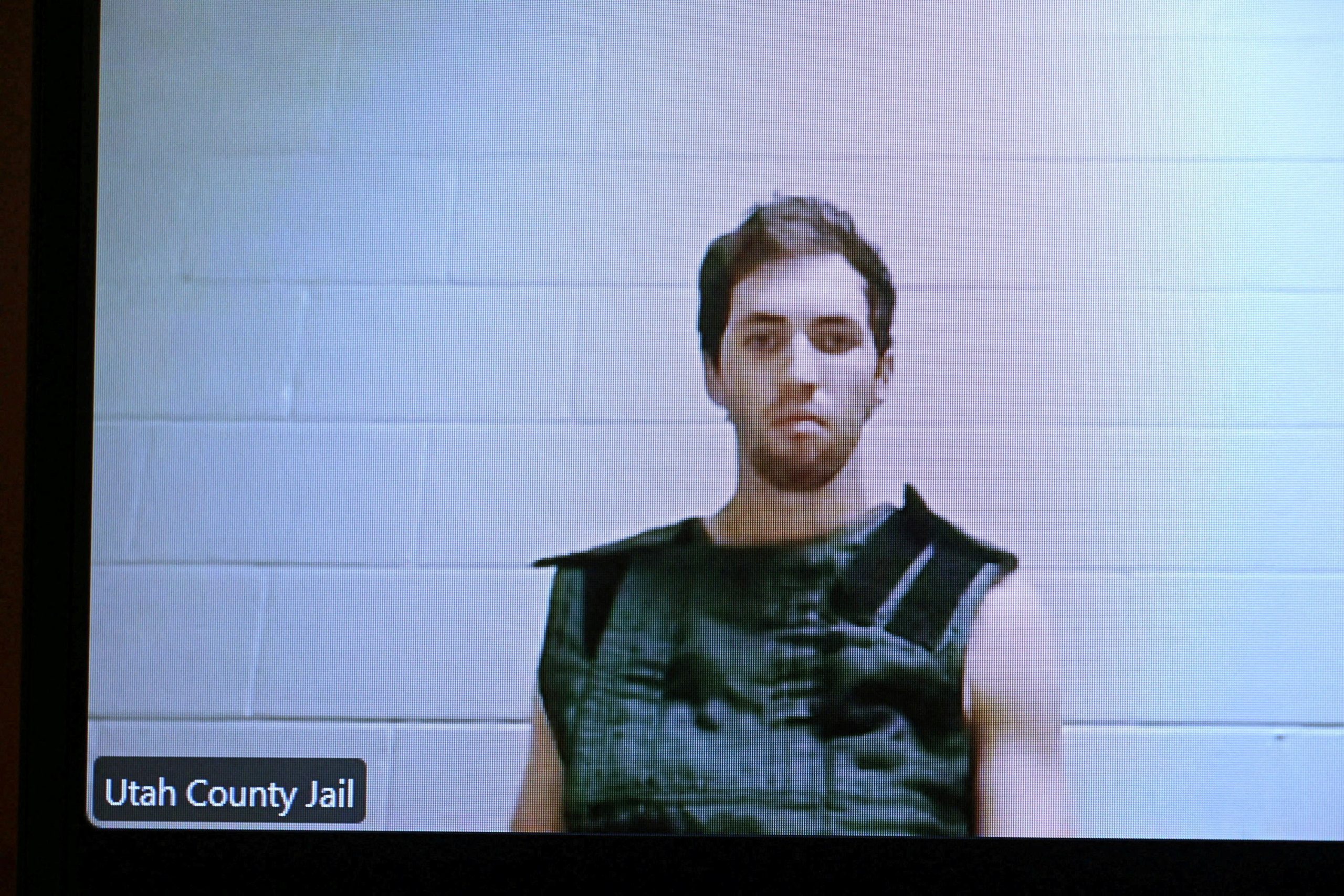
Utah County’s top prosecutor on Tuesday unveiled criminal charges against Tyler Robinson , a 22-year-old man accused of shooting the conservative activist Charlie Kirk , and said his office plans to seek the death penalty. Here is what to know about the charges and what happens next in the proceedings.
What charges does Robinson face?
Robinson faces a total of seven charges, including one for aggravated murder, which puts the death penalty on the table. Prosecutors also accused Robinson of felony discharge of a firearm. And they charged him with obstruction of justice and witness tampering in connection with alleged steps he took to conceal his rifle and to urge his roommate to delete text messages and to not cooperate with law enforcement.
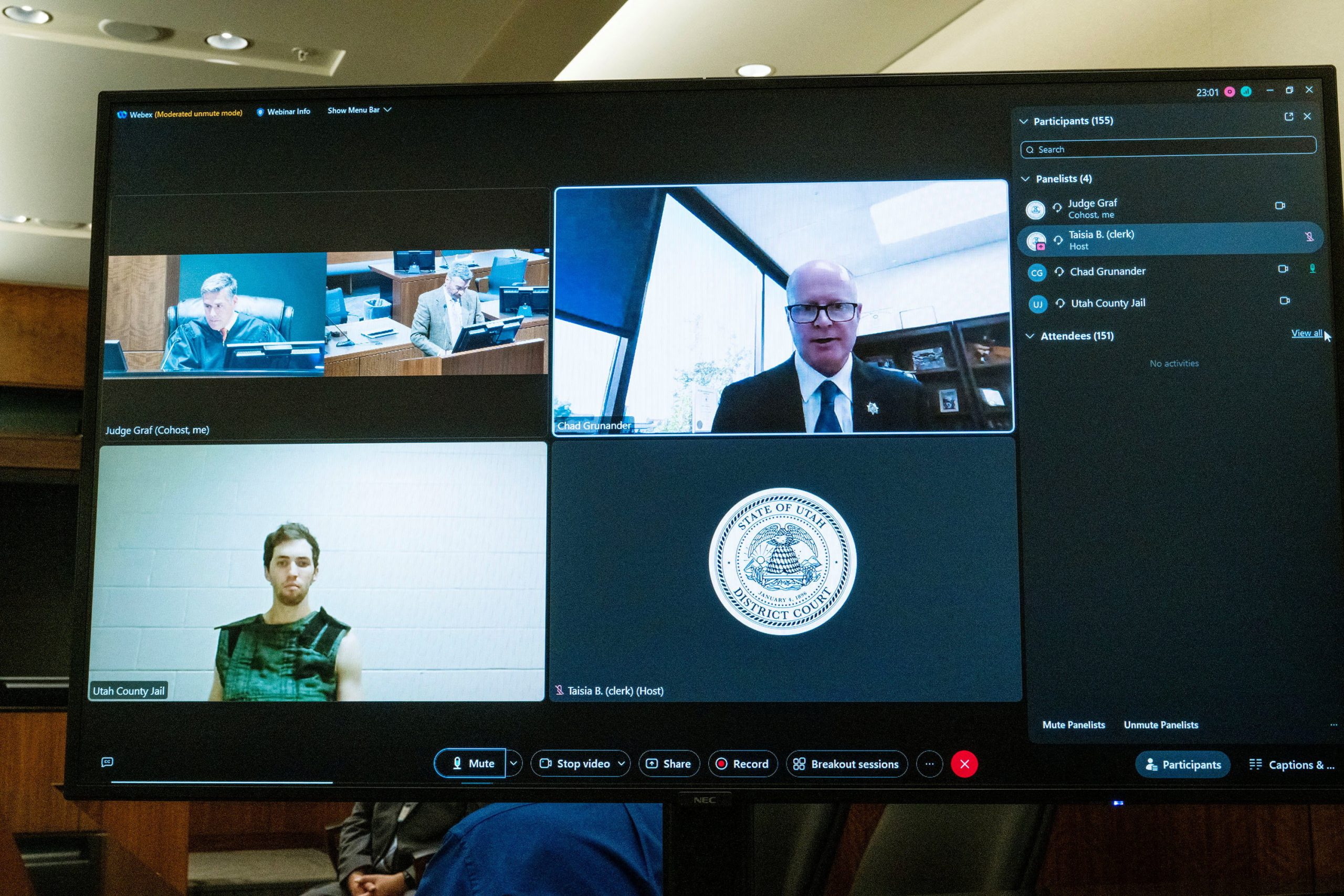
Tyler Robinson, 22, the suspect in the shooting death of Charlie Kirk, appears by camera before Judge Tony Graf of the 4th District Court on Tuesday, Sept. 16, 2025 for his initial appearance in Provo Utah, U.S. Scott G Winterton/Pool via REUTERS
What hurdles do prosecutors have to clear to get the death penalty?
Prosecutors in Utah must prevail in two phases. First, they must convict the defendant. Then, they must convince the same jurors that the death penalty is warranted, in a proceeding designed to weigh aggravating factors against other mitigating circumstances that might instill some sympathy for the accused.
Utah County Attorney Jeffrey Gray on Tuesday underscored that Kirk was killed while appearing before a large crowd on the Utah Valley University campus, a factor he cited as meeting one of the aggravating circumstances in the state’s death-penalty law. Robinson shot and killed Kirk in a manner that “created a great risk of death to others,” Gray said.
Further aggravating the offense, Gray said, was that Robinson targeted the conservative activist based on Kirk’s political expression and that he did so knowing that children were present and would witness the homicide.
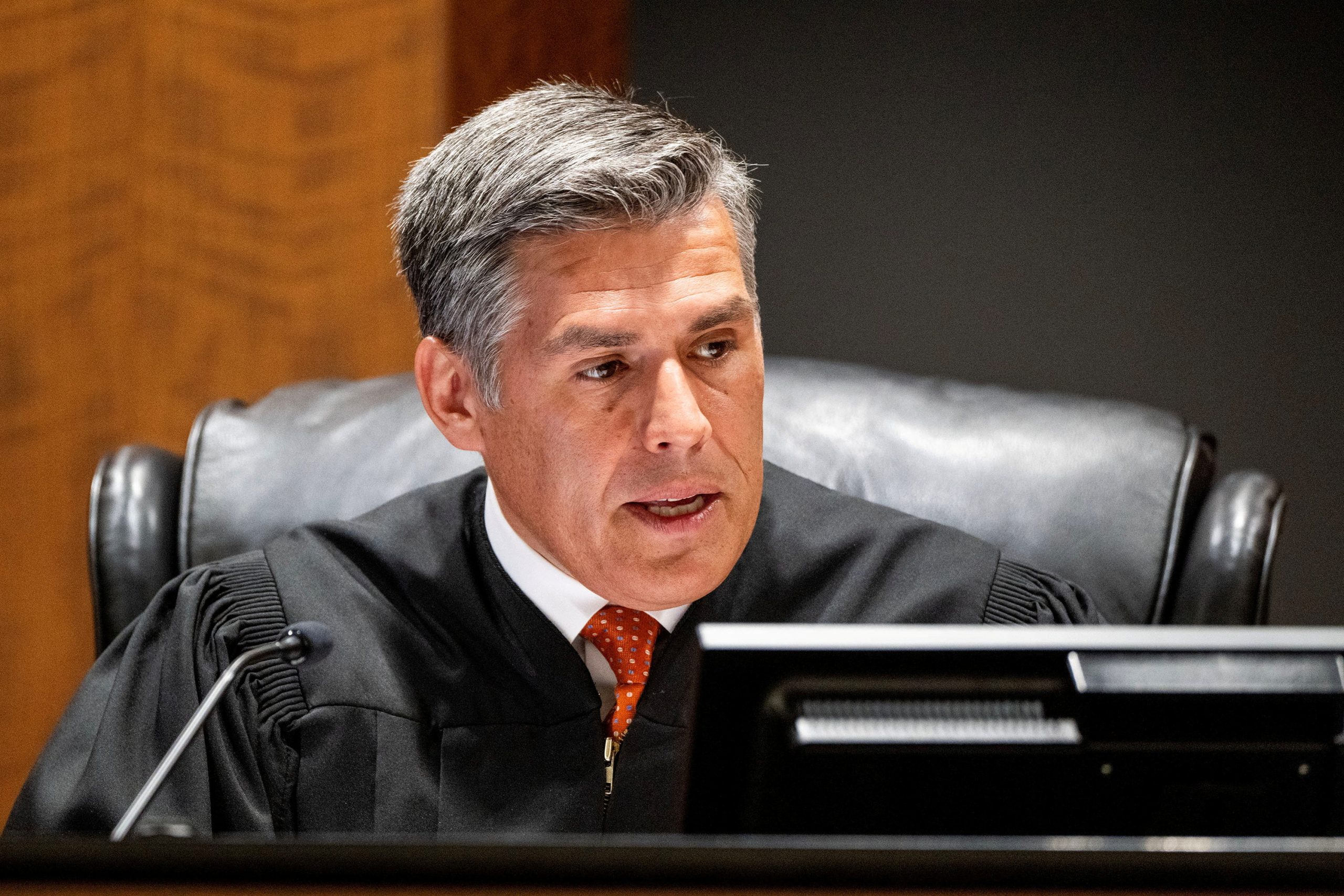
4th District Court Judge Tony Graf reads the charging documents as Tyler Robinson, 22, the suspect in the shooting death of Charlie Kirk, appeared by camera on Tuesday, Sept. 16, 2025, for his initial appearance in Provo, Utah. Scott G Winterton/Pool via Reuters
“We’re looking at not a private vendetta but a public assassination in a crowd,” said Paul Cassell , a University of Utah law professor. “That’s what makes this a death penalty-eligible crime—the risk to others.”
When was someone last executed in Utah?
Taberon Honie , a convicted murderer, was executed by lethal injection in 2024. It was the first time the state had held an execution since 2010, when an inmate was executed by firing squad.
A Utah jury last sentenced someone to die in 2015, in the case of Douglas Lovell , who was convicted of murdering a woman in 1985 to prevent her from testifying against him on charges he raped her. The Utah Supreme Court overturned the sentence last year.
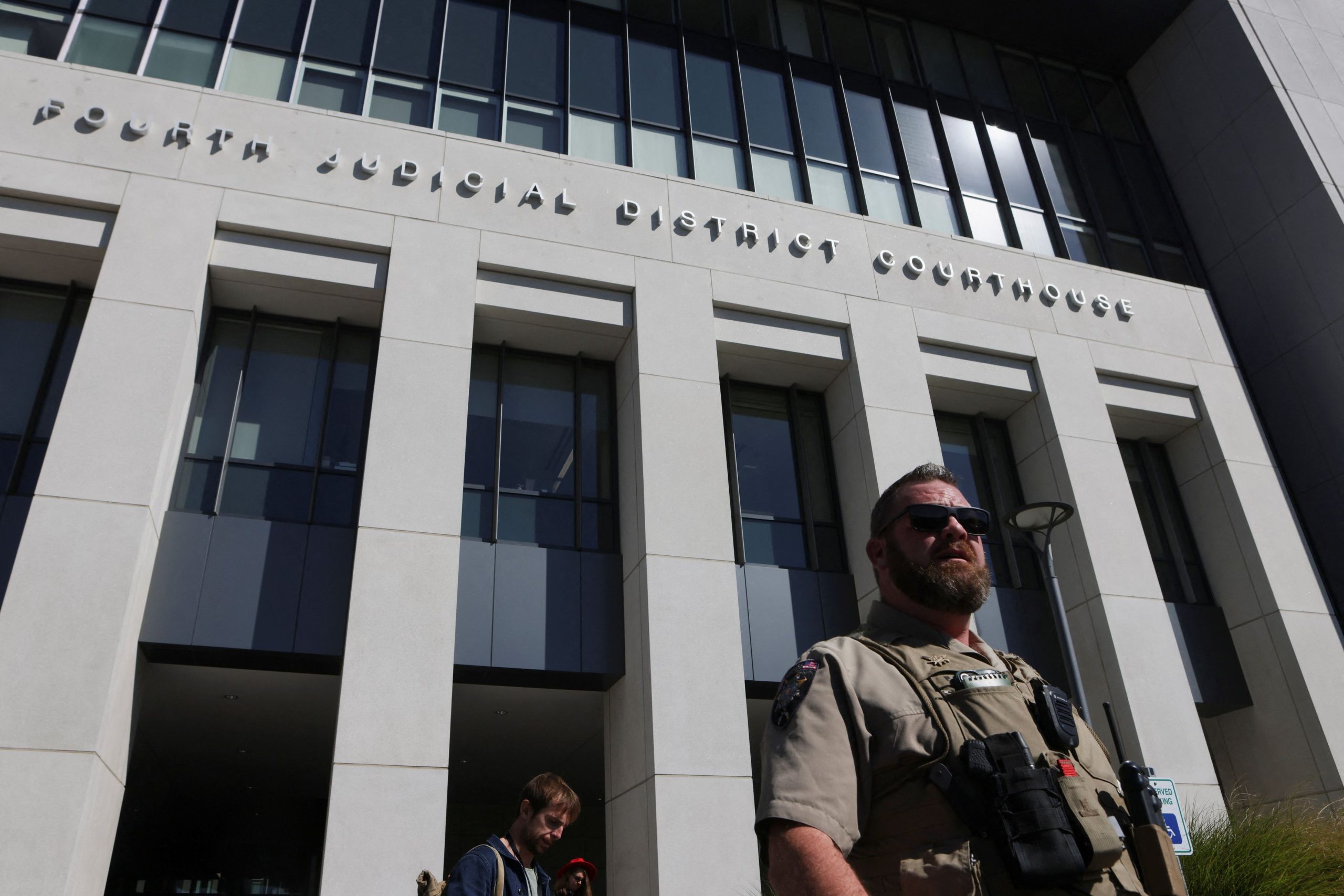
A law enforcement member looks on outside the Fourth Judicial District Courthouse while Tyler Robinson, who is suspected of fatally shooting U.S. right-wing activist and commentator Charlie Kirk, an ally of U.S. President Donald Trump, is expected to be arraigned, in Provo, Utah, U.S., September 16, 2025. REUTERS/Jim Urquhart
What happens next in Robinson’s case?
Robinson made his initial appearance Tuesday before a judge who conducted the hearing virtually. His next court date is Sept. 29.
Under Utah law, he is entitled to a preliminary hearing in which prosecutors would need to show they have adequate evidence to establish probable cause and proceed toward trial. Robinson would then proceed to an arraignment, where he would enter a formal plea of guilty or not guilty for each of the charges.
When could the case go to trial?
Legal experts said that, because the case involves only one defendant and a single shot fired, it could go to trial as early as next year, although complexities common in any death-penalty case could delay the proceedings.
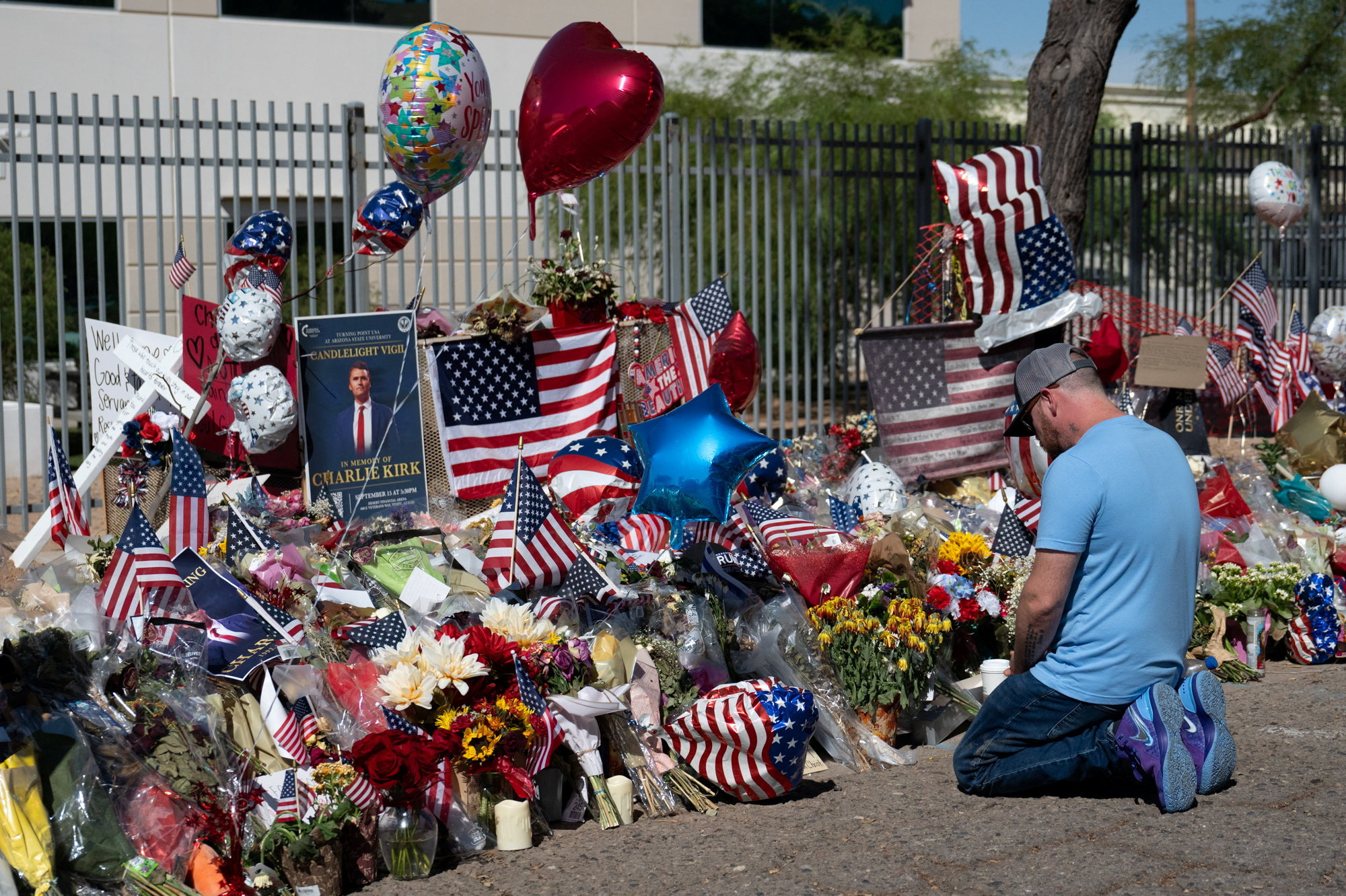
A supporter kneels as tributes grow in memory of right-wing activist Charlie Kirk who was fatally shot during an event at Utah Valley University, outside offices of Turning Point USA in Phoenix, Arizona, U.S. September 16, 2025. REUTERS/Caitlin O’Hara
Could the Justice Department bring a separate federal case?
The Justice Department is expected to bring a federal case against Robinson. Deputy Attorney General Todd Blanche said on CNN on Tuesday that the department was reviewing the evidence. But because Robinson is already detained in Utah in a state case that carries the death penalty, “This isn’t something we need to rush,” he said.
Legal experts said a federal nexus isn’t immediately clear based on the evidence made public so far.
A possible avenue could be found in the charges the Justice Department brought against the suspected gunman in the killing of Minnesota state Rep. Melissa Hortman and her husband earlier this year. Federal prosecutors in Minnesota charged the suspect, Vance Luther Boelter, with stalking and murdering Hortman and her husband, Mark Hortman , during a night of terror targeting elected officials and their families. In court documents, prosecutors said Boelter used the mail, a GPS navigation system, interstate wires and the internet to plan and carry out the murders.
Prosecutors also brought firearms charges against Boelter, who has pleaded not guilty.
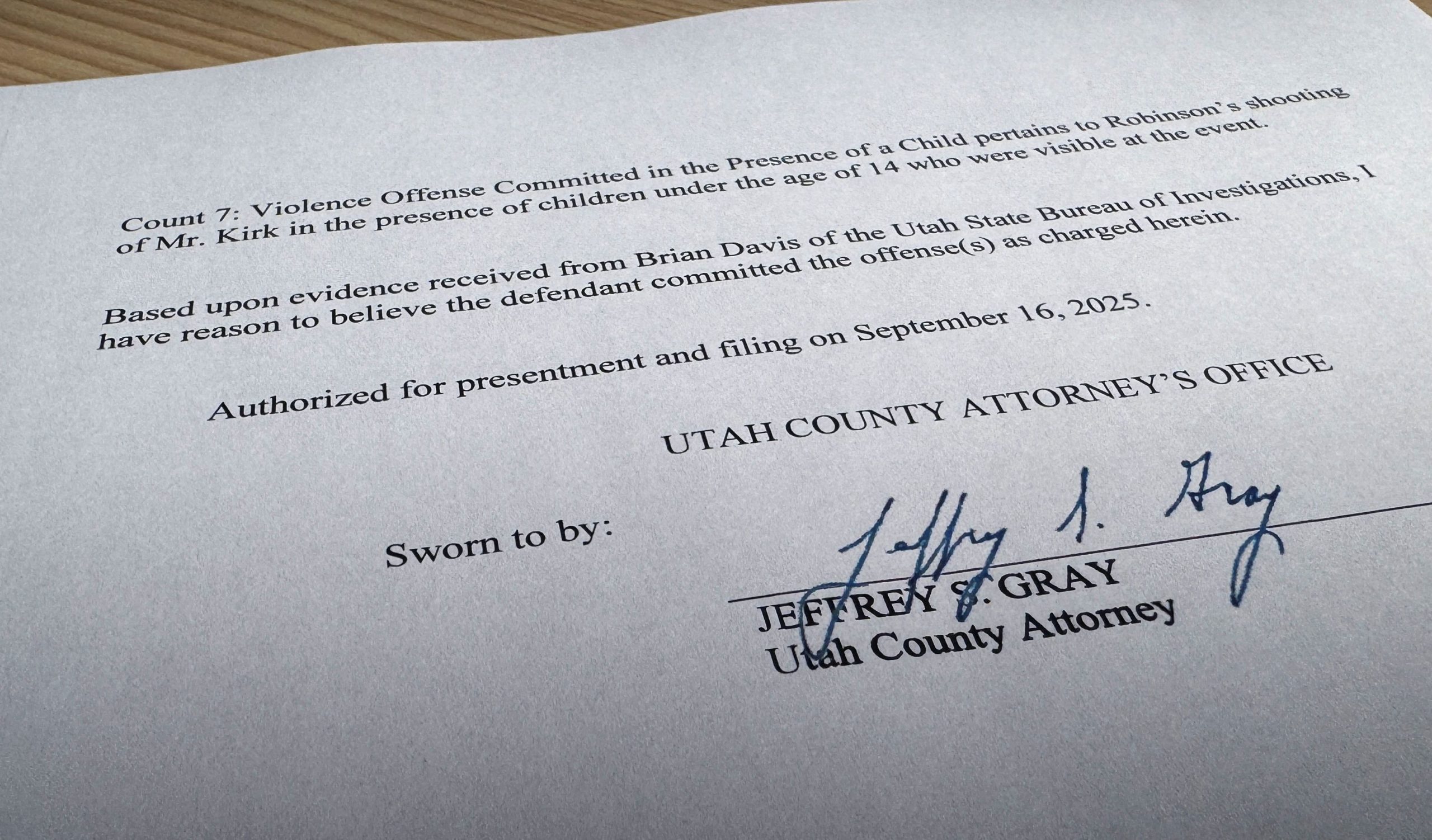
A charging document in the State of Utah vs Tyler Robinson, suspected of fatally shooting conservative activist Charlie Kirk, is seen in this release from the Utah County Judicial District Court, September 16, 2025. Provo District Court/Handout via REUTERS THIS IMAGE HAS BEEN SUPPLIED BY A THIRD PARTY
Given the high-profile nature of the case, could Robinson seek to move the trial?
President Trump and other top officials responded with outrage to the shooting of Kirk, a 31-year-old father of two who was widely credited with galvanizing young conservatives. Given that attention, Gray was asked Tuesday whether he expected Robinson’s defense lawyers to ask to move the proceedings out of Utah County to another part of the state in hopes of finding a more impartial jury and a fair trial. “I couldn’t predict what they’re going to do,” he said.
Any bid to move a trial faces long odds, and in Robinson’s case, it is unclear whether moving the trial to another part of Utah would help given the scale of the attention, legal experts said.
This explanatory article may be updated periodically.
Write to C. Ryan Barber at ryan.barber@wsj.com