An old storm drain in Minneapolis. A damp cottage in Ontario. Underneath a house in New Zealand. In everyday encounters around the globe, people are getting a fright by a Halloween-worthy sight: the eight-legged undead.
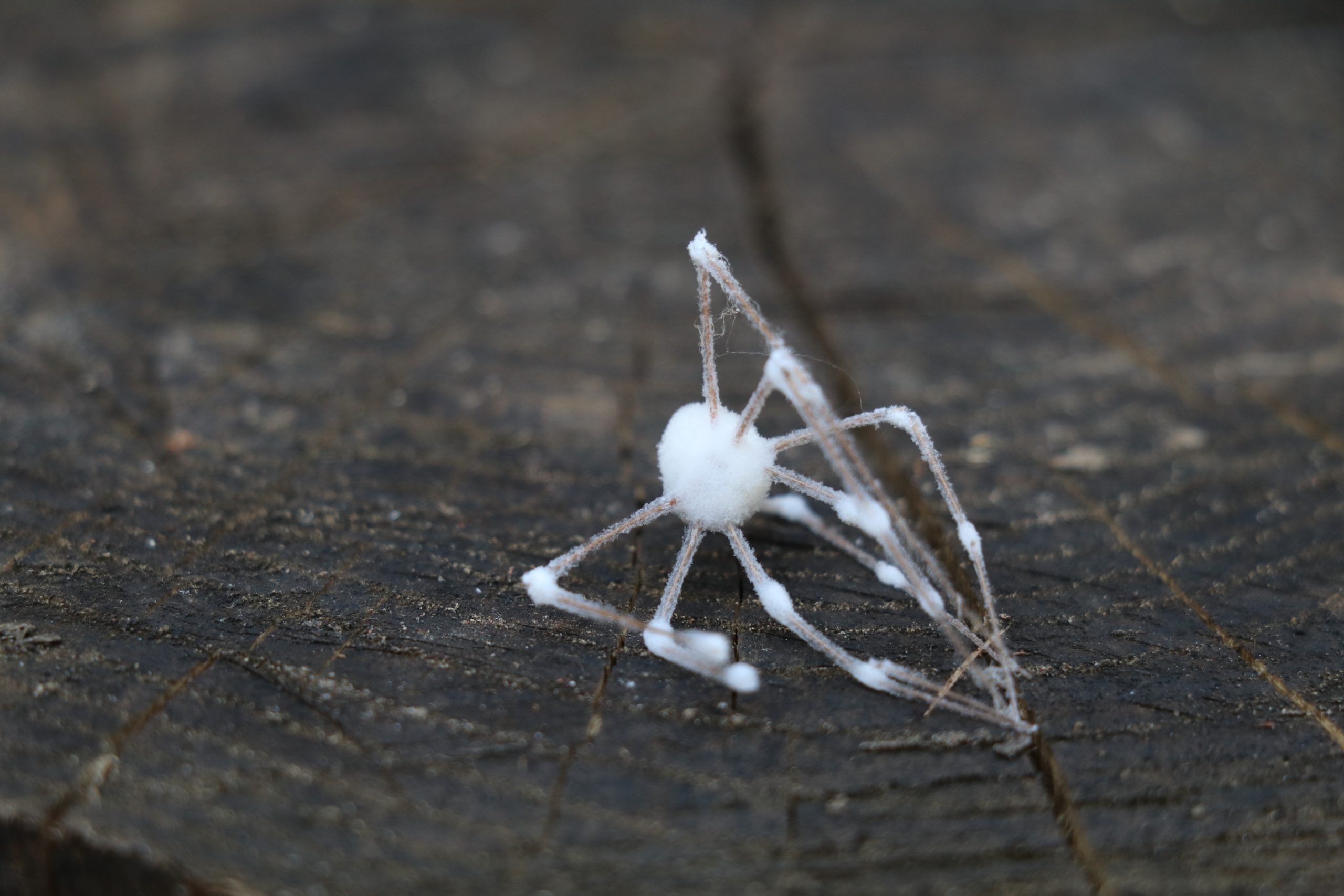
A parasitic fungus is creating zombie spiders. It slowly consumes the arachnids, eventually leaving only their crusty white corpses, ready for discovery.
“I’m not scared of any spiders,” said Anna Baddams, who collected black widows with her friends when she was young. “But these ones freaked me out.”
Baddams found hundreds of the spiders in her shed in Southampton, England, in January. They seemed to be breeding like rabbits. The creatures were almost see-through. Their legs had bobbles on them.
“I couldn’t sleep for weeks,” the 54-year-old recalled in July. “I still don’t open my windows in case they crawl in.”
The fungus was discovered in 2021, during the filming of the BBC’s “Winterwatch” series. An infected spider was spotted on the ceiling of an abandoned gunpowder store in Northern Ireland. The fungus was identified as a new species, and is now named for beloved British naturalist David Attenborough.
Gibellula attenboroughii has since been found lurking in spiders around the globe.
“It consumes the host’s body from the inside out,” said João Araújo, a mycologist at the Natural History Museum of Denmark. Spores drill through the spider until they reach the organs. Researchers say it’s hard to tell how long the spiders stay alive once infected, but some suggest it could be up to three weeks.
While it works, the fungus manipulates the behavior of its host, often making the spider hyper active and causing it to move away from its usual habitat. Spiders found in caves might migrate when infected to more open areas, such as the underside of leaves, where the fungus has a higher likelihood of releasing more spores.
Landscaper Gareth Jenkins was lifting the deck in a London garden earlier this year when he noticed what looked like a big ball of cotton wool hanging below. On closer inspection, he saw the first sign it was something considerably more hair-raising: a lot of legs.
Zombie spiders were clumped in groups. They looked like they had been frozen in icicles. “Their legs were curled up in a horrible crow position as if they were going to jump on my face,” Jenkins said.
He had never seen anything like it in his 20 years of landscaping.
“Maybe don’t tell the kids,” he told the homeowner, who was so terrified that she refused to step outside until the spiders were out of sight.
Still, he had good news: “I’ve been assured it can’t pass on to humans,” said Jenkins. “It’s not like ‘The Last of Us’…just yet.”
Scientists say there’s no chance of Gibellula attenboroughii cosplaying the videogame-turned-hit-HBO-series , in which a fungus mutates to infect humans , transforming them into aggressive, mind-controlled, zombielike creatures, ushering in a global apocalypse.
“Infecting humans would require many, many millions of years of genetic modifications,” said Araújo.
Simon Butenko, a 22-year-old programmer, was used to finding toads in his parents’ wine cellar in Anapa, Russia. It was always damp. Encountering zombie spiders—which he first mistook for moldy berries—was another matter.
“What was especially creepy was that these spiders were hanging at head height,” he said.
Not everyone is spooked by ghostly spiders with spiraled tentacles.
“I am always looking for strange things in nature,” said Ben Mitchell, an amateur naturalist and photographer who takes an interest in everything from encrusted lichens to unusual ferns.
He found his first zombie spider in a Scottish woodland in July 2024. “I saw this amazing candyfloss thing stuck to the underside of a leaf,” he said. “It had a membrane of threads around it holding it in place, and all I could see of the spider was its toes sticking out.”
He picked up the leaf, wrapped it up and took it home to take photos.
Spiders aren’t the only insects falling prey to deadly fungi. Ants infected with Ophiocordyceps are manipulated into biting down on leaves, known as the “death grip.” When cicadas become infected by Massospora cicadina, their abdomen falls apart over time until just the head and thorax remain. They are still able to fly, dropping spores and infecting other cicadas—earning the nickname “flying salt shakers of death.”
“It’s like what we see on TV, where the viruses that infect zombies cause their host to bite other people to spread the disease,” said William Beckerson, a postdoctoral researcher at Utrecht University in the Netherlands.
For Baddams, in Southampton, those “Last of Us” comparisons feel acutely unsettling. She still hasn’t been anywhere near her shed.
“They told me they’re all cleaned out, but there could always be one or two lurking.”
Write to Natasha Dangoor at natasha.dangoor@wsj.com