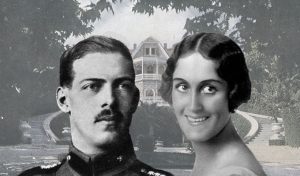
The romance was legendary: Alexander, who had ascended the throne amid civil unrest, married Aspasia—no royal, a simple Greek commoner. His family saw it as an affront to dynastic order and feared it might shift Greece’s monarchy forever.
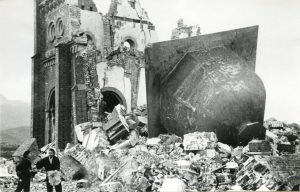
On August 6 and 9, 1945, the first nuclear weapons were unleashed on Japan’s cities—shattering lives instantly and reshaping history. Seventy-eight years later, we revisit their devastation, the scientific motives, and lingering moral questions.
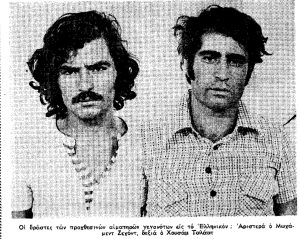
In 1973, two Palestinian gunmen turned a peaceful summer day at Athens' Ellinikon Airport into a bloodbath, targeting innocent travelers in one of the deadliest terrorist attacks on Greek soil
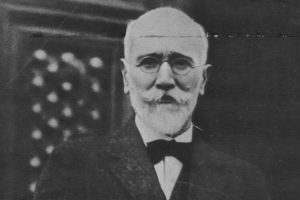
The assassination attempt of Eleftherios Venizelos in Paris caused major upheaval in Greece, especially because erroneous reports said he had died.
Today, Greece, like much of the world, is grappling with the undeniable consequences of climate change: more frequent and intense heatwaves, longer wildfire seasons, unpredictable weather patterns, and vulnerable cities pushed to their limits
The attack on the Greek City of Poros day cruise remains the deadliest peacetime atrocity in modern Greek history, and is a sobering reminder of the potential cost of Greece’s entanglements in the Middle East
The critical moments before and after Greece’s 2015 referendum on the bailout deal between the Greek government and international creditors
In a war filled with unspeakable horror, Lela Karagianni’s story is one of undying light. She turned her family into a fortress of resistance, her home into a battlefield, and her life into a weapon against fascism
“Here, I felt, a higher human consciousness prevails... Here, man’s virtue triumphs over the desert,” Kazantzakis wrote,
Founded by Emperor Constantine the Great, Constantinople had long stood as the shining center of Orthodox Christianity and imperial power.
Konstantinos Karamanlis signs the Treaty of Accession of Greece to the European Economic Community on May 29, 1979 and promises "far-reaching reforms."
On May 24, 1844, Samuel Morse sent the first telegraph message, launching an era of instant global communication.
The Genocide of the Pontic Greeks as recorded by “ELEFTHERON VIMA” and by people who lived through it.
In 1455, Greek Cardinal Bessarion nearly became pope. Did his beard cost him the papacy — and Christians in the East and West their chance at unity?
Some of the first color photographs of Athens and the Cyclades are now available online
For years, NATO’s very existence was justified by the idea of an aggressive Soviet Union waiting to expand into Western Europe. But what happens to a military alliance when its enemy disappears?
Jules Dassin was an exile, an artist, a rebel. Blacklisted in Hollywood during the McCarthy era, he found refuge in France and then in Greece, where he built a new life, shaping its cultural landscape through film and theater.
Eleni Alexandrakis’ latest film sheds light on the Greek Civil War, its Children’s Cities, and the need to properly address our past, “so we can truly build our future”
The assassination of Julius Caesar was shaped by Greek philosophy, prophecy, and politics—linking his fate to Athens as much as to Rome.
Many accounts have long associated the origins of International Women’s Day with a supposed March 8, 1857, textile workers’ strike in New York. Some even claim that Malkiel intended to honor that event