Amy Winehouse wasn’t just a singer—she was a storm of raw talent, aching vulnerability, and untamed defiance. Born on September 14, 1983, in North London to a Jewish family, Amy’s life was steeped in music from the very start. But her story, which ended in tragedy on July 23, 2011, at just 27, remains one of the most poignant cautionary tales in modern music history.
Childhood Shadows and Family Strains
Amy’s relationship with her father, Mitch Winehouse, played a formative—though often painful—role in her life. Working two jobs to support the family, Mitch was rarely home. More scarring, however, was his long-running affair with a woman 13 years his junior, which began when Amy was just 18 months old. Her parents divorced when she was 9. That betrayal left Amy with deep emotional scars, fuelling insecurity and self-destructive tendencies that would haunt her relationships and shape her art.

British singer Amy Winehouse performs at the Brit Awards at Earls Court in London, in this February 20, 2008 file photo. REUTERS/Alessia Pierdomenico/Files (BRITAIN – Tags: ENTERTAINMENT OBITUARY BUSINESS)
After the divorce, Amy moved in with her grandmother, Cynthia, herself a former singer who deeply influenced Amy’s love of music. At Cynthia’s urging, Amy enrolled in the Susi Earnshaw Theatre School, followed by a scholarship at the renowned Sylvia Young Theatre School—alma mater of stars like Dua Lipa, Rita Ora, and Daniel Kaluuya. Cynthia became a maternal figure, and her death in 2006 devastated Amy.
Amy struggled with mental health from an early age. In high school, she was diagnosed with depression and began medication. At 13, she confided in her mother that she had bulimia, but her mother brushed it off as teenage rebellion—a reaction that would prove tragically misguided. The eating disorder would persist throughout Amy’s life.
A Dazzling Debut with Frank
By 2002, Amy had already impressed the industry so much that Island Records signed her for £250,000—without a single album to her name. She delivered Frank in 2003, a moody, jazz-infused debut inspired in part by Frank Sinatra. Introspective and brimming with attitude, it captured London life and raw emotion with diary-like lyrics.
Though Frank earned critical praise, Amy herself felt it was overproduced—too shaped by industry hands and not her own vision. Seeking autonomy, she moved to Camden, her creative playground, where she could immerse herself in the scene. Her local hangout, the Hawley Arms, would later be immortalized in pop culture—most recently in the Netflix hit Baby Reindeer.
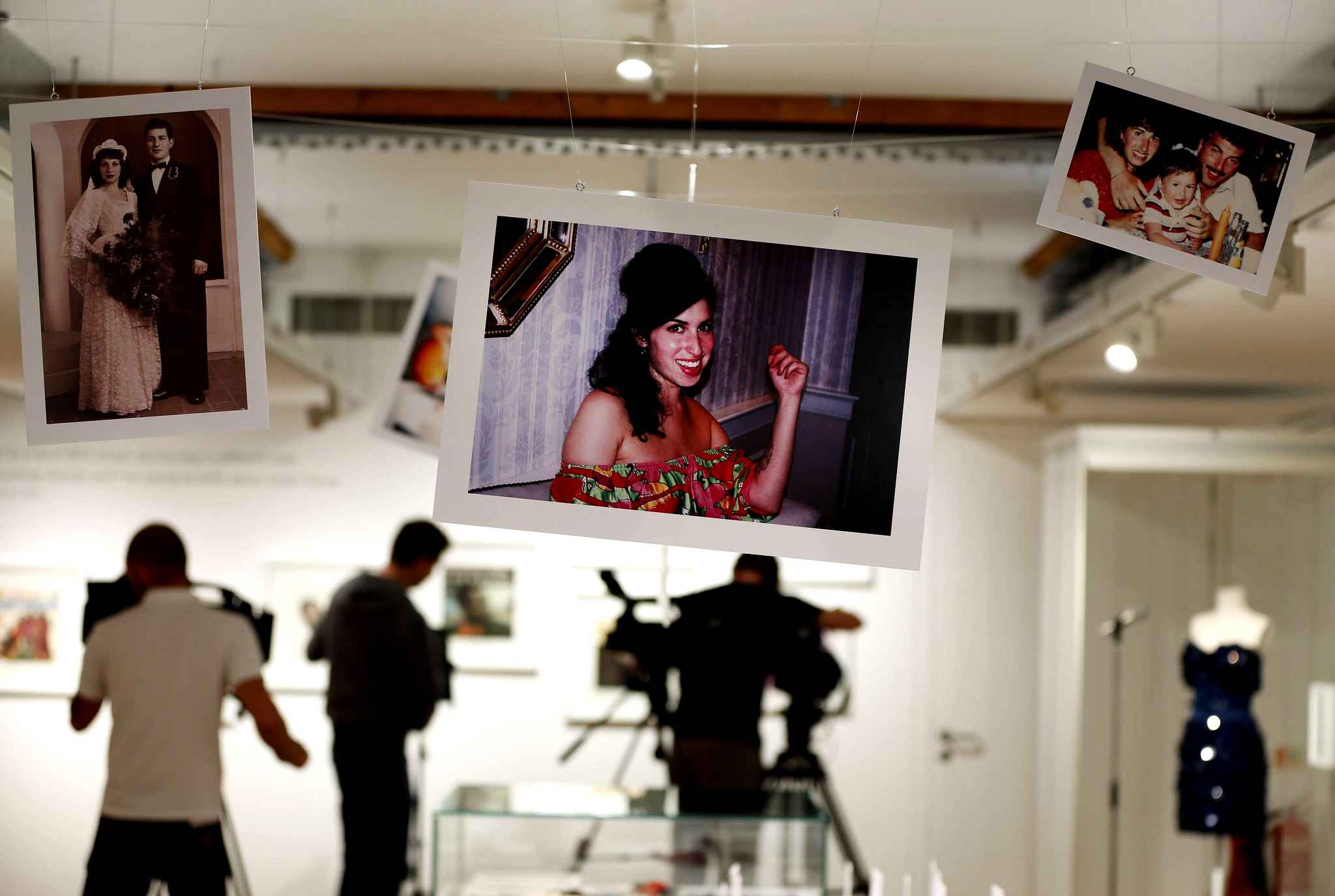
With fame came scrutiny. Paparazzi stalked her every move, hoping to catch her drunk outside a bar. But it was Amy’s turbulent relationship with Blake Fielder-Civil that would define—and unravel—her world.
Love, Heartbreak, and the Making of Back to Black
Amy met Blake in a bar when she was 21. Though both were in relationships, they spent that first night together and quickly became inseparable. But Blake’s past was riddled with addiction and instability. He introduced Amy to hard drugs—something she had never touched before.
In 2005, Blake abruptly broke things off via text while Amy was vacationing in Mallorca. That heartbreak birthed Back to Black, a haunting exploration of grief, relapse, and longing. “You go back to her / And I go back to black,” she wrote, crafting an anthem of emotional devastation.
In retaliation, Amy slept with one of Blake’s friends—fuel for another confessional hit: You Know I’m No Good. Their relationship was chaos incarnate: volatile, obsessive, toxic.
At the time, Amy’s drinking spiraled. Her manager urged rehab. Her father refused, claiming she was fine. That moment—his denial—would inspire Rehab, the song that would come to define her.
Instead of treatment, Amy went to the U.S. to record her second—and final—album.
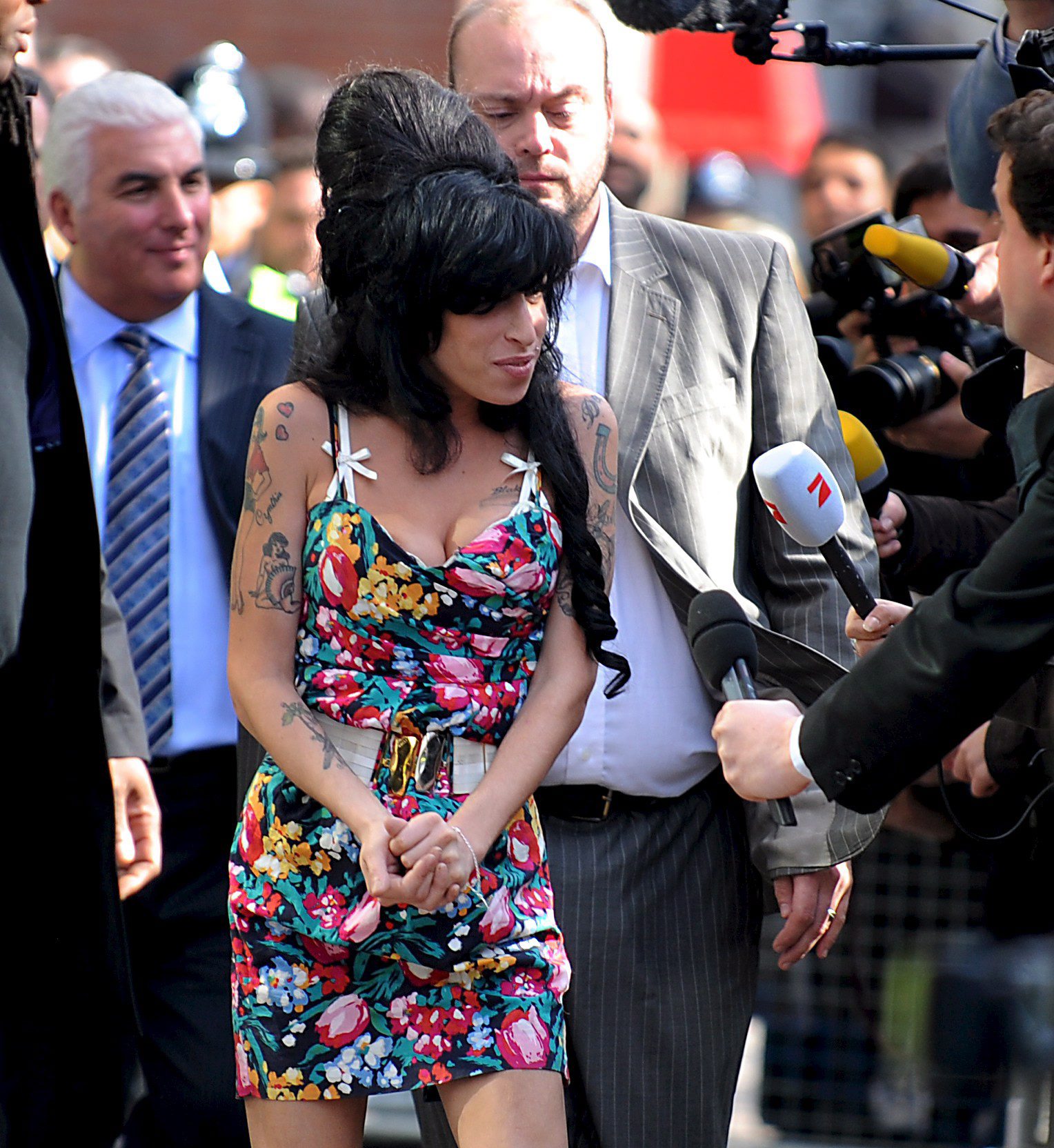
Amy Winehouse departs the Westminster Magistrates Court with her father Mitch Winehouse (L) in central London, Britain, 17 March 2009. British music sensation Winehouse is in court for an assault charge for hitting a fan back in 2008. EPA/ANDY RAIN
Back to Black: Stardom and the Price of Pain
Released in 2006, Back to Black was a triumph. Drawing from ‘60s girl groups, Motown, reggae, and soul, Amy and collaborators Mark Ronson, Salaam Remi, and The Dap-Kings crafted a genre-blending masterpiece. Her voice—deep, defiant, aching—struck a universal chord.
The world took notice. In 2008, Amy won five Grammys, including Song of the Year for Rehab, beating out Beyoncé and Rihanna. It was the most Grammys ever won in one night by a British artist.
But personal turmoil never let go. Blake returned, and six months later, they secretly married in Miami. Soon after, he introduced Amy to heroin and crack cocaine. Friends said she wanted to share every experience with him—even the pain.
Her addiction deepened. In 2007, she nearly died from an overdose. Mitch moved her to a hotel for privacy, but paparazzi discovered her location, reserving every room just to be closer.
Amy became a symbol of public spectacle, a case study in tabloid cruelty. Some UK bookmakers even took bets on when she would die.
Her father pushed her to keep touring. Blake kept supplying drugs. She was being destroyed by the two men closest to her.
Blake’s eventual arrest for assault and bribery gave Amy some distance—but not freedom.
Brief Escapes, Fleeting Hope
In 2008, Amy checked into rehab. The following year, she found refuge on the Caribbean island of St. Lucia. There, for six months, she swam, did yoga, and began to recover. She even fell for someone new. But when photos of her with another man surfaced, Blake filed for divorce.
Though heartbroken, Amy knew their love had run its course. Still, her demons were never far behind.
The Final Days
In 2010, Amy returned to London and attempted a comeback. She formed a close bond with her bodyguard, confiding in him that her bulimia had left her unable to conceive—a fear that consumed her.
For a while, she tried. She worked out, stayed sober. But a European tour in 2011 unraveled it all. In Belgrade, she pleaded not to perform. Forced onstage, she was incoherent and overwhelmed—crying, shaking, unable to sing. The audience booed. The tour was canceled.
On July 23, 2011, Amy Winehouse was found dead in her Camden home from alcohol poisoning. She was 27.