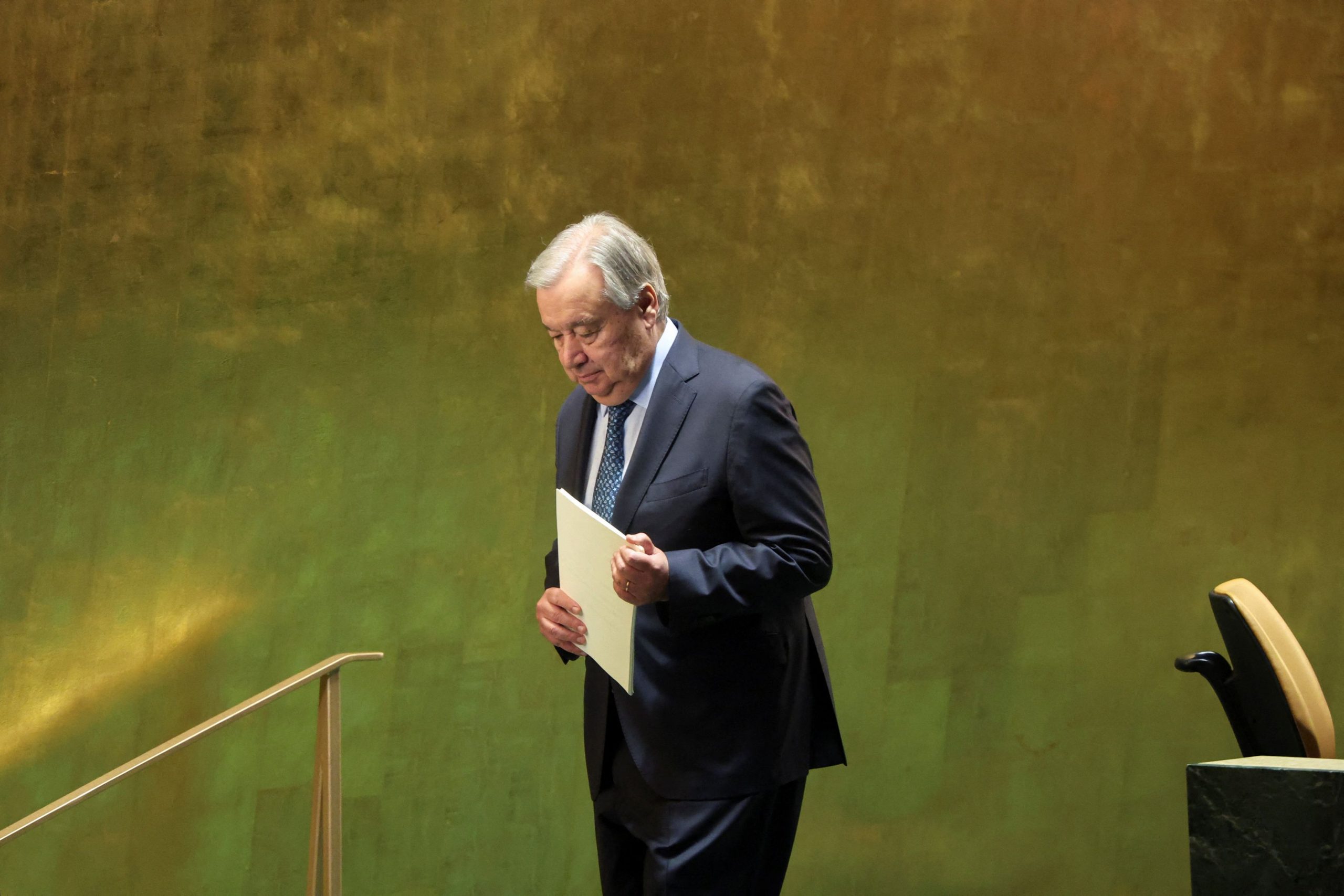
This year’s Climate Week NYC unfolded under the shadow of global conflicts- most notably the war in Gaza- and was further disrupted by U.S. President Donald Trump’s remarks at the UN dismissing climate change as a “con job” and green energy as a “scam.” The result was a subdued political and international media response, yet scientists and policymakers who gathered in New York continued to press for urgent climate action. Their focus has now shifted to preparations for this year’s COP30 in Brazil, a summit widely expected to test whether ambitious pledges can translate into measurable progress, even amid the glaring absence of the U.S. from global climate leadership.
The gathering of scientists and policy-makers also further underscored the persistent gap between ambition and implementation, as scientific and policy networks scramble to bridge the divide through evidence-based pathways. Among those shaping this conversation is Cypriot-born Professor Phoebe Koundouri, founder of the Alliance of Excellence for Research and Innovation on Aephoria (AE4RIA), Chief Scientist for the 2027 UN Sustainable Development Report and Professor at Athens University of Economics and Business. Speaking with To BHMA International Edition, Professor Koundouri reflects on the main takeaways from Climate Week NYC and the road ahead to COP30, emphasizing that sound science, systemic investment, and fair finance remain essential to achieving climate neutrality.
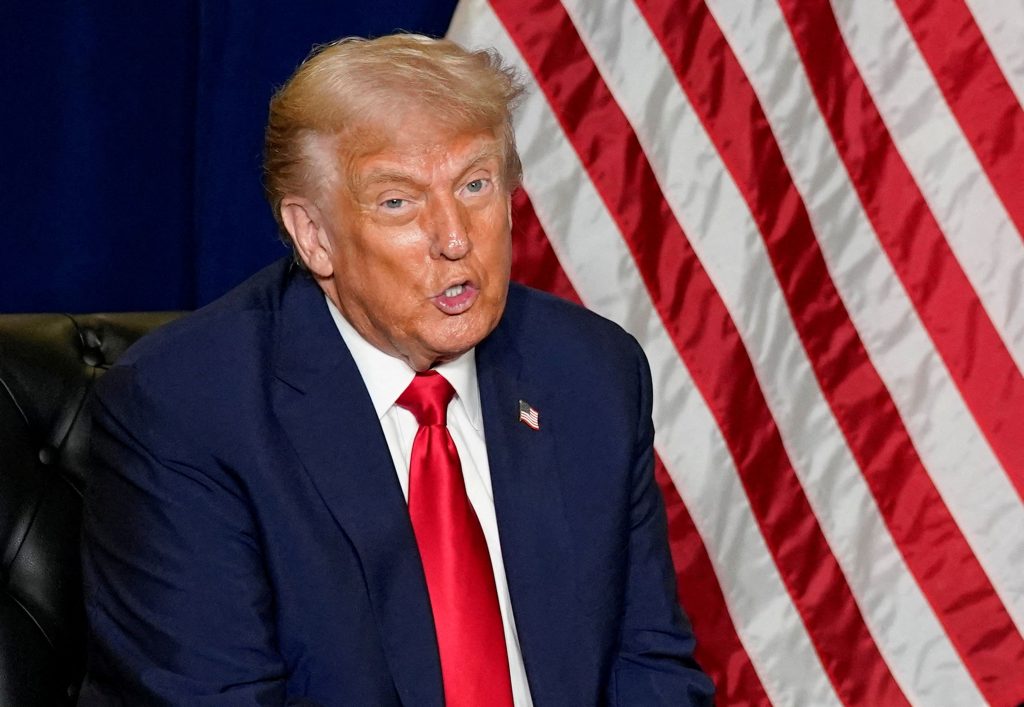
FILE PHOTO: U.S. President Donald Trump speaks as he meets with United Nations Secretary-General Antonio Guterres (not pictured) during the 80th United Nations General Assembly, in New York City, New York, U.S., September 23, 2025. REUTERS/Al Drago/File Photo
Q1: Professor Koundouri, from your perspective, what were the most important messages or shifts you observed at this year’s Climate Week, particularly in how the world is framing the path from commitment to implementation?
The 80th UN General Assembly and Climate Week NYC became a global hub for dialogue on peace, cooperation, and sustainable development. Secretary-General António Guterres urged nations to reaffirm the values of multilateralism, justice, and human rights in addressing planetary crises. In this spirit, UN press releases called for fairer financing for sustainable development and reform of global governance structures to meet today’s challenges. Climate Week brought together governments, international organizations, businesses, academia, and civil society to highlight the urgency of faster decarbonization, a fair green transition, and science-based policymaking.
In this context, the Alliance of Excellence for Research and Innovation on Aephoria (AE4RIA), which I founded and lead, actively participated in numerous events, representing the voice of science, innovation, and education. The UN SDSN Global Climate Hub (GCH), which I have the honor to chair, also played a key role in the discussions, by participating in numerous meetings and conferences, such as the high-level conference on Reform of the UN Charter, hosted by the United Nations Sustainable Development Solutions Network (UNSDSN), focusing on the role of the Security Council and the financing of global public goods. In addition, at the annual SDSN Chairs’ Meeting, the work of the European network, which I chair, was presented in global collaborations aimed at climate neutrality and resilience. Subsequently, a meeting was held at the UN Foundation with the aim of accelerating progress through stronger partnerships, while the SDSN Leadership Council discussed issues such as climate finance, education in Africa, and the prospects for global trade. In this context, the collaboration between the GCH and the Global Innovation Hub (UNFCCC GIH) was announced for the implementation of scientifically documented, integrated pathways to climate neutrality.
A milestone moment, for me, was my appointment by the UN Secretary-General as Chief Scientist of the Independent Group drafting the 2027 UN Sustainable Development Report, a pivotal document guiding decisions across governments and the private sector as we approach 2030. Our team also participated in educational activities. At the event Advancing Transformative Education for Peace and Planet, I talked about the Ages of Globalization program, which was supported by the AE4RIA team through the participation of SDSN Greece, ATHENA RC and AUEB, and the European project ARSINOE.
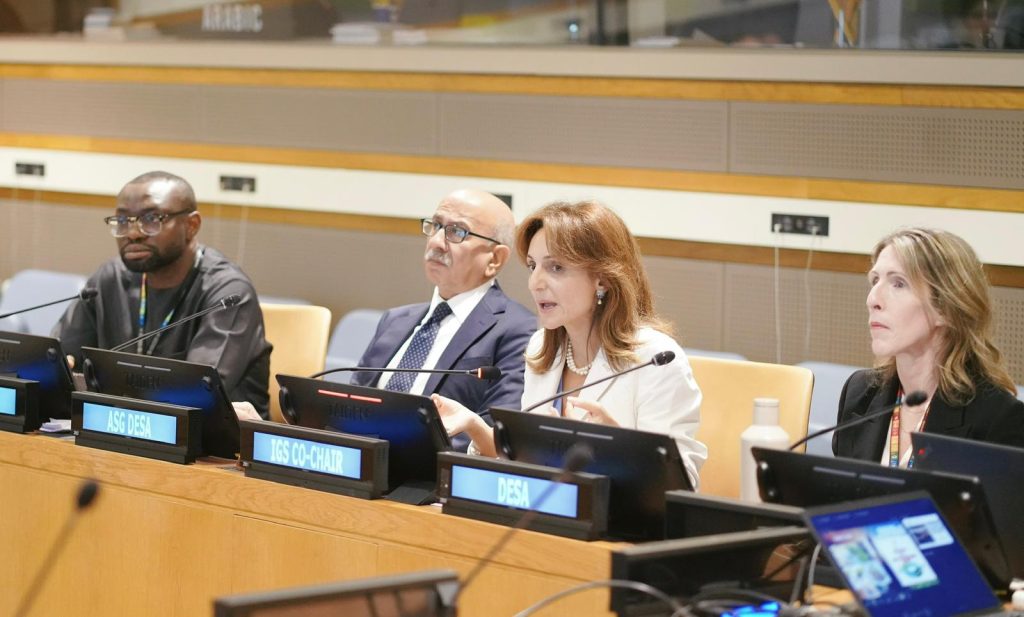
Professor Koundouri speaking at UN headquarters during Climate Week NYC 2025.
Q2. Europe’s Position Ahead of COP30 – How well do you think the EU — and particularly Southern European countries like Greece — are positioning themselves to deliver on the next phase of their climate commitments?
Europe remains a leader in global climate diplomacy, yet the challenge lies in ensuring that ambition translates into implementation. The European Green Deal, Fit for 55, and National Energy and Climate Plans offer a strong framework, but progress remains uneven, especially across Southern Europe.
Greece and other Mediterranean nations are well placed to turn these challenges into opportunities. Through the GCH’s system-nexus approach, which is now the scientific instrument with which UNFCCC Climate Hub is refining NDCs across the globe, we have developed national pathways for 35 countries (EU, Balkans, and the UK) that link energy, water, land, and socio-economic systems to ensure policies are coherent and fair. Our recent reports, “Climate Neutrality Pathways for Greece” and “An Integrated Assessment of the European National Commitments for Climate Neutrality”, demonstrate how holistic approaches can identify bottlenecks, highlight opportunities for multiple co-benefits, guide investment priorities, and strengthen equity across the transition. Having set a solid basis with our work in Europe, we are currently working with Asian and African countries. Strongly believing in open access, we have created a beta version of an online platform, featuring all data, models and results from our work that interested stakeholders can openly use to explore alternative decarbonization pathways for a wide spectrum of countries.
Europe’s comparative advantage lies in its blend of scientific excellence and participatory governance, but reaching net-zero by 2050 will require accelerating innovative finance, regional adaptation, and cross-sectoral policy alignment. As we approach COP30 in Brazil, Europe must lead with an integrated vision that unites decarbonization and resilience, ensuring no region or community is left behind.
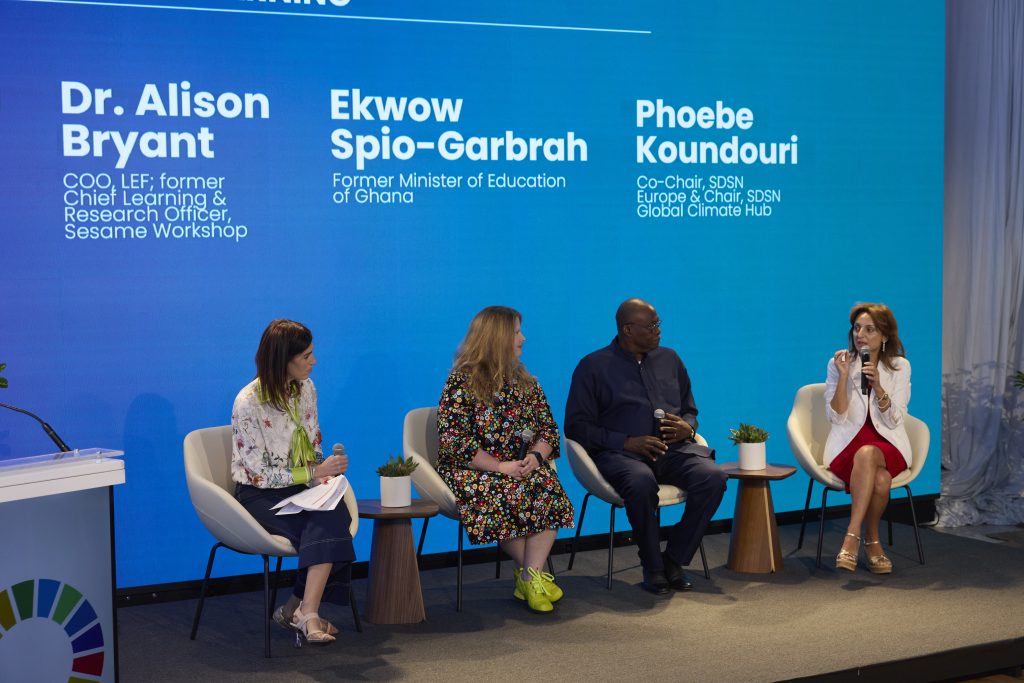
Professor Koundouri speaking at Climate Week NYC 2025.
Q3. Climate Economics and Investment – Are we seeing a shift in how governments and investors value nature and climate risk, or is it still treated as secondary to economic growth?
Climate finance is shifting from being perceived as a cost to being understood as an investment in stability and innovation. Yet, according to the UN, we are far from meeting the financial requirements of the SDGs, with estimates suggesting a shortfall of $2.5 trillion per year, while at the same time savings of around $30 trillion remain unmobilized each year.
A key step forward is the P2R Catalogue for Adaptation Finance, developed under the EU-funded Pathways2Resilience project. The Catalogue presents 55 financial sources, 61 instruments, and 169 global case studies, enabling local governments to design Adaptation Investment Plans and diversify funding beyond limited public sources. It transforms abstract climate goals into bankable, context-specific projects.
At AE4RIA and the Global Climate Hub, we emphasize the need to integrate financial innovation with systemic modeling. The P2R Catalogue complements this mission by turning financial complexity into practical knowledge, helping decision-makers identify suitable instruments for their needs. As our research and the IPCC affirm, the problem is not the lack of capital but the failure to channel it effectively. The real challenge is to reengineer global finance toward climate and human resilience.
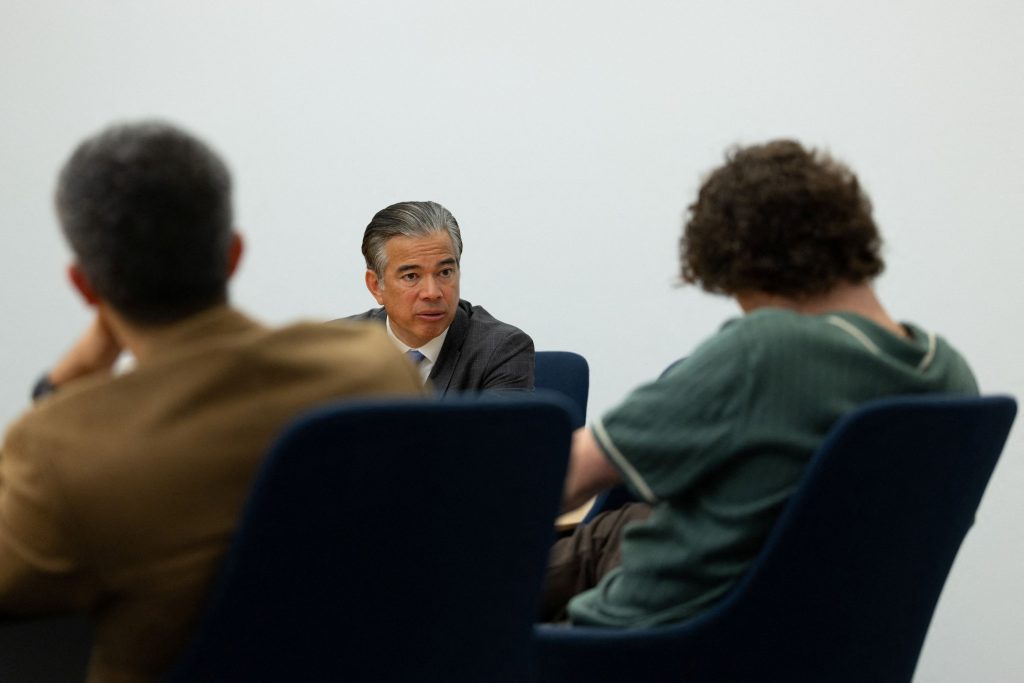
California Attorney General Rob Bonta speaks with journalists during the Reuters Inside Climate Week NYC in Manhattan, New York City, U.S., September 23, 2025.REUTERS/Carlos Barria
Q4. Innovation and Collaboration – How will the lessons from Climate Week shape AE4RI’s priorities for the coming year, and where do you see the greatest opportunity for Greece and the region to lead?
Innovation and collaboration remain central to AE4RIA’s mission, and this year’s Climate Week reaffirmed that progress depends on scaling existing solutions through strong global partnerships. AE4RIA unites more than 200 researchers and 20 partner institutions across Europe and beyond, bridging academia, business, and government to co-create human-centric, systems-based pathways for the SDGs and the European Green Deal.
In 2025, AE4RIA will deepen its focus on AI-enabled decision-support tools and expand its Data Platform and AI Applications Unit within the GCH. This open-access platform integrates national data, models, and digital twins to guide policy implementation, while our research on AI governance and the AGI challenge advances transparency, explainability, and ethical digital transformation. Built on three priorities, AE4RIA reinforces Greece’s role as a regional leader in sustainable innovation and climate resilience, grounded in scientific excellence and collaboration.
Q5. Personal Vision – If you could send one message to negotiators preparing for COP30, particularly those from smaller or climate-vulnerable countries, what would it be?
Looking ahead to COP30 in Brazil, my message to negotiators is clear: trust science, invest in systems, and demand fairness in finance. The pathway to climate neutrality must also ensure justice and resilience, built on open knowledge and equitable access to technology and capital. It must also be co-designed with stakeholders through participatory, science-based processes that integrate local knowledge with advanced modelling and data-driven tools.
The SDGs represent a comprehensive framework for transformation toward sustainable development. Humanity already possesses science, technology, policies, and even financial resources to achieve them. Yet implementation remains strikingly low, primarily due to the lack of accountability within the global multilateral system, which itself is in crisis. While the SDGs provide direction, there is no robust institutional structure explicitly tasked with driving their implementation at scale.
What we urgently need is the creation of an explicit institutional mechanism dedicated to implementing the SDGs, an operational structure capable of aligning global efforts, ensuring effective coordination, and delivering results on the ground. This must be supported by efficient and transparent channels for technology transfer, financial flows, and capacity building, particularly for policymakers and key stakeholders across all sectors and regions.
This is where my recent appointment by UN Secretary-General António Guterres as Co-Chair of the Independent Group of Scientists drafting the 2027 Global Sustainable Development Report (GSDR) becomes central to my vision. The GSDR serves as the United Nations’ flagship science-policy report, bridging science, policy, and society, and will play a key role in shaping the future of the 2030 Agenda. Through this role, I am deeply committed to ensuring that the report translates scientific knowledge into actionable strategies, strengthens accountability mechanisms, and mobilizes governments and institutions toward implementation on the ground.
Climate diplomacy must now evolve from negotiation to collaboration, aligning governments, regions, and the private sector within transparent frameworks. My vision is of a world where climate neutrality is achieved through inclusion, innovation, and co-creation, a world where smaller nations and all stakeholders become co-designers and co-creators of global solutions, empowered by science, partnerships, and shared purpose. This encapsulates my work as Professor at the School of Economics, Athens University of Economics and Business and Visiting Professor at the Department of Earth Sciences, University of Cambridge, and an economist renowned for pioneering human-centric, interdisciplinary, mathematical systems that enable the sustainable interaction between nature, society, and the economy, a vision grounded in the integration of science, policy, and stakeholder co-design for a just and resilient future.
Prof. Dr. Phoebe Koundouri, Athens University of Economics and Business & University of Cambridge; Co-Chair, United Nations IGS Global Sustainable Development Report; Chair, World Council of Environmental and Resource Economists Associations; Director, AE4RIA