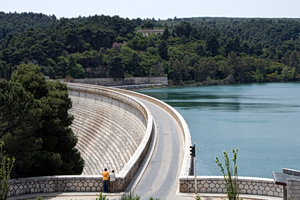
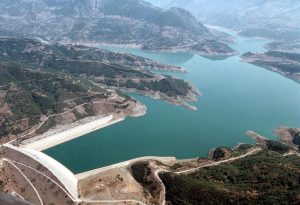
Water reserves supplying the greater Athens-Piraeus agglomeration have risen sharply in recent months, offering significant relief for the region’s water security after a prolonged period of lower-than-average precipitation.
According to the latest data, total reserves reached 771.8 million cubic meters Wednesday, up from 640.6 million cubic metres a year earlier—an increase of more than 131 million cubic meters. Compared with the start of the hydrological year on Oct. 1, 2025, when reserves stood at just 402.1 million cubic meters, volumes have nearly doubled.
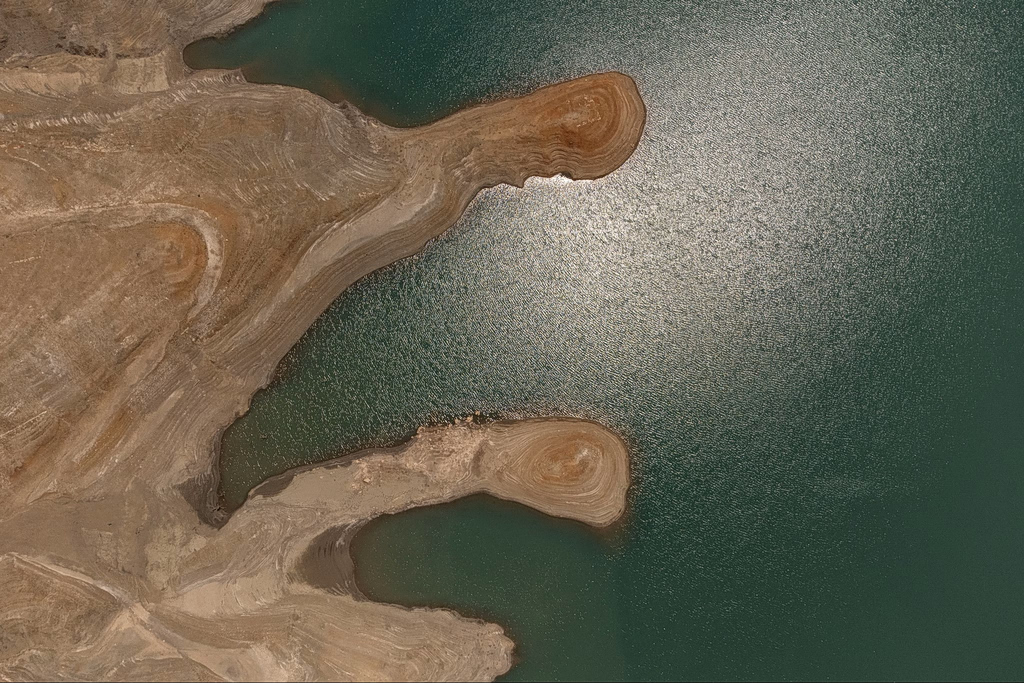
An aerial view of the Mornos reservoir in south-central Greece.
Winter Storms Refill Key Reservoirs
The rebound is largely attributed to successive winter storms over the recent period, which brought heavy rainfall and flooding in parts of Greece. While disruptive, these conditions significantly replenished the main reservoirs managed by EYDAP, including the Marathon Reservoir, Lake Yliki, Mornos Reservoir and the Evinos River network.
Water levels have now surpassed 700 million cubic meters for the first time since August 2024—a threshold closely watched by Greek authorities.
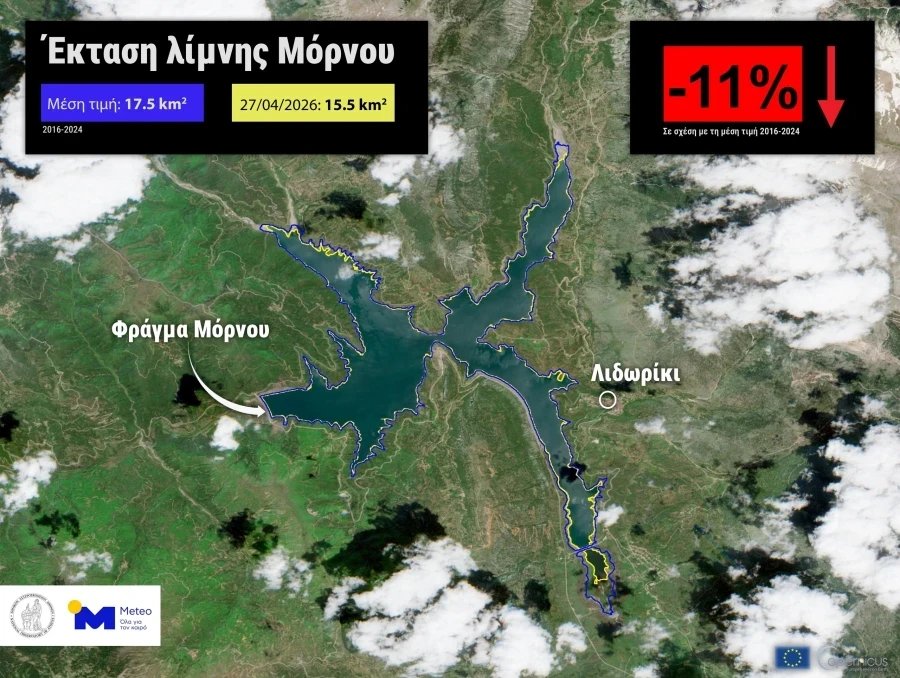
Mornos Recovery
Particular attention is on the Mornos Reservoir, a primary water source for the Greek capital. Satellite data show its surface area reached 15.5 km² on April 27, 2026, up from 13.0 km² in February, though still below the long-term average of 17.5 square kilometers (2016–2024).
The rapid recovery over just two months highlights the scale of recent inflows, even if levels remain about 11% below average.