 Μake us preferred on Google
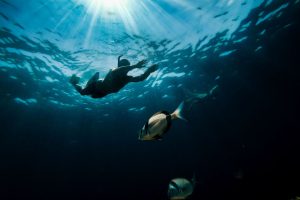
 There is a moment, just after you dip your head beneath the surface of the Aegean or the Ionian, when everything stands still. The noise of the beach disappears. In its place: stillness, and the relentless sun illuminating every corner of the deep blue sea. The slow drift of seagrass, the golden sand, the tiny fish darting away. It is the Greece people carry in their minds all winter.
In these same waters, however, divers and cleanup groups are increasingly finding marine debris left behind by abandoned “ghost” fish farms. Nets, polysterene, rubber rings, rope- most of the fish farm waste is plastic. Over the past four years, NGOs and environmental foundations have removed 310 tons of such waste from “ghost farms” around Ithaca, Patras, Menidi, and Methana. Researchers say the debris they have discovered and removed is only a fraction of what remains.
Fish farm waste, like all marine waste, does not stay put. It washes up on beaches, litters the seabed, and drifts into shipping lanes, snagging smaller boats. While Greece seems unable to tackle the problem, organizations that have tried to clean it up at their own expense have been sued for their efforts. Veronika Mikos, Director of a global nonprofit dedicated to removing marine litter around the world and active in Greece, known as Healthy Seas, says the lack of accountability for fish farming waste in Greece is unlike anything they have encountered.
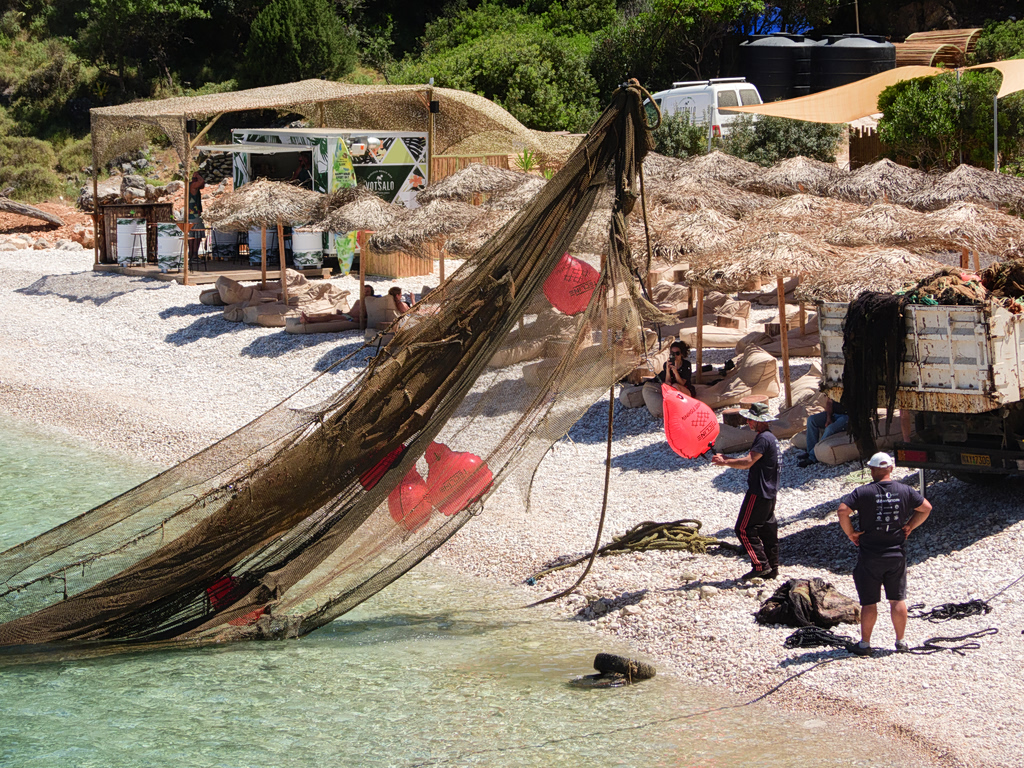
Healthy Seas removes a net from an abandoned fish farm. Credit: Health Seas
From isolated sites to a wider pattern
When Healthy Seas pulled 76 tons of debris out of the waters around Ithaca in 2021, the Netherlands-based foundation thought it had solved an isolated problem. “We thought we’d solved a problem, until a week later, after the cleanup, the phone calls started to come in from Rhodes, from the Peloponnese, from Thessaloniki. People were saying that they also had an abandoned fish farm there,” Mikos tells TO BHMA International Edition. “That’s when we realized that we had actually found a hornets’ nest.”
Subsequent reporting and fieldwork pointed to a wider pattern. “It’s not regional,” Mikos says. “We have seen the same in Attica, in other areas. It’s a national problem.”
Healthy Seas’ Deputy Director and Diving Manager, Pascal van Erp, describes the scale of the problem in western Greece. “The most comprehensive overview we have is in western Greece, where we surveyed the coastline from Patras to Igoumenitsa. In that zone, we identified 150 sites polluted with aquaculture gear. That does not mean 150 entire fish farms, but 150 separate locations where the pollution originated from aquaculture.”
Assessing the scale
Greece has no official reporting system to record the extent of fish-farm marine waste. One of the few organizations attempting to systematically document the problem is OZON, a small Greek nonprofit specializing in marine pollution led by Anastasios Filippides, which partners with Healthy Seas.
Funded by a range of Greek foundations, OZON says its findings are unequivocal. “The results of our site-restoration projects with Healthy Seas, together with the results of OZON’s impact surveys, demonstrate that the sites of present or former fish farm activity are heavily infested with debris lying on the seabed, washed ashore, or abandoned on the coastline,” says Filippides.
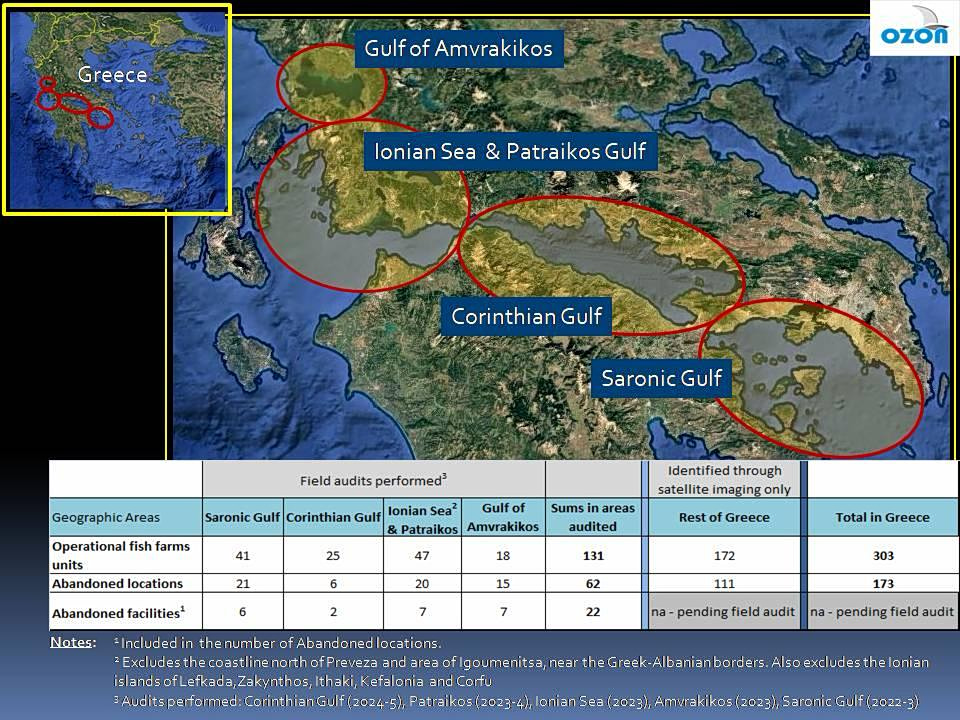
Credit: OZON report
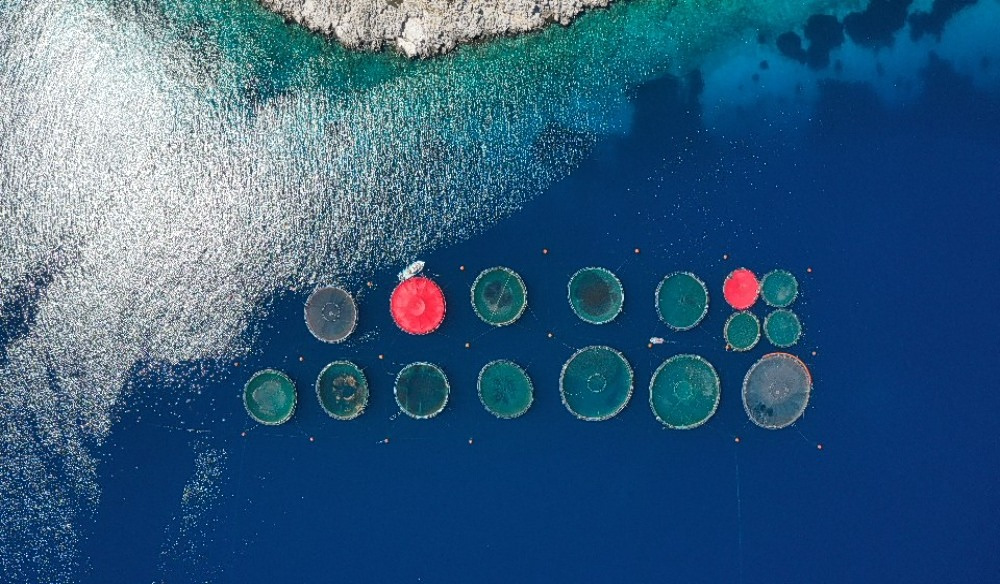
Using satellite imaging, OZON has identified 303 locations of apparently active fish farm operations and 173 locations that have been abandoned or show signs of former activity with visible or potential environmental impact. These range from facilities that are “currently inactive with all assets still in place,” to those “completely abandoned leaving behind assets and visible debris,” to sites abandoned after relocation where “no visible debris or assets” remain but concerns persist about seabed and coastline damage.
Yet even this mapping has limits. “In all cases, our experience from the areas where we have conducted field investigations and surveys reveals that the picture of a location or a facility in the field can be very different from that depicted in satellite images,” Filippides notes. “It is often impossible to evaluate the operating status or condition of a facility without a field audit.” As a result, the true scale of abandoned aquaculture infrastructure remains unclear.
That being said, OZON says it has conducted detailed field audits of the Gulf of Amvrakikos, a portion of the Ionian Sea and Patraikos Gulf, the Corinthian Gulf and Saronic Gulf over the period 2022-2025, and confirms the existence of 62 abandoned fish farm locations in these areas alone.
Decades of neglect
The Ithaca cleanup exposed how long the problem had been allowed to continue unaddressed.
According to Mikos, the local municipality had spent ten years trying to get someone to act. What made it worse, she says, is that the municipality never wanted the fish farm to begin with. The local council had voted against its establishment in the 1980s, only to be overruled at the regional level. The company eventually went bankrupt, abandoned everything, and left the community with a mess it had never asked for.
“It’s a deeply unfair situation,” Mikos says. “The regional and national government imposed something, and then the local government was left to live with the consequences.”
The environmental damage was significant. The area originally had a thick covering of Posidonia seagrass, a marine plant that absorbs more CO₂ per hectare than many forests. According to Mikos, aquaculture debris had severely degraded it.
“We saw the situation, and it literally broke our hearts,” Mikos says. When Healthy Seas offered to help, it took a year for the Corfu regional environmental office to authorize the cleanup.
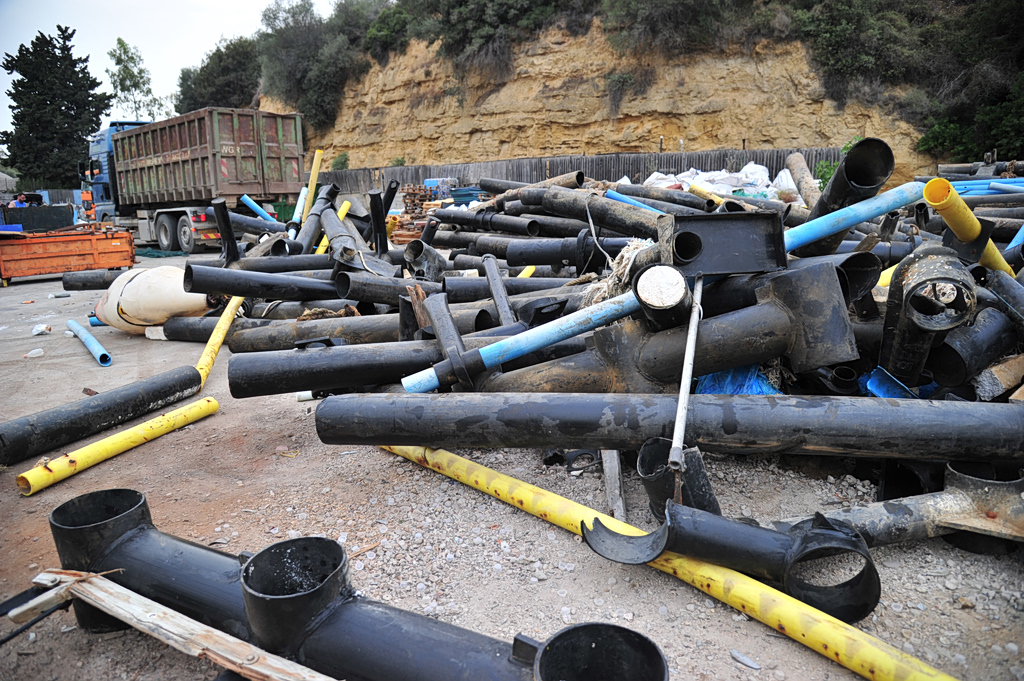
Fish farming open net cage waste on shore as part of abandoned fish farm clean up.
“The facility had already been abandoned, the company had gone bankrupt, the license had been revoked,” Mikos says. “Which means the government should have taken responsibility for cleaning it up. But they didn’t have the money, the capacity, the knowledge, and perhaps the will. When we raised our hands and said we wanted to help, it still took a year to get the green light to clean it up–at our own expense.”
Who pays the price?
Both OZON and Healthy Seas have faced legal obstacles to their cleanup work. Filippides describes the situation plainly: “We clean and restore nature from the mess that fish farms leave behind: abandoned facilities, rotting equipment and debris that the Greek authorities do not want to know about. We perform these difficult, labor-intensive and dangerous tasks as unpaid volunteers, with all the licences and permissions required by the authorities. Yet we are sued by the polluters as vandals and thieves. This unfortunate situation is a result of the state’s profound inability to enforce law and order in the aquaculture sector.”
The case he is referring to began when an abandoned fish farm near the central Greece region of Nafpaktia left behind an estimated 50 tons of waste. According to documents seen by TO BHMA International Edition, in February 2021, the Decentralized Administration of the Peloponnese, Western Greece and the Ionian revoked the facility’s operating license and gave the owner six months to remove its equipment and restore the site. The deadline passed. The site stayed dirty.
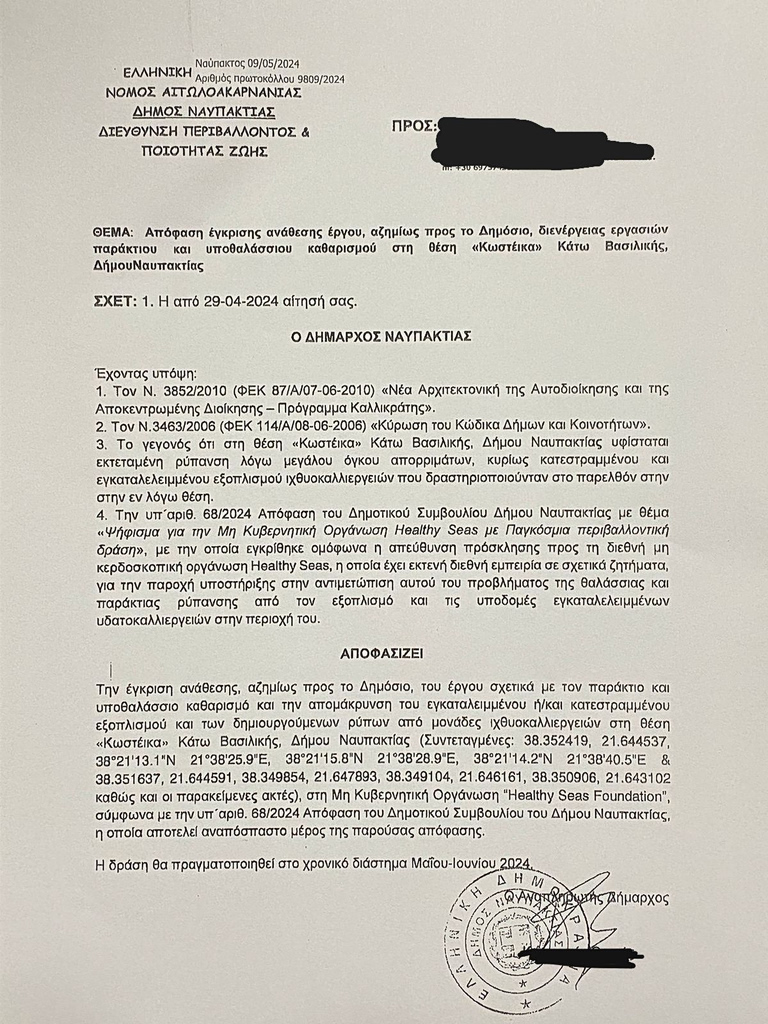
Official notification from the municipality of Nafpaktias granting Healthy Seas permission to conduct a clean-up of an abandoned fish farm. This clean-up eventually led to a legal dispute and accusation that Healthy Seas and OZON stole the equipment. Document provided by OZON.
Eventually, Healthy Seas were formally requested to step in. Alongside OZON, the two organizations carried out the cleanup “under the auspices of the Dutch government, with full official authorization from Greek authorities”, according to Mikos.
Six months after the cleanup, the owner reported to the police that his fish farm had been robbed. In the lawsuit that TO BHMA International Edition has seen, the former owner admits that the fish farm license was revoked in 2021, but claims that it had filed an appeal to this decision, and that at the time of the removal a decision was still pending before the Hellenic Council of State.
The former owner is seeking €500,000 in compensation for assets which, according to OZON, were not present at the site at the time of the clean-up. Among those facing charges are Filippides, a Healthy Seas representative, and the deputy mayor of Nafpaktia. The case is ongoing.
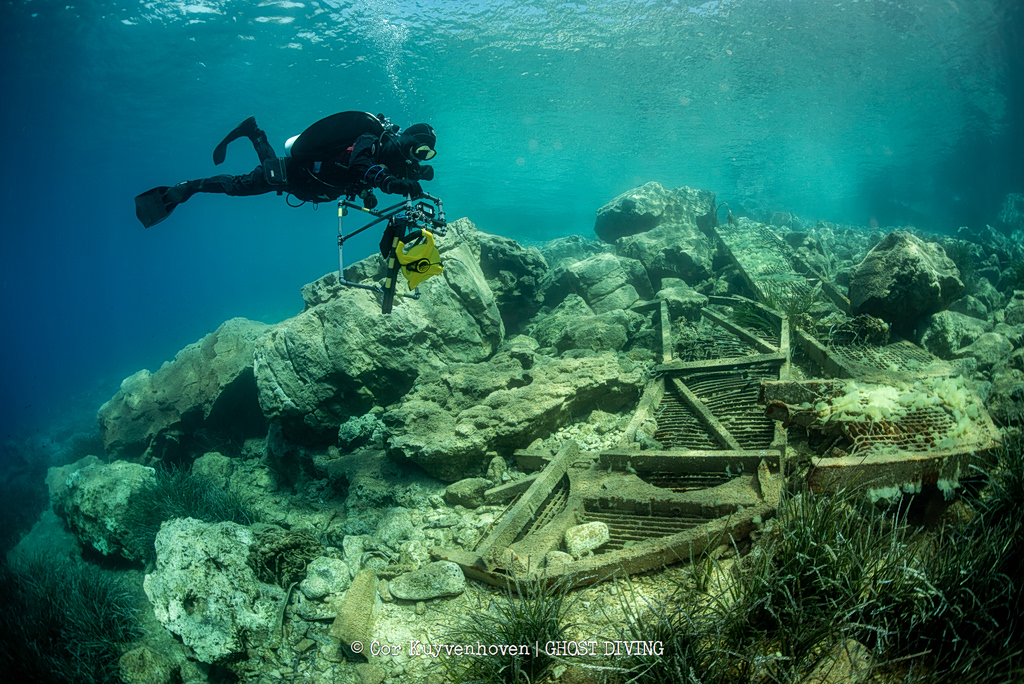
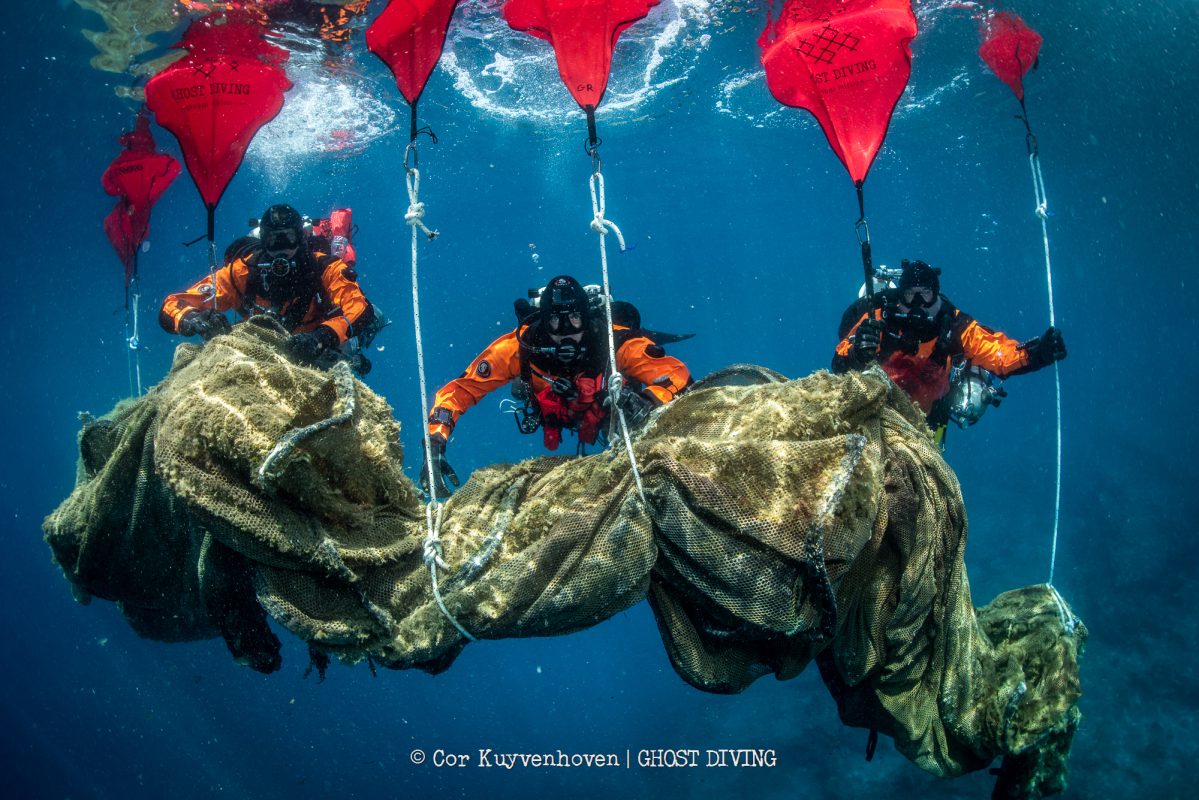
An image of fish farm waste on the sea floor. Credit: Cor Kuyyenhoven, Ghost Diving
“The person illegally storing waste on the seabed, on the surface of the sea, on the coastline, without a valid license, is not being held responsible,” Mikos says. “The people who cleaned it up with a permit are. This is beyond absurd.” Healthy Seas has conducted activities in 20 countries and, as Mikos says, “You would never see this anywhere else.”
That being said, the state filed its own case against the fish farm owner in 2021 for allegedly operating without a valid license and degrading public waters in violation of Greek law, as well as a separate charge of unlawful occupation of public property. The preliminary investigation has concluded, and the trial is scheduled for December 2026.
The impact of ghost fish farm waste
For those working underwater, the scale of what has been left behind is not always immediately visible. “Sometimes you see a small shape that looks like part of a net,” van Erp says. “When you start digging and pulling, you find a whole net buried beneath the sand. In one instance, we pulled out a five-ton net.”
Not all of what lies on the seabed got there by accident. At Methana, the Healthy Seas team found the large open net rings half-submerged and stripped of their nets. On the other side of the bay, three or four rings showed clear signs of having been deliberately sunk. “You could see holes cut into them every few meters so the whole structure would go down,” van Erp told us.
The Ithaca site told a different story: one of abandonment rather than concealment. “They went bankrupt and simply walked away,” van Erp says. “Then a storm came and tore the rings apart. Half of it sank, the other half snapped loose and drifted out to sea.”
In some cases, debris floats far afield, drifting into shipping lines and jeopardizing the safety of passing boats, big and small. “About three years ago, in the Ionian shipping lane near Patras, a speedboat hit a floating fish-farm ring at speed, flew into the air, and landed inside the ring” Mikos tells TO BHMA International Edition. “The ring was sixteen meters in diameter, the boat about ten meters long. When the skipper called the coast guard, he was told to make his way to the nearest shore. He towed the ring behind his boat for hours.”
“People really underestimate how serious this problem is,” she says. “As long as there is no death or major injury, it seems no one takes it seriously, even though there have already been injuries and vessel accidents.”
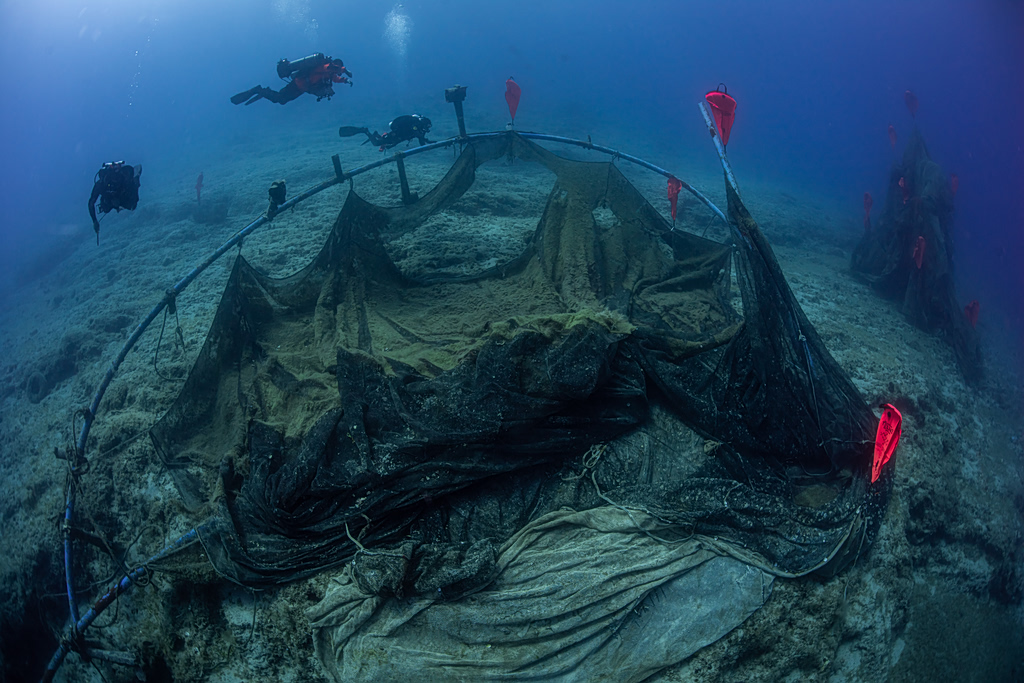
Removal of fish farming net from the bottom of the sea off Ithaca, Greece. Credit: Cor Kuyvenhoven
A regulatory vacuum
Across most of Europe, van Erp says, this situation would be unthinkable.
“If you leave anything behind from your business at sea, you won’t get away with simply abandoning it. Everybody understands that the government will come after you, and if you don’t respond, they’ll clean it up for you and send you the bill.”
The gap is not just cultural. It’s structural. A proper marine cleanup can cost up to six figures. The fines levied on companies that pollute and abandon their sites range from €3,000 to €10,000, says Mikos. The arithmetic alone makes it clear there is no incentive to comply.
What Greece also lacks is a mandatory insurance mechanism, whereby fish farms would be required to set aside cleanup funds when they receive their operating license. It’s the same principle as a rental deposit.
“It exists in other countries,” Mikos says. In Spain, she notes, the government issues a cleanup order, opens a tender, and pays for the work itself—recovering costs from insurance or the bankrupt company where possible, but not leaving the problem to nonprofits and local communities.
Mikos argues the issue with marine waste also violates EU law—specifically, the polluter-pays principle enshrined in EU environmental directives. But the burden and cost of cleanup falls on whoever is willing to bear it.
“In Northern Europe and other EU member states, the government takes responsibility and tells the fish farmer: this was your land, you have been irresponsible. You have polluted it, you are not taking care of it, so you no longer get to keep it,” explains Mikos.
At Methana, the team encountered a different kind of obstruction. The source of the pollution was not in dispute—there was only one fish farm in the bay, and its disintegrating rings were washing polystyrene along more than ten kilometers of coastline, affecting not just Methana but the nearby island of Poros, too. Yet when Healthy Seas arrived to clean up, the fish farm owner wouldn’t allow them to set foot on “his land”, the most practical access point for the operation. The team had to bring in additional boats and work entirely from the sea, while the owner watched from the shore.
According to Healthy Seas the local mayor declined to provide a letter supporting their request to access land for the clean-up.
“I just can’t believe it,” van Erp says. “These areas depend on tourism. How can they accept their home being polluted because of personal relationships? That defies common sense.”
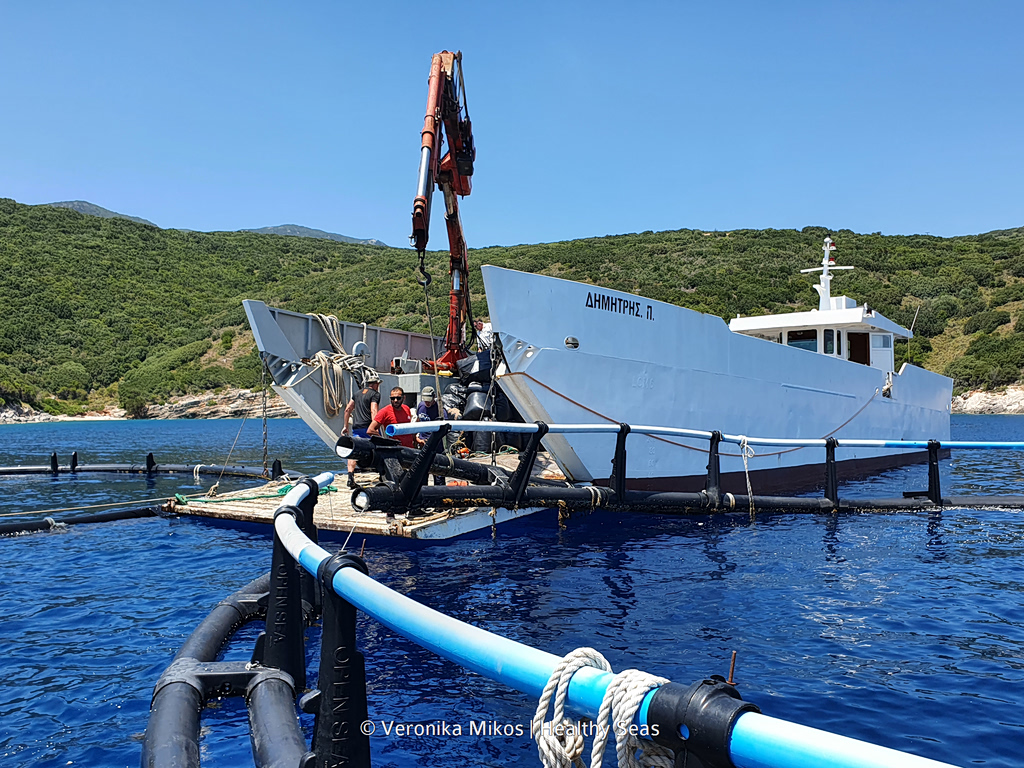
Healthy Seas clean-up of fish farm waste in the sea, facilitated by the use of scientific vessels. Credit: Veronica Mikos
Signs of recovery
There is some cause for optimism.
“Every time we go back to a site we have cleaned, I am amazed by the diversity of the marine life I see,” van Erp says. “Areas where I personally removed nets are starting to be recolonized by seagrass. It is definitely recovering.”
On Ithaca, locals have reported that water visibility—described as “milky” during the farm’s years of operation—has improved significantly since activity ceased, and that the Posidonia grass is returning.
But recovery depends on removing every source of pollution. On Ithaca, the ghost farm’s land-based infrastructure—buildings, construction materials, equipment—continues to degrade with each winter storm, releasing new debris into the water.
“It is an endless game of cat-and-mouse,” Mikos says. “We clean the sea while the source on land remains untouched.”
What comes next
At the European level, aquaculture expansion is framed as both an economic opportunity and a component of food security. EU environmental rules are designed to ensure that growth takes place within ecological limits, with responsibility for implementation resting with member states.
In practice, the effectiveness of these frameworks depends on monitoring and enforcement. As Greece continues to expand its aquaculture sector—the country is the EU’s largest producer of farmed sea bass and sea bream—the question is not only how new farms are approved and managed, but what happens to existing sites, both active and abandoned, over the years and decades that follow.
The answer, so far, has all too often been nothing –until someone else steps in.
“What is needed,” Mikos says, “is willingness and engagement from government. The solutions are not far away.”
Van Erp puts it more simply: “It’s common sense. The polluter is responsible for what he polluted. I don’t understand why that is so difficult to comprehend.”
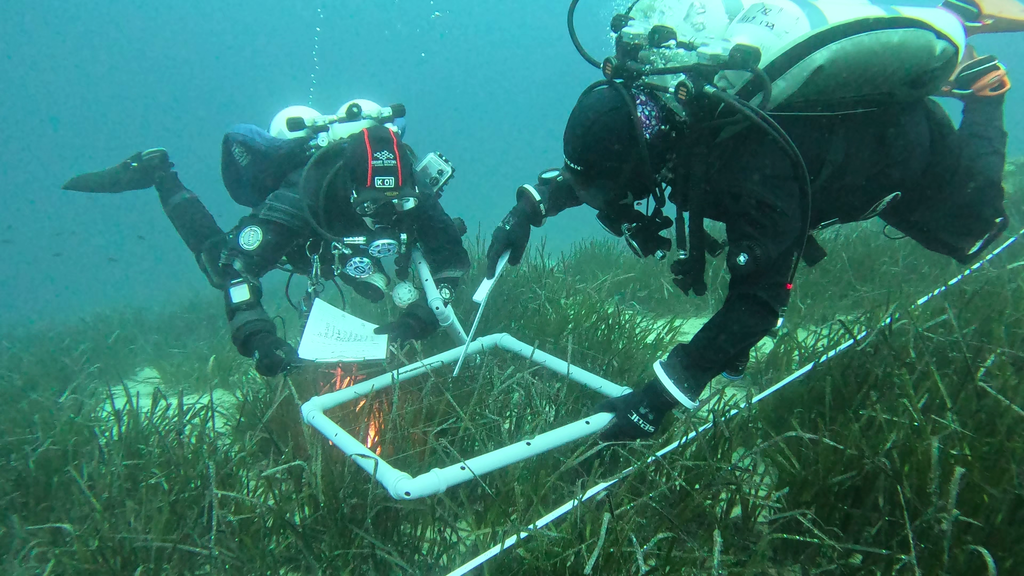
Credit: Healthy Seas Foundation