 Μake us preferred on Google
 A central historic route in Athens has officially reopened after six years of closure, restoring traffic flow along a key corridor that connects some of the city’s most important archaeological landmarks.
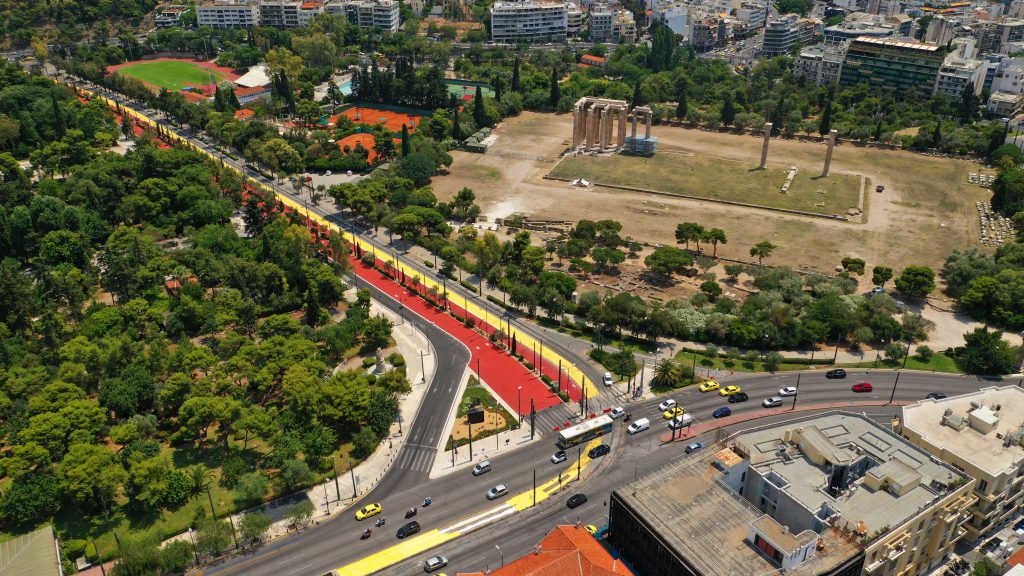
The avenue, known as Vasilissis Olgas Avenue, runs through the heart of the Greek capital, linking the Panathenaic Stadium with the Temple of Olympian Zeus and passing near the Zappeion exhibition hall. It had remained closed for extensive redevelopment works and prolonged delays.
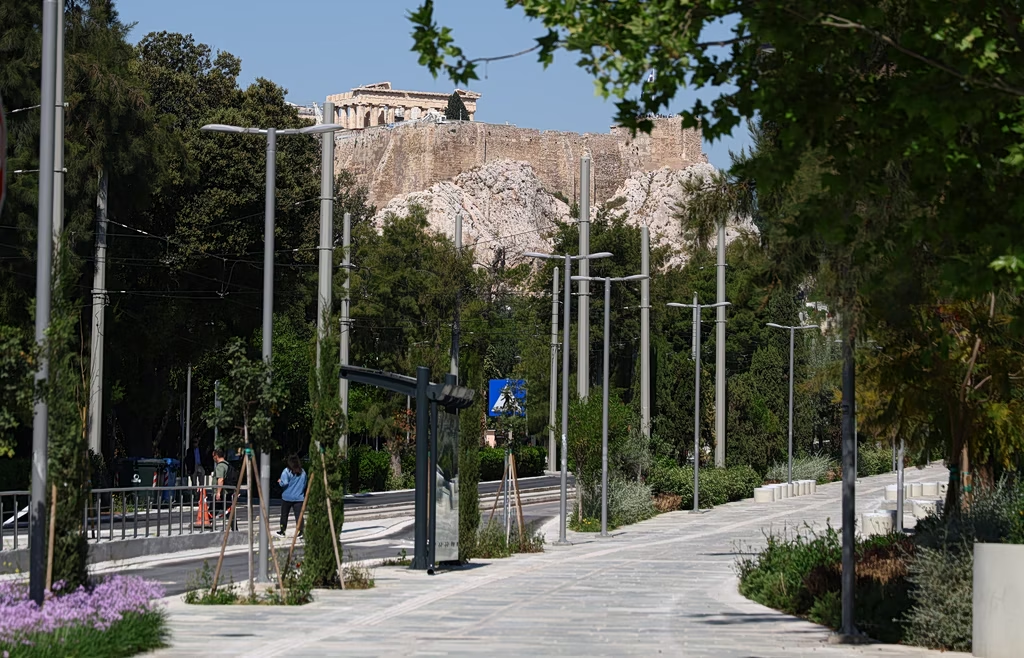
Following a revision of the original design, the road has reopened as a low-speed, two-way street with a maximum speed limit of 20 km/h. The initial plan had called for full pedestrianization of the area.
The reopening has sparked renewed political debate over the project’s direction and purpose. Athens Mayor Haris Doukas described the development as a “vindication for the citizens of Athens,” arguing that public needs could not be ignored in urban planning decisions.
He also criticized the previous municipal administration, led by Kostas Bakoyannis, claiming the original plan risked creating what he described as a “privatized road” benefiting a local tennis club. Bakoyannis had previously visited the site alongside Prime Minister Kyriakos Mitsotakis and Culture Minister Lina Mendoni during earlier phases of the project.
The Prime Minister, Kyriakos Mitsotakis, said the reopening marked the realization of a long-standing vision for the capital. He highlighted the cultural importance of improving access between Athens’ archaeological sites, noting the significance of the project for both residents and visitors.
The avenue had been closed for six years in total, including more than three years during which no construction work was carried out, contributing to significant delays in its completion.