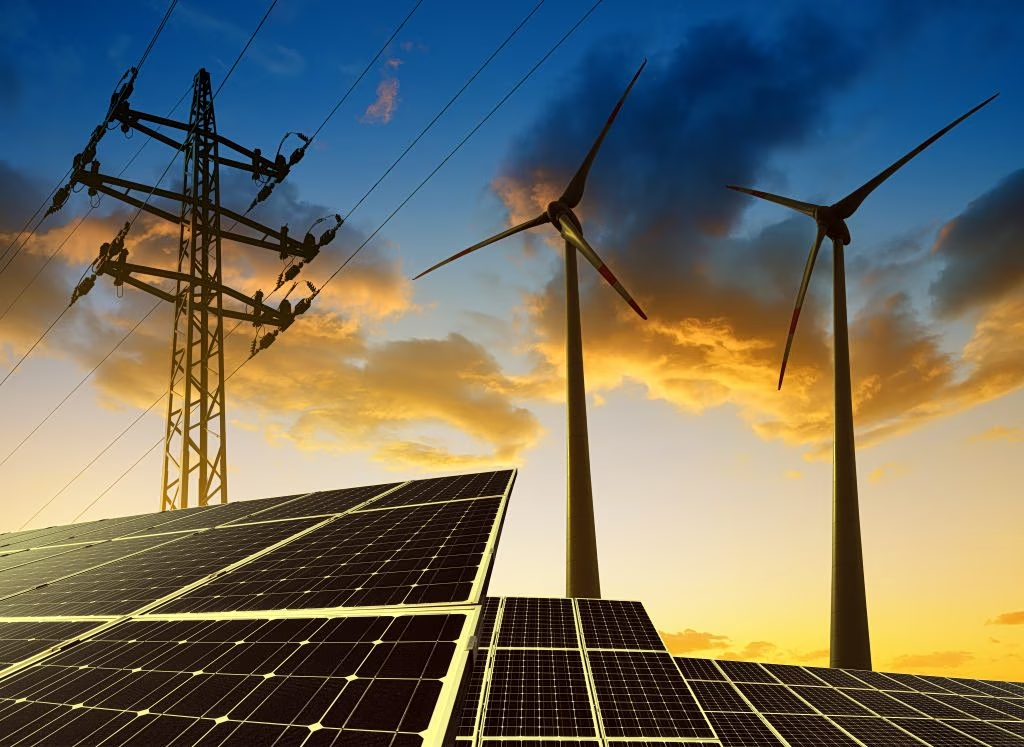
Greece is set to allow households to install small balcony-mounted solar panel systems for the first time under a new regulatory framework designed to expand renewable energy self-consumption and help consumers reduce electricity costs.
The Ministry of Environment and Energy has launched a public consultation on a ministerial decision governing the development, installation and grid connection of self-consumption renewable energy systems. The consultation will remain open until July 20.
Balcony solar systems introduced
A key feature of the proposal is the introduction of balcony solar systems with a maximum capacity of 800 watts.
The systems will be intended exclusively for covering a household’s own electricity needs and will not be allowed to feed electricity back into the grid. The framework also includes safety requirements aimed at protecting both the electricity network and residential electrical installations.
The ministry said the changes address practical issues that emerged under the existing self-consumption framework while giving consumers greater flexibility and new opportunities to generate their own renewable electricity.
Easier shared self-consumption
The proposed rules also make it easier to develop collective self-consumption schemes, allowing apartment buildings and residential complexes to share renewable energy production more efficiently.
Consumers participating in self-consumption schemes would be able to be represented by different electricity suppliers. The proposal also allows, under certain conditions, transitions between different self-consumption models and enables a single electricity connection to participate in more than one renewable energy installation.
Transitional provisions are included to ensure existing self-consumption systems can move to the new framework without additional costs while allowing users to continue benefiting from their installations.
Smart meters and digital services
The new framework is accompanied by measures aimed at modernizing the self-consumption system.
These include accelerating the rollout of smart electricity meters for participants and establishing an Electronic Self-Consumption Registry to digitize procedures and improve information sharing between the authorities involved.
Strong growth in self-consumption
According to figures from the Ministry of Environment and Energy, Greece has installed 37,407 self-consumption renewable energy systems since 2020, with a combined capacity of 1,070 megawatts.
The ministry said this represents significant growth compared with the 2015-2019 period, when only 1,772 systems with a combined capacity of 36 megawatts entered operation.
The public consultation on the proposed regulation will run until July 20, 2026, before the framework is finalized.