
 Μake us preferred on Google
 Greece has launched a public consultation on a new spatial planning framework for renewable energy projects that would significantly tighten where new wind and solar installations can be developed across the country.
The draft framework, unveiled by the Ministry of Environment and Energy, introduces new restrictions aimed at balancing the expansion of renewable energy with environmental protection, cultural heritage preservation and land-use planning.
For the first time, the government is simultaneously advancing three separate spatial planning frameworks covering tourism, industry and renewable energy. According to the ministry, the coordinated approach is designed to avoid land-use conflicts and create a more integrated development strategy.
New Restrictions on Solar Projects
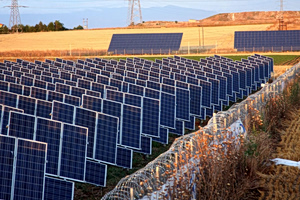
Under the proposed rules, new photovoltaic installations would no longer be permitted in a wide range of environmentally protected areas.
NEWSLETTER TABLE TALK
Never miss a story.
Subscribe now.
The most important news & topics every week in your inbox.
The restrictions would apply to all Natura 2000 protected sites, forests and forested land, Ramsar wetlands, national parks, protected natural monuments, scenic landscapes and designated roadless areas. Solar projects would also be prohibited in protected archaeological zones, areas containing significant cultural heritage sites, protected terraces and bathing beaches.
The framework would additionally introduce new siting criteria. New solar projects that have not yet received environmental approval would be limited to a maximum land coverage of 1.5% per regional unit.
Minimum distance requirements from residential areas would also be established, while visual impact assessments would become mandatory for projects located near major cultural heritage sites, archaeological areas and traditional settlements.
Wind Farms Barred from Major Metropolitan Areas
The draft rules also impose sweeping restrictions on new wind energy developments.
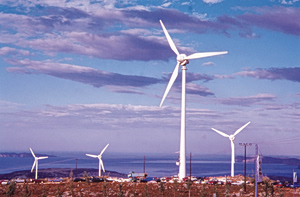
New wind farms would no longer be allowed in the metropolitan regions of Athens and Thessaloniki, nor in areas located above 1,200 meters in elevation.
Additional exclusions would cover Ramsar wetlands, protected natural landscapes, national park core zones, strict nature protection areas, roadless regions and bathing beaches.
The proposal would also prohibit new wind projects on islands smaller than 300 square kilometers, except when intended to meet essential local public-interest needs such as desalination facilities. Restrictions would further apply to areas with intensive tourism development and designated tourism and leisure zones.
Within bird protection zones that form part of the Natura 2000 network, wind projects would only be permitted under exceptional circumstances and only if specific environmental conditions are met.
The framework would also require wind farms to be located exclusively in designated suitability areas with adequate wind resources and compliance with all environmental and planning restrictions.
For island regions, the maximum land coverage by wind energy installations would be capped at 4% of the area of each municipal unit.
Existing Projects Exempt
The proposed rules would not affect renewable energy facilities already in operation. Projects that have completed environmental licensing procedures or have already received key administrative approvals before the start of the public consultation would also be exempt.
Rooftop solar systems, large hydropower plants, pumped-storage facilities and several categories of small renewable energy projects would remain outside the scope of the new framework.
The public consultation process will remain open until June 24, 2026, after which the government will review feedback before moving forward with the final version of the renewable energy spatial planning framework.