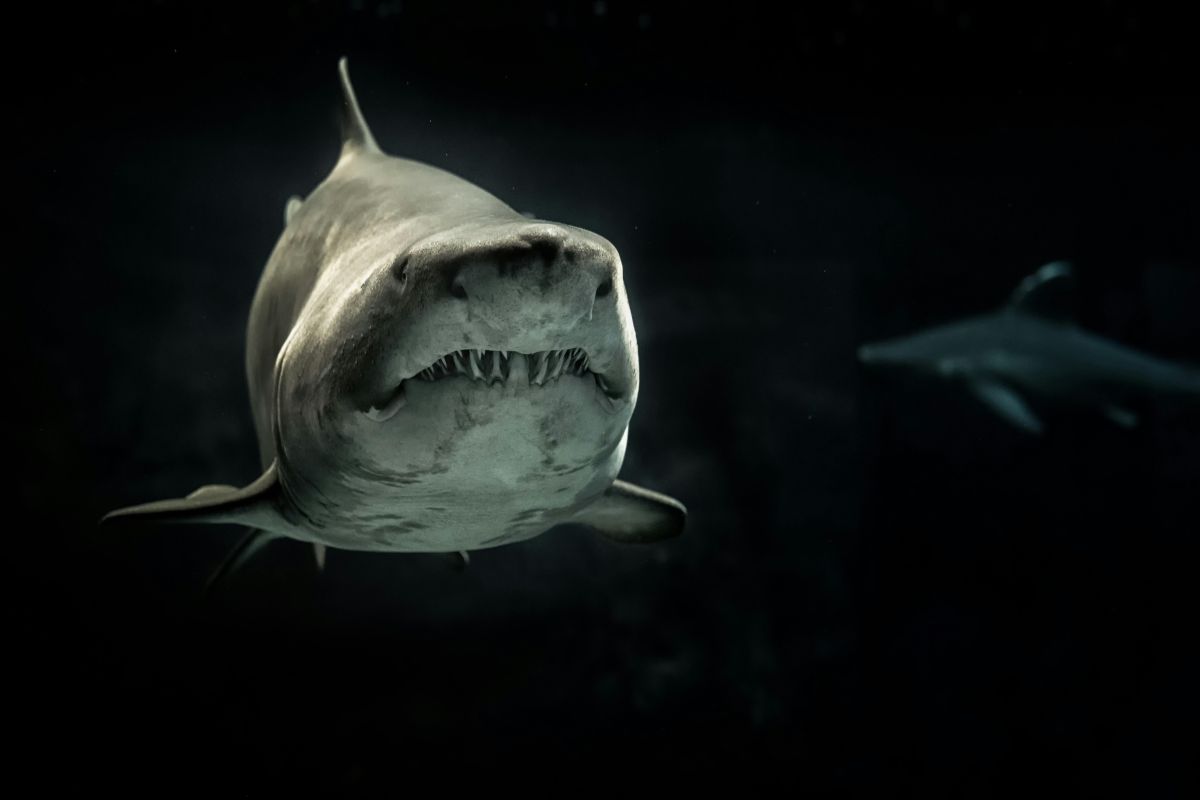
Sharks’ teeth are among nature’s most formidable tools — sharp, regenerating, and vital for survival. Yet new research from Heinrich Heine University in Germany suggests these very weapons may be vulnerable to the changing chemistry of the oceans that are their home.
Ocean acidification: an invisible threat
Oceans absorb about 30% of the carbon dioxide (CO₂) released into Earth’s atmosphere, acting as vast carbon sinks. As CO₂ dissolves in seawater, it reacts to form carbonic acid, increasing hydrogen ion concentration and lowering the ocean’s pH — a process known as ocean acidification.
Currently, the global average ocean pH is around 8.1, similar to baking soda. But projections suggest that by 2300, it could fall to 7.3, making seawater nearly ten times more acidic than today.
According to marine biologist Maximilian Baum, who led the study, such acidification could weaken sharks’ teeth, which — despite their continuous regeneration and adaptation for cutting — are chemically vulnerable to corrosion.
Testing shark teeth under future conditions
To investigate, researchers collected over 600 naturally shed teeth from Carcharhinus melanopterus (blacktip reef sharks), a key species in tropical coral ecosystems. Sixteen of the most intact teeth were placed in artificial seawater tanks: one at pH 8.2 (today’s level) and another at pH 7.3, simulating future acidity.
The teeth exposed to more acidic water developed visible cracks and pits. Every part of the tooth showed damage — crowns eroded, roots weakened, and the serrated edges that make shark bites so effective lost fine detail.
Interestingly, the researchers observed that tooth perimeter appeared to increase under high acidity. However, this was due not to swelling but to irregular surface roughness from corrosion. While rougher edges might theoretically improve cutting ability, they also make teeth more brittle and prone to breakage.
Beyond teeth: wider impacts on sharks
The study also warns that acidification could affect dermal denticles — tooth-like scales covering sharks’ bodies. These structures enhance protection and hydrodynamic efficiency. If corroded, sharks may swim less efficiently, expend more energy, and become more vulnerable to predators and environmental stress.
Caveats and next steps
Researchers note that their findings are based on shed, non-living teeth. The effect of acidification on living teeth inside sharks’ mouths, which are exposed to saliva and biological repair processes, may differ. Further research is needed to confirm how ongoing ocean acidification will affect living shark populations.