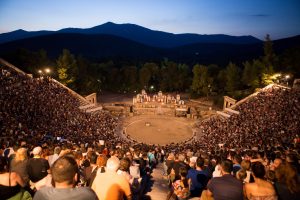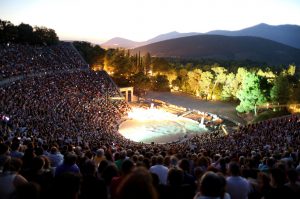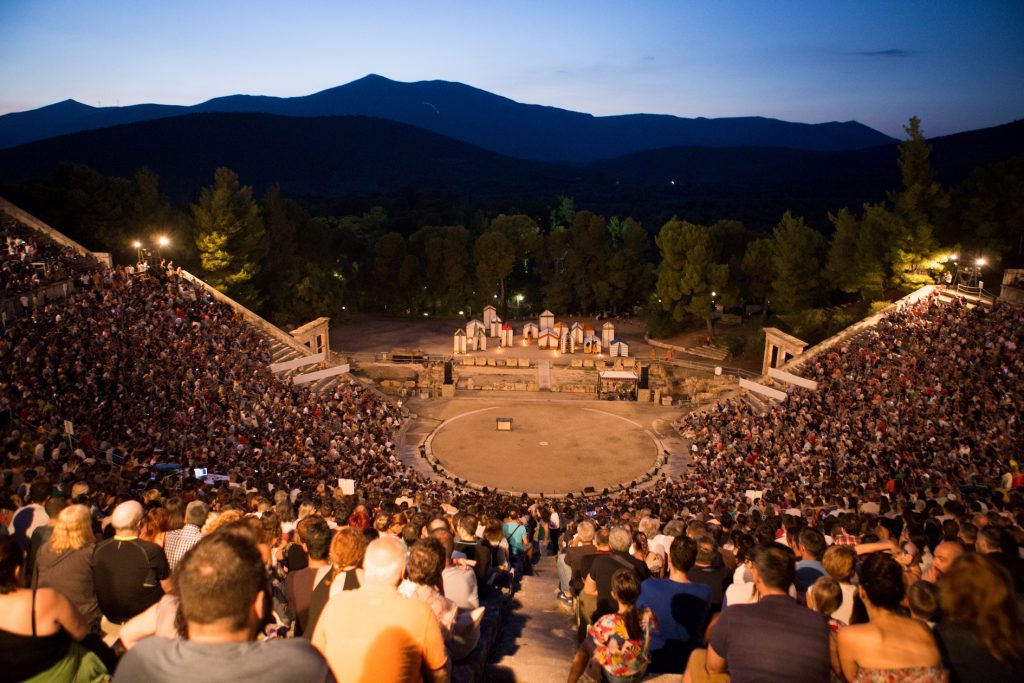
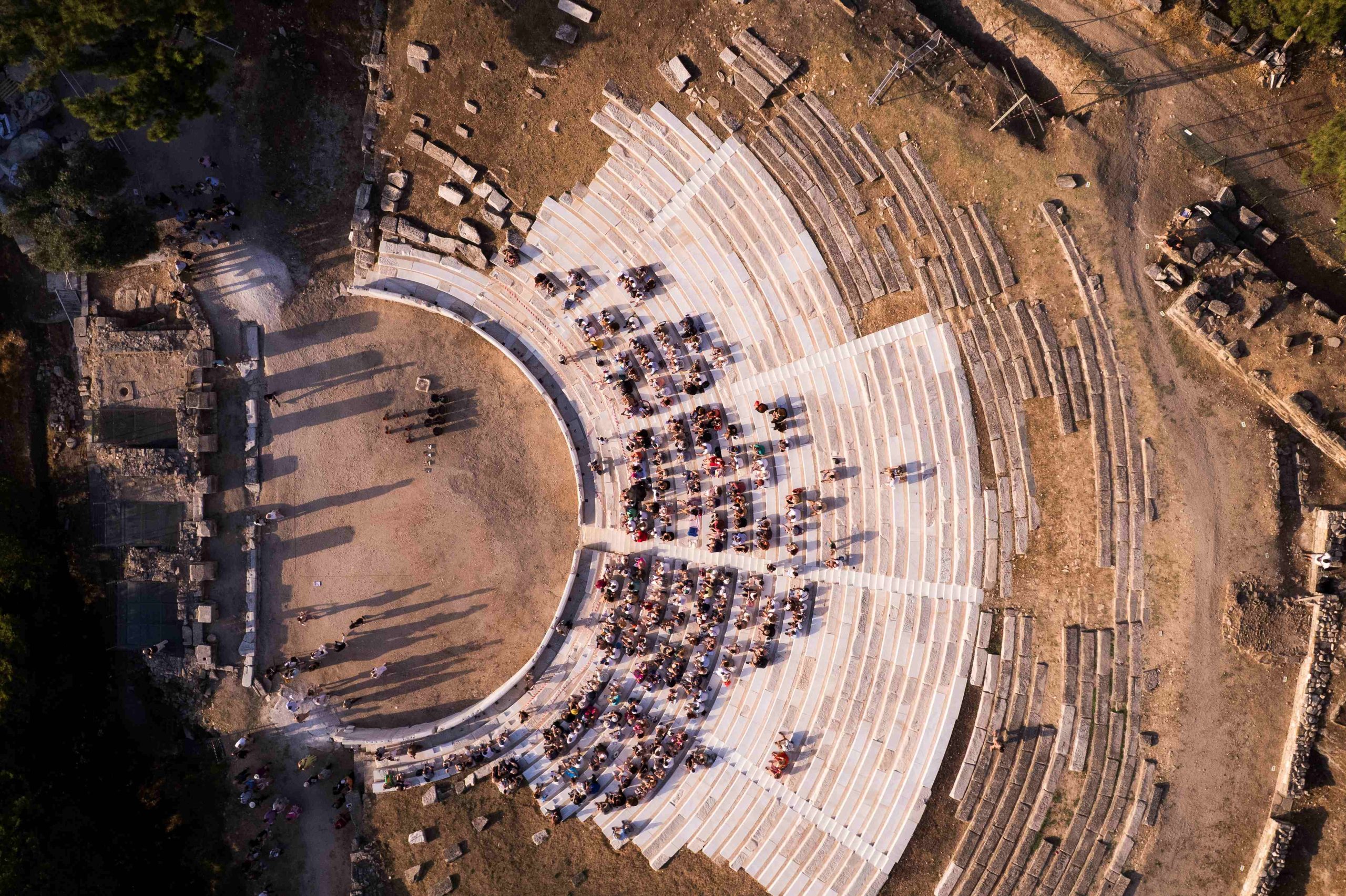
A famed fourth century BC outdoor theater on the north Aegean Island of Thasos has again reopened for performances after no less than 14 years of restoration and maintenance.
The Classical-era Odeon is distinctive for its white marble quarried on the verdant island as well as its exquisite location, surrounded by pines and with the sea as a backdrop.
The first theatrical performance since its reopening was a production by the National Theatre of the play “Fragments: Euripides”, billed by the latter as an “innovative initiative to raise the profile of Greece’s surviving ancient theatres”.
The premise of the “theatre/archaeology performance” came in 2022, when a papyrus with excerpts from ancient playwright Euripides’ lost plays Polyidus and Ino was discovered in Philadelphia, Egypt.
The performance was directed by Efthimis Theou.
The touring theatrical performance is part of a cooperation between the National Theatre, the Diazoma Association for ancient theater renovations and promotion and the culture ministry.
In statements to the media during the ancient theater’s reopening for performances, the head of the local eforate for antiquities, Stavroula, Dadaki, emphasized that “the restoration of this monumental theater was perhaps one of the most difficult technical projects undertaken in recent years by the ephorate of antiquities for Kavala-Thasos, completed under the supervision of archaeologist Konstantina Panousi. In fact, the theater’s koilon (the tiered seating area where the audience sat – cavea in Roman-era venues) was dug up from its foundations in order to repair past damage, resolve structural issues, complete important infrastructure to ensure its preservation.”
The former mayor of the island, Costas Hatzimmanuel, who spearheaded the restoration of the ancient theater to its original marble form, emphasized that the ambitious project “fulfilled a commitment I made to the people of Thasos when, in 2010, I promised that I would remove the rotten plywood from the island’s ancient theater and replace it with the pure white Thasos marble. I would also like to highlight the unanimous decision of the Central Archaeological Council (KAS) regarding the marble restoration of this monument. The decision was based on the excellent work of the outstanding archaeologist and architect Tony Kozelj, who lives permanently on the island and has made a significant contribution.”