
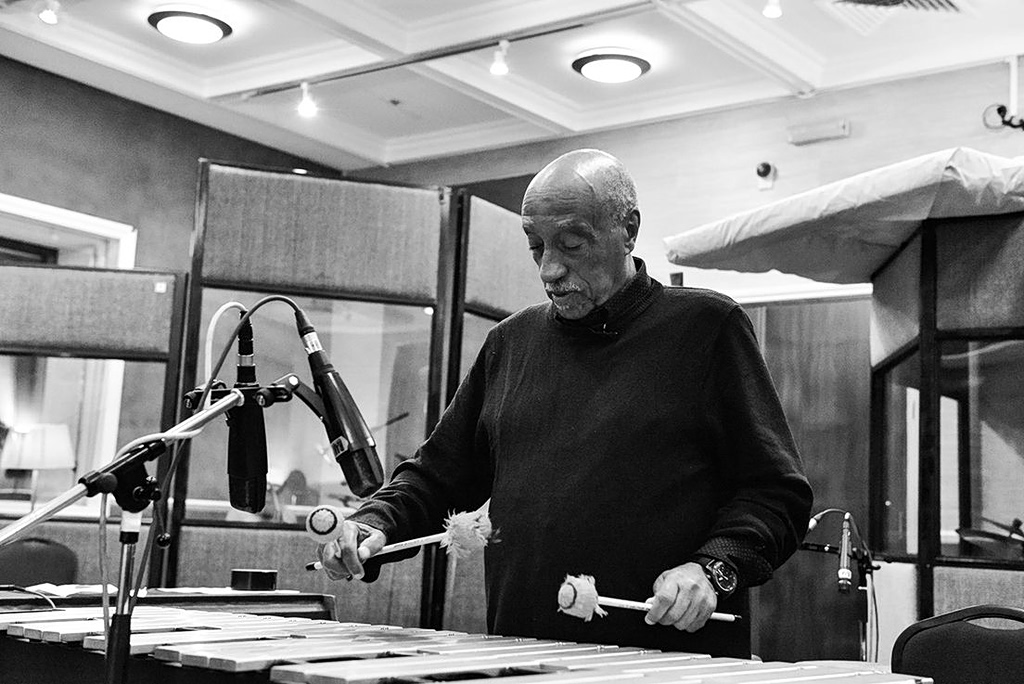
The father of Ethio-jazz is coming to town. On November 25, 2025, legendary Ethiopian composer, bandleader, and vibraphonist Mulatu Astatke takes the stage at Christmas Theater for a rare Athenian appearance, part of his global farewell tour and a celebration of one of the most influential musical journeys of the past half-century.
For fans of world music, jazz, and everything in between, it’s a moment not to be missed.

A Global Icon Who Changed Music Forever
Astatke is widely regarded as one of the most visionary figures to emerge from Ethiopia’s vibrant musical scene. During the cultural explosion of “Swinging Addis” in the late 1960s and 1970s, he revolutionized the country’s sound by blending pentatonic Ethiopian modes with the improvisational language of American jazz. The result—Ethio-jazz—is today a beloved global genre, infused over time with elements of Afro-funk, soul, and Latin rhythm.
But its origins trace back to Mulatu: the man who experimented fearlessly, reimagining traditional instruments such as the krar, masenqo, and washint alongside vibraphone, electric keys, congas, and bongos. His innovations didn’t come easily; at the time, traditionalists resisted his boundary-breaking ideas. Yet the music endured—and transformed the landscape forever.
Astatke’s influence spread as he worked both in Ethiopia and abroad, arranging for leading Ethiopian artists such as Mahmoud Ahmed and Tilahun Gessesse, recording in New York, and even appearing with Duke Ellington’s orchestra during their historic 1973 visit to Addis Ababa.
A Life Between Continents
Born in Jimma and initially sent to Britain to study engineering, Mulatu redirected his path toward music—first at Trinity College of Music in London, and later at Berklee in Boston, where he became the school’s first African student. It was in the U.S. that he discovered Latin jazz and recorded his early Afro-Latin Soul albums, laying the foundations for what would become Ethio-jazz.
Throughout the 1970s he remained a defining presence in Ethiopia’s Golden Age of Music, appearing on all three instrumental albums released in that era and working closely with the celebrated Walias Band. Even under the Derg regime, he continued teaching, recording, and deepening his musical understanding—including through time spent in Havana immersed in Cuban musical traditions.
A Late-Career Renaissance
Over the past decade, Astatke has toured the world, winning new audiences across continents. He collaborated with the Australian collective Black Jesus Experience, contributed to Nubiyan Twist’s album Freedom Fables, and recorded with the Israeli-Ethiopian Hoodna Orchestra. His 2024 U.S. summer tour included major shows in San Francisco, New York, Washington D.C., and a standout performance at the Hollywood Bowl Jazz Festival, curated in part by Kamasi Washington.
The Farewell Tour: Mulatu Plays Mulatu
In 2025, Mulatu embarked on his final international tour, marking the release of what he has announced will be his last studio album, Mulatu Plays Mulatu. Recorded across London’s RAK Studios and his own Jazz Village club in Addis Ababa, the album features his full big band alongside traditional musicians—a fitting summation of a lifetime spent weaving cultures and sounds together.
“All my life, I wanted to bring Ethio-jazz to every corner of the world, and I feel like I’ve done that,” Mulatu has said. The global music community agrees.
for tickets and more info please go here.