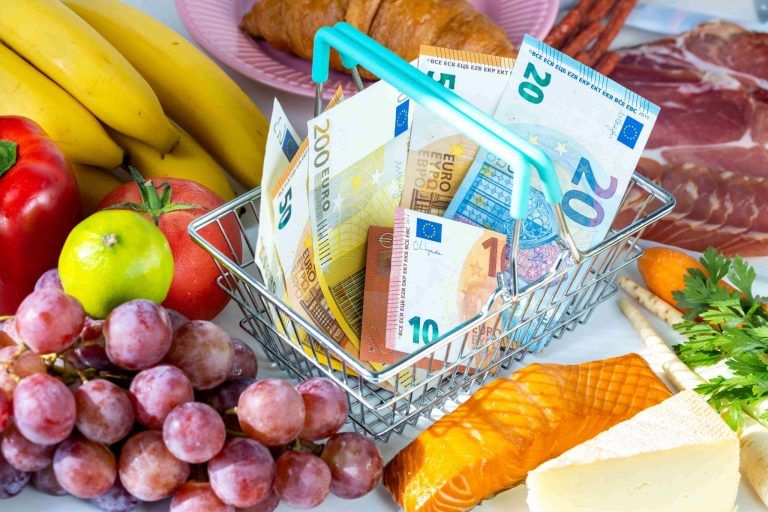

In December 2023, inflation in Greece settled at 3.7%, up from 2.9% in November, according to final data from Eurostat. The figure saw a huge fall from last year in December when it stood at 9.2.
Inflation in the Eurozone was 2.9%, compared to 2.4% in November. Across the European Union, annual inflation reached 3.4% in December 2023, rising from 3.1% in November marking a significant decrease from the 10.4% recorded one year earlier.
Concerning core inflation, which excludes volatile product prices such as energy and food, the inflation rate declined annually from 3.6% to 3.4%. However, there was a monthly increase of 0.5%, higher than the initially estimated 0.4%.
Denmark reported the lowest annual inflation rate at 0.4%, followed by Italy and Belgium, both at 0.5%. Conversely, the highest annual inflation rates were observed in the Czech Republic (7.6%), Romania (7.0%), and Slovakia (6.6%). In comparison to November, annual inflation decreased in fifteen member states, remained stable in one, and increased in eleven.
In December, the highest contribution to the Eurozone’s annual inflation rate came from services (+1.74 percentage points), followed by food, alcohol, and tobacco (+1.21 percentage points), non-energy industrial goods (+0.66 percentage points), and energy (-0.68 percentage points).
According to recent data from ELSTAT, inflation in December reached 3.5% in Greece, up from November’s 3%. Additionally, the inflation rate for food stood at 8.9%.
The data revealed a notable 58% surge in the price of olive oil, while prices for fruits and vegetables increased by 15% and 14%, respectively. Heating oil experienced a 13.7% rise, with beverages and mineral water seeing an increase of over 12%. Pharmaceutical products also recorded an 11.8% price hike.