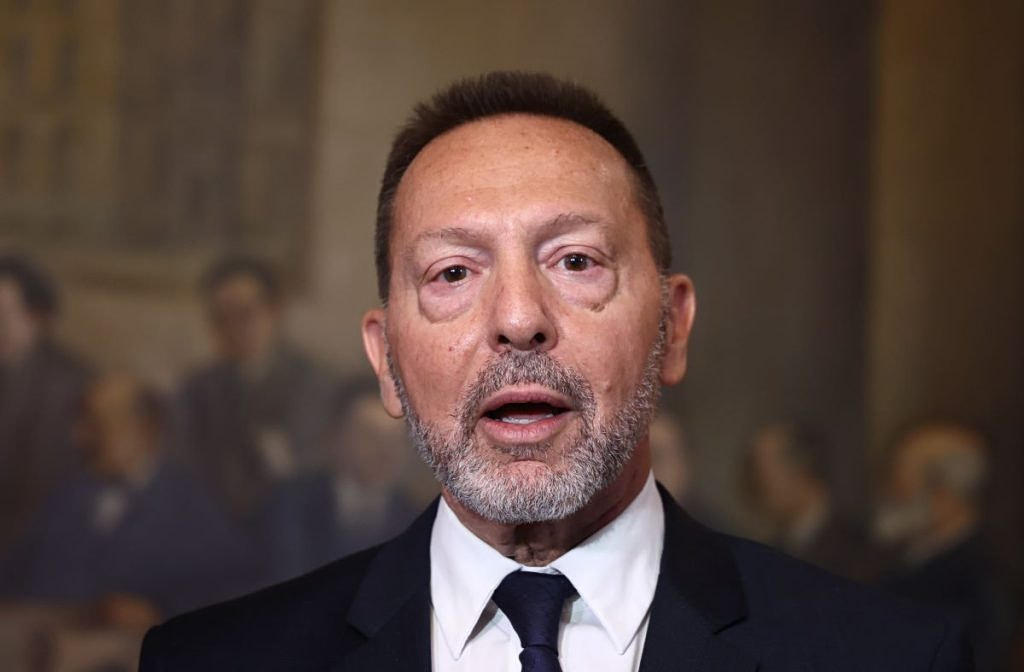
The governor of the Bank of Greece has warned that the current inflation crisis could prove more difficult to manage than the surge seen in 2021–2022, citing changing market expectations and ongoing global disruptions.
Yannis Stournaras made the remarks during an international economic forum, where he highlighted the growing complexity of tackling inflation in the current environment.
A different inflation landscape
According to Stournaras, one key difference compared to the 2021–2022 period is how businesses and households perceive inflation today.
At that time, economic actors had little recent experience with high inflation, having lived through decades of low or even negative price growth. As a result, they were slower to react when inflation surged above 10%.
Now, however, that experience is fresh. Producers and workers are more familiar with rising prices and are therefore less likely to respond gradually, potentially making inflationary pressures more persistent.
Global shocks challenge central banks
Stournaras also pointed to a series of overlapping global crises—including geopolitical tensions in the Middle East, the post-pandemic recovery, and earlier disruptions linked to the war in Ukraine—as factors complicating the current situation.
These repeated shocks, he said, may lead the public to believe that inflation is increasingly driven by external supply-side disruptions, rather than being fully controllable by central banks.
As a result, confidence in monetary policy as the primary tool for stabilizing inflation could weaken.
Call for swift action
The Greek central banker stressed that if there are signs inflation expectations are becoming entrenched, the European Central Bank must act quickly to prevent longer-term consequences.
He emphasized the importance of maintaining credibility and ensuring that inflation does not become embedded in economic behavior.
Cautious optimism
Despite the challenges, Stournaras expressed cautious optimism. He noted that central banks are now better prepared than in the previous inflation episode, having improved their analytical tools and refined their strategies.
He also pointed out that inflation in the eurozone has remained close to the 2% target for nearly a year, even dipping slightly below that level in early 2026. This, he said, provides some room for future policy adjustments if needed.