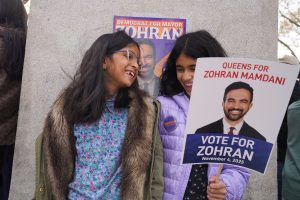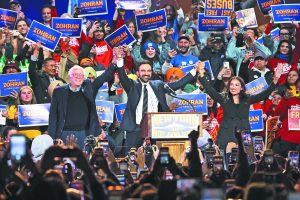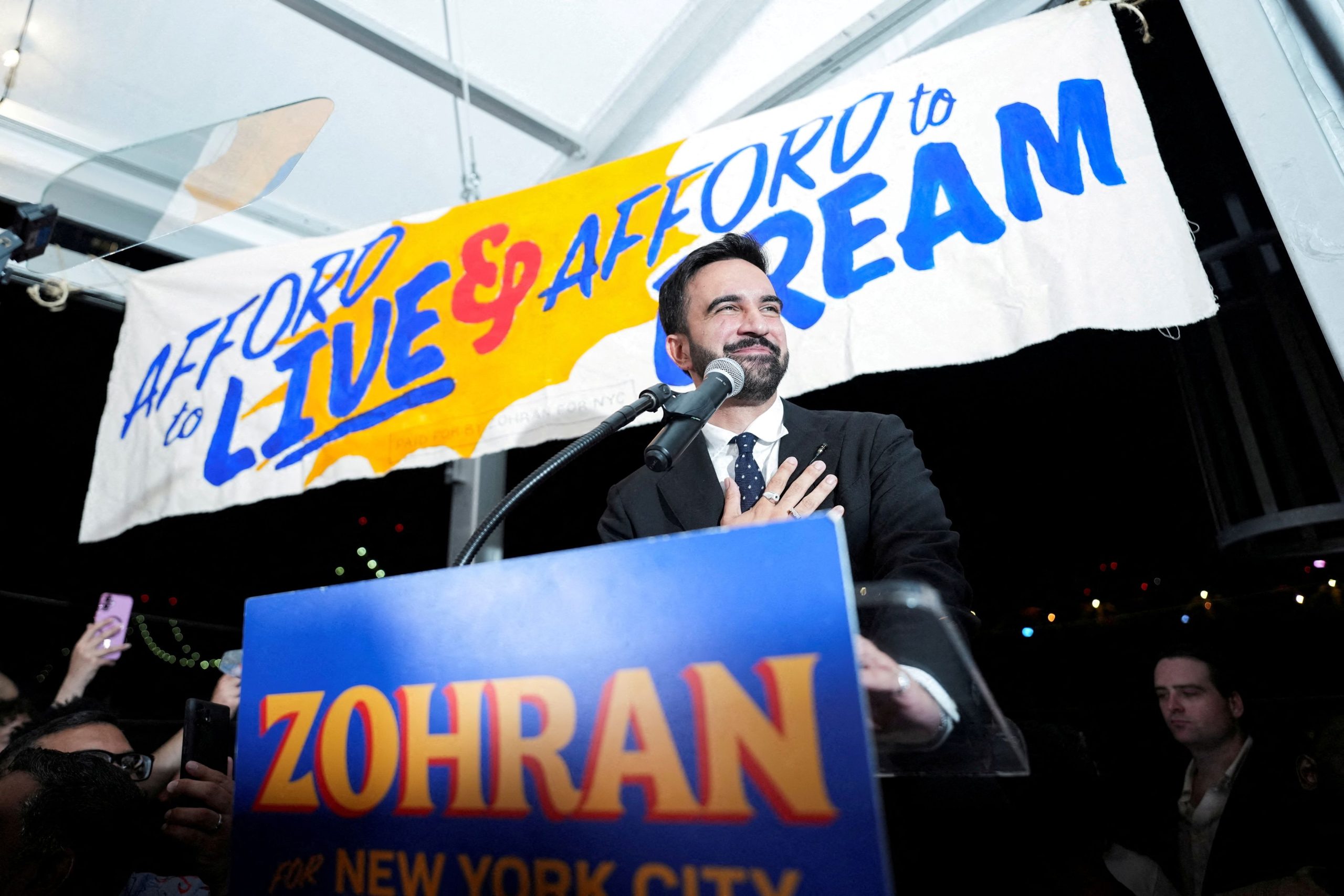
It was perhaps the most striking political event on the international stage last week: the election of a left-wing Muslim immigrant from India, born in Uganda, as mayor of New York City — the very heart of global capitalism, home to Wall Street, the world’s most powerful banks, and one of its most iconic stock exchanges.
The symbolism could hardly be greater. This happened in the city where Donald Trump built his name and fortune, his signature skyscraper, the Trump Tower, still dominating the skyline of Manhattan’s famous Fifth Avenue.
And it came at a time when Trump had just completed his first year in the White House, showing open disregard for the American system of checks and balances between the Presidency, Congress, and the Judiciary. His dominance across domestic and foreign policy had imposed his trademark brand of extremism on Washington.
The natural question now is whether Mamdani’s election — as the new mayor of New York — can begin to challenge this deeply troubling political climate, or whether the divisions within the Democratic Party will blunt any real change.
“It’s the Economy, Stupid” — Again
One fact, however, remains beyond dispute: New Yorkers voted with their wallets. Their choice reflected frustration over the soaring cost of living and rising inflation, a reminder of political strategist James Carville’s famous line during Bill Clinton’s 1992 campaign: “It’s the economy, stupid.”
That phrase, as it turns out, still rings true — not only in America but around the world. Economic anxiety, more than ideology, is shaping voter behavior.
And that anxiety helps explain the steady decline in Trump’s approval ratings, despite his boasts to the contrary. The New York result was not an isolated incident. The same day, two Democratic women — both from the party’s centrist wing — were elected governors in Virginia and New Jersey.
Both have emphasized the need for political consensus and moderation, a sharp contrast to Trump’s confrontational style. Their victories highlight the deep divisions within the Democratic Party — between its progressive left and its pragmatic center.
The Road to the Midterms
All eyes now turn to next year’s midterm elections, which take place halfway through a president’s term. These elections will decide the fate of all 435 members of the House of Representatives, one-third of the U.S. Senate (33 or 34 seats), and around 34 state governors.
At the moment, Trump’s grip on power remains firm. He enjoys majority support not only in both chambers of Congress but also in the Supreme Court, where he has appointed six of the nine justices.
As a result, many of his controversial decisions, which lower courts occasionally overturn, are often upheld by the Supreme Court, reinforcing his authority.
This concentration of power allows Trump to govern almost as an elected autocrat, in a country that for decades stood as the global model of liberal democracy.
Why Mamdani’s Election Matters
This is where the symbolic weight of Mamdani’s victory comes into focus. Though he belongs to the left wing of the Democratic Party — a faction that does not yet represent mainstream American opinion — his election could mark the beginning of a political realignment.
It may serve as the first spark in an effort to curb Trump’s growing authoritarianism — a shift with potentially profound consequences not only for the United States, but for the entire world at a time of mounting instability.