The meeting, they say in Brussels, was “closed.” It was neither announced in advance nor were its results disclosed. “Closed,” however, does not mean exactly “secret.” In the corridors of the European apparatus, where almost nothing remains hidden, it was learned that one of the items on the agenda of the closed meeting was the agreement on tariffs that Donald Trump and Ursula von der Leyen had signed a few months earlier in Scotland.
Last July, in Turnberry—the Scottish resort where businessman Trump had invested $60 million in local golf facilities in 2014, only to continuously lose money in the following years—President Trump finally experienced a moment of commercial triumph. Europe, with the signature of the President of the European Commission, agreed to impose a 15% tariff on all European products imported into the United States. The “surrender,” as it was interpreted at the time, was seen as the only way to avoid a trade war that would have taxed European products at 30%.
Surrender, however, is not just an agreement between winners and losers. It is also an agreement between the triumphant and the humiliated. The American president enjoyed his triumph—if not in words, certainly with the street-style demeanor that accompanies almost every moment of asserting his dominance. Beside him, the President of the Commission embodied submission with a frozen expression on her face.
Or was it not so? In the closed Brussels meeting, according to leaks in the corridors, von der Leyen herself offered a different explanation. “We signed,” she said, “to buy time.” By seeking lost time, and once it was gained, Europe could prepare its next moves on the chessboard. Perhaps in Turnberry she conceded two pawns or a knight. Last Tuesday, however, she signed in New Delhi an agreement with India that both sides called “the mother of all agreements,” as it foresees the elimination of tariffs on the majority of bilateral trade.
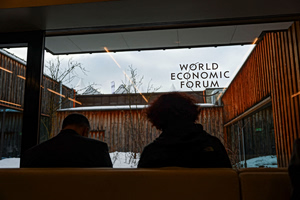
Triumph? What is certain is that in “Trump’s planet,” the world begins to move despite Trump. Whether one notices it or not. Whether one hears Canadian Prime Minister Mark Carney calling for an “alliance of middle powers” against Trump’s America. Whether one counts the eight times Ursula von der Leyen used the word “independence” in her Davos speech—likely because the Commission President does not have the stature of a “great leader,” and her face will never appear on a sticker pinned to our lapel.
And? Words—and even more so those repeated like a loop—are no longer feathers in the wind. Carney’s speech was republished in full by many media outlets as a living historical document. And if there are acts showing that the world moves despite Trump, they are not only the Euro-India agreement. They include Starmer’s visit to Beijing—the first British prime minister’s visit to China in ten whole years. They also include the increased demand for green economy bonds in defiance of the fossil-fuel-loving Trump.
The West, as an economic entity, seems to be overcoming the shock of America detaching from its body. Whether it can stand on its feet as a defensive and technological entity remains to be seen. In any case, it is beginning to move—despite, against, or in defiance of the American president, and not while waiting for Trump.
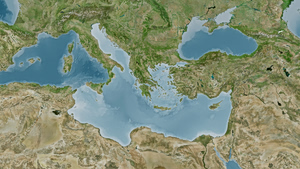
This is the message reaching closed meetings in Athens—a city lately highly enchanted by the “American factor.” No one in this neighborhood of the world is waiting for Trump precisely because they do not know what awaits them from the American administration. Something, then, must move so that the Southeastern Mediterranean does not remain—a part from its eternal saltiness—a sea of eternal pending matters.