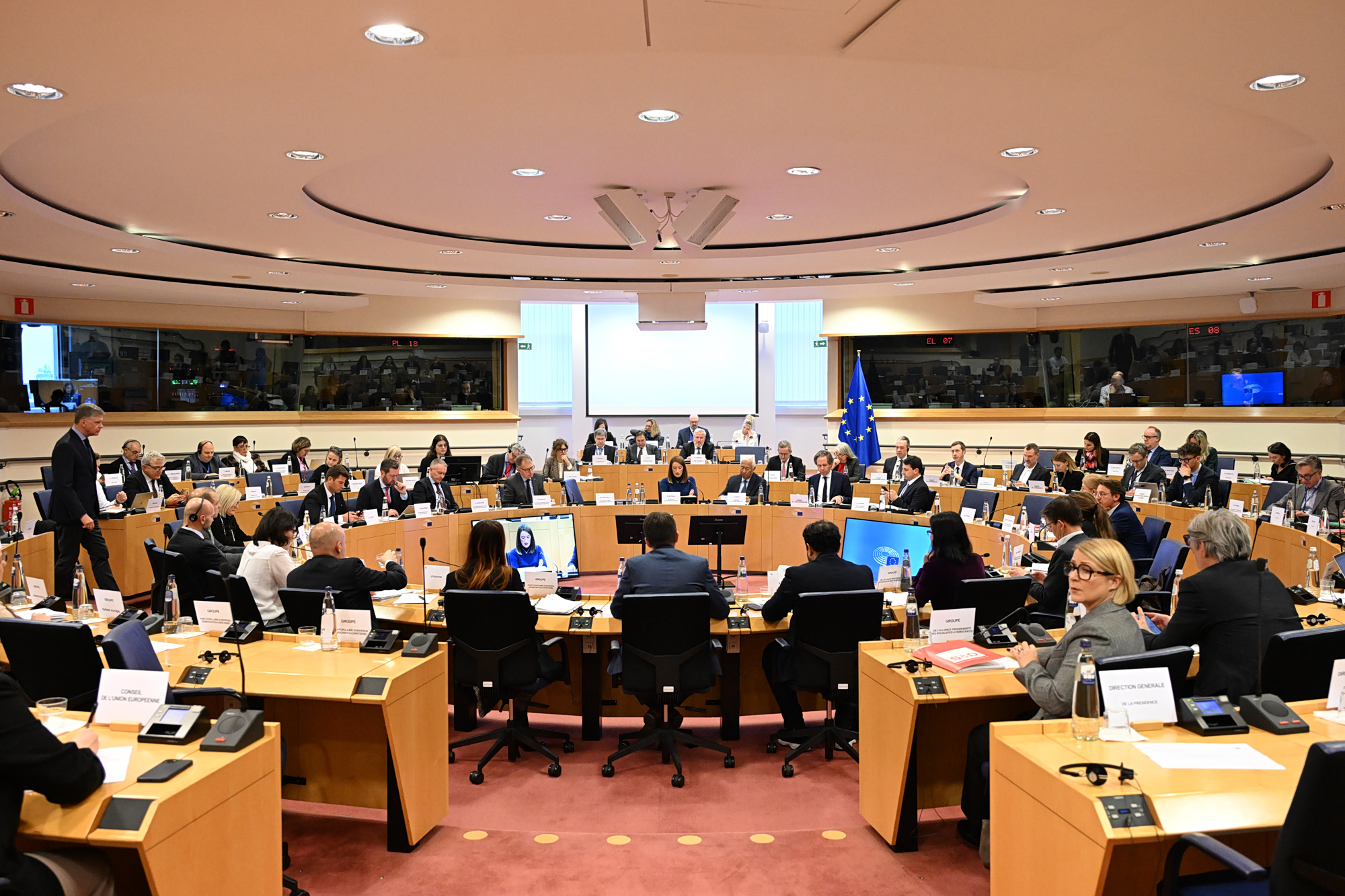
I’m just back from Paris, where I took part in the third Greece-France Forum staged by the Delphi Economic Forum in cooperation with To Vima and Ta Nea (5/2).
Where this concern was registered in every key and register, accompanied by countless questions but precious few certainties.
Our split from Russia is acknowledged as a done deal, and “the rift runs deep”. There is an awareness that it will not be bridged either soon or easily. Though the problem does not seem insurmountable.
Russia was never “really Europe”; it was just that various self-serving apologists tried to cloak her in an outfit Moscow never wore, that never fit, and which was never even wanted.
In contrast, the rift with the US seems to be as grave and stark as it is unusual and unexpected. Apart from catching the Europeans unawares, it has also left them visibly confused while—most significantly of all—concealing their ambivalence about how to respond.
What are we dealing with here: a “storm that will pass” or “something that has to be done”?
The obvious recourse to “strategic autonomy” is easy to proclaim and even easier to turn into action points, but they will take years and hundreds of billions of Euros to implement.
Which means I haven’t come back from the City of Light with an answer—because none exists.
But if Europe is concerned, it is mainly because it is aware of the impasse. And since there are no ways of getting round it for now, we’ll have to learn to live with it for a while.
And the continent as a whole can clearly afford to ignore certain vital issues which, though weighing heavy on Greece, are low down on its own list of priorities.
Which is to say that Paris and Berlin are not keeping up with the latest developments concerning the new political parties to be headed by Tsipras and Karystianou. Nor is the debate over the sections of the Greek Constitution up for amendment keeping Merz or Macron up at night. Nor is the EU whiling away its days in courts and commissions of inquiry.
Most importantly of all, Brussels and Strasbourg have given no sign of being concerned about what comes after the next elections. Which is reasonable. Once you’ve lived through a Tsipras-Varoufakis government, you feel you can handle anything that’s thrown at you.
Europe clearly doesn’t know what it’s missing. Nor will it ever know, so long as the overheated cut and thrust of Greek current affairs remains out of its field of vision.
I imagine our continent has chosen to concern itself with “those trifles”—the global existential threats which Greece, by some sorcery, has managed to remain so entirely unbothered by.
What can you do? It’s a thankless task, but someone has to do it.