Tomoko Akane cannot enter the United States, her credit card has been cancelled, and throughout the day she has to keep looking over her shoulder, wondering whether a Russian contract killer is following her. Yet she remains determined: she will continue to serve international law with passion.
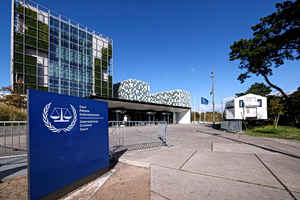
Because Akane isn’t just anyone. A former prosecutor, the 70-year-old Japanese jurist has been the president of the International Criminal Court since 2024. The body is relatively new, having been founded in 2002. And as she says herself in an interview with El País, “The court emerged from the lessons of war, persecution, and mass atrocities, and from the conviction of states that law and justice must prevail over force.” To date, the ICC has conducted 18 investigations and delivered justice in cases involving the recruitment of child soldiers, the destruction of cultural heritage, sexual violence, and attacks against civilians. Next November, the trial against former Philippine President Rodrigo Duterte will begin, and in 2027, Khaled Mohamed Ali El-Hishri, the former commander of a prison in Libya where serious crimes were committed, will be brought before the court.
However, the ICC has also committed two “unforgivable” acts: it issued international arrest warrants for Vladimir Putin, for the abduction of thousands of children from Ukraine, and for Benjamin Netanyahu, Israeli Defense Minister Yoav Gallant, and Hamas leaders for crimes committed in Israel and Gaza. In retaliation, the Trump administration imposed sanctions last month on Akane herself, Senegalese prosecutor Abdoulaye Saye, and 11 other judges and prosecutors. At the same time, nine current and former judges, including the entire leadership of the ICC, were convicted in absentia by Russia, which poses obvious risks to their safety.
The United States is not an ICC member state and maintains the position that no court in the world can supersede US courts and the US Constitution. But it does not stop at theory. As Politico revealed this week, US envoy Matthew Whitaker asked NATO countries last July to withdraw from the Court “immediately” and to assist in its dismantling. “We will be watching closely who stands with America,” he stressed. A few days earlier, US Secretary of State Marco Rubio had stated that “the ICC and its friends are waging a war against our country, not with bullets or missiles, but with statutes, compacts, and the force of so-called international law.”
So is this the beginning of the end for international law? “These are deeply troubling times for international justice and for the rules-based international order,” Tomoko Akane responded to El País. “At the same time, it is heartening to see states, civil society organizations, and citizens speaking out in defense of international law. Such expressions of solidarity are more important than ever.”
The Japanese judge will never forget the answer given by a victim of sexual violence when asked by the Court why she agreed to testify. “I know no one else can defend me, only justice, the judges […] because what happened to me, I wouldn’t want that to happen to anyone else.” These victims remind the judges why their work is important and why they must keep doing it, Akane says. To make the promise of “Never again!” a reality. And because, sooner or later, History will ask the same question of all of us: “Where were you?”
This observation by the ICC president could not be more timely. And it does not concern only judges or politicians, but citizens as well, both individually and collectively. Where were we, to recall yesterday’s anniversary, when terrorists attacked the Twin Towers? Where were we, and what did we do, when Russia invaded Ukraine and continued bombarding it for years? Where were we when Hamas launched its October 7, 2023, terrorist attacks against Israel, and what did we say when Israel responded to the attacks with the indiscriminate bombing of Gaza and Lebanon, killing tens of thousands of Palestinians—the majority of them women and children—and permanently burying the vision of Israel and Palestine coexisting in peace?