
 Μake us preferred on Google
September’s news that billionaire hedge fund manager Chris Rokos was swapping London for Athens, where he plans to establish an office, ruffled some feathers. Not least in the UK, where he is one of the country’s biggest taxpayers, reportedly paying £330mn last year.
Greece has spent years trying to persuade wealthy foreigners to bring their money to the country. Now it wants them to bring their businesses and families too. And the policies are making their mark on the prime property market.
Since 2020, Greece has introduced a series of tax incentives aimed at attracting new residents. Its non-dom regime offers qualifying new residents (who must, among a number of things, invest at least €500,000 in real estate, business, securities or shares in legal entities) a €100,000 annual flat tax on foreign-sourced income. Qualifying foreign retirees have a flat 7 per cent tax on foreign-sourced income for up to 15 years. Eligible workers and entrepreneurs relocating to Greece receive a 50 per cent exemption on Greek-source employment or business income.
The measures are designed to help reverse the brain drain that accompanied the country’s financial crisis, when close to one million people left Greece over the course of a decade, attract internationally mobile professionals and encourage foreign businesses to establish operations in the country.
At Greece Sotheby’s International Realty, buyers benefiting from the country’s non-dom regime accounted for nearly a third of the agency’s transaction volumes in 2025, up from virtually none before 2024, according to its president and chief executive Savvas Savvaidis. More than half of those transactions involved UK passport holders.
This summer, the Greek government went further, cutting the tax rate on carried interest for qualifying investment managers relocating to Greece from 15 per cent to 5 per cent. The tax break requires the fund’s Greek operation to spend at least €3mn a year in the country, ensuring a genuine rather than nominal presence.
The government says its ambition is broader than attracting a handful of wealthy individuals to buy holiday homes. It hopes that the first wave of wealthy arrivals will draw a wider community of professionals and their families. “It is not 10 people who spend a lot of money,” says Vassilis Karatzas, an adviser to the finance minister. “Their potential is that [they help] set up an ecosystem and a business environment that did not exist in the country.”
Elina Filippou, head of private wealth at Greek law firm Zepos & Yannopoulos, which specialises in advising businesses and individuals relocating to Greece, says her team has grown from eight to almost 20 since 2020. Her firm has handled about a quarter of relocation applications under the tax incentive regimes, she says.
Since the non-dom scheme was introduced, it has attracted roughly 500 applications, about half from outside Europe, according to data from the Greek finance ministry. Nearly 1,500 retirees and about 10,000 executives, employees, freelancers and entrepreneurs have applied under other incentives. It’s “a constant flow of people”, says Chryssa Miliou, general secretary for tax policy at the Greek finance ministry.
And those people need somewhere to live. The challenge is persuading them to put down roots rather than merely establish a tax residence.
One place where that ambition is already being tested is the Athens Riviera, where the low-rise villas and gardens of Glyfada, Voula and Vouliagmeni are increasingly giving way to luxury apartment buildings with sea views, swimming pools and round-the-clock security.
“I have been living in Voula for 30 years,” says Paulina Billiri, an estate agent with 26 years’ experience. “The gardens, the low houses — the urban landscape is changing very quickly. One apartment block is taller than the other.”
For Eleni Papadopoulou, who was born and raised in Glyfada, where both her father and grandfather built family homes, the transformation has become a race against time. Through her Instagram account, @Vintage.Glyfada, and other documentation, she has amassed nearly 700 photographs of the neighbourhood’s disappearing villas, with their distinctive red stonework, handmade iron gates and gardens filled with lemon and orange trees.
“There were days when I would see two houses and the next day they were gone,” she says. The old homes, often built as summer retreats, were open to the street and reflected the personalities of their owners, she recalls. By contrast, she finds the new apartment buildings increasingly uniform and inward-looking. For her, what is disappearing is not just the architecture but the memories and way of life associated with it.
Billiri dates the beginning of the transformation to the middle of the last decade, when Greece was emerging from its sovereign debt crisis and its golden visa programme, introduced in 2013, brought a first wave of foreign property investors. “In 2015, there was nothing,” she says of new developments. “It was deep crisis.”
Greek apartment prices fell by more than 40 per cent between 2008 and 2017, as the debt crisis crushed incomes, employment and mortgage lending. Since their 2017 trough, prices have risen about 85 per cent, surpassing their 2008 peak by 7 per cent in 2025, with prices continuing to rise by 5.5 per cent year on year in the second quarter of 2026, according to preliminary Bank of Greece data.
Early buyers included investors from China and the Middle East. Initially offering residency in exchange for a property investment of €250,000, the golden visa scheme raised the threshold to €500,000 in sought-after areas in 2023, before increasing it to €800,000 in 2024. Chinese nationals held 12,700 investor residence permits as of August 2026, or nearly half the total, according to government data.
Agents say another kind of international buyer is arriving: one more likely to be looking for a primary or semi-permanent home and, in some cases, bringing a business with them.
The appeal is partly financial. Despite the rise in prices, agents argue that coastal Athens remains relatively inexpensive compared with rival Mediterranean markets. “Right now, Greece — particularly its coastal areas — offers the most attractively priced square metre on the European Riviera,” says George Ioannou, private office adviser at Engel & Völkers.
Oliver Banks, international residential development partner at Knight Frank, agrees. Values across the Athens Riviera vary between €6,000 and €10,000 per sq m — broadly below Barcelona (€10,000 per sq m), Lisbon (€11,000), Rome (€13,200), Madrid (€15,300) and substantially below Paris (€23,200), prime central London (€26,000) and Monaco (€54,000). “Prime waterfront locations, sea views, privacy and turnkey condition are the key drivers,” he says.
But Sotheby’s Savvaidis argues that price is only part of the attraction. Athens, he argues, combines something unusual: a European capital with a long urban coastline, some 40km. “The common denominator is that they feel Greece is not an artificial paradise,” he says. “If they wanted the lights of Monte Carlo, they would go to Monte Carlo.”
For one family who moved from Berlin to the Athens Riviera a year ago under Greece’s non-dom tax regime, the attraction was less about taxes than the prospect of a different life. The couple, who have two young children and asked not to be named, wanted to live by the sea while retaining the amenities of a major city, international schools and easy connections to Germany. “We wanted to experience life in the Mediterranean,” says the mother. “Now is a good time because our kids are still small.”
The family chose to rent rather than buy, uncertain about which neighbourhood would suit them and also how long they would stay. The couple estimate that their living costs are about 20 per cent higher than in Germany, largely because of rent, electricity, international schooling and the need for a car. “That’s something that takes a little bit of getting used to here, that you have to use the car a lot.”
Yet the trade-off has been worthwhile. “The quality of life is definitely higher,” she says, describing weekends exploring nearby islands and more time outdoors as a family.
But the supply of the kind of homes these buyers want remains limited. “We are a very small real estate market,” Savvaidis says. “Obviously there is room for improvement. But that will only happen through large developments.”
More than 4,000 residential properties have changed hands in Glyfada, Voula, Vouliagmeni and Vari since 2017, according to an FT analysis of Greek government transaction records. About 1,200 of those sales took place between January 2024 and September 2026.

Aerial drone photo of beautiful peninsula in Vouliagmeni and laimos with luxury resorts and private beach of Asteras, Athens riviera, Attica, Greece
The shortage of newly built homes is partly a legacy of Greece’s decade-long financial crisis. “For 10 years in Greece and more, not a brick was laid,” Savvaidis says. That limited supply is now colliding with international demand, particularly for properties with sea views and the security and amenities wealthy buyers have come to expect elsewhere.
At Apollo Hills, a new gated community in Voula, a three to four-bedroom, 200-250 sq metre apartment costs around €2.5mn, according to Savvaidis.
Billiri says the change in the property market has accelerated dramatically since 2022. Sales volumes at her agency have increased by 50 per cent, she says, while prices at the top end have climbed sharply; €10,000 per sq m “has died” as a benchmark for premium penthouses, she says. New developments can fetch €15,000-€20,000 per sq m, while homes in some of the most exclusive projects can reach around €30,000 per sq m.
In Glyfada, Atlantia, a two-level, three-bedroom 276 sq m penthouse with private pool, shared wellness areas and concierge services, is on sale with Sotheby’s for €3.4mn. In Vouliagmeni, the Chrysalis is a 500 sq m house very close to the sea, with butterfly-inspired architecture, glass walls, landscaped gardens, private pool, rooftop Jacuzzi, gym and cinema, on sale with Engel & Völkers for €6.75mn.
“The demand is: we want 150 to 200 square metres, a minimum of three bedrooms and a sea view,” says Ioannou.
Most of his international clients are cash buyers, he says, and many prefer new-build apartments to traditional villas. They are also willing to buy off-plan. He is currently working with three British buyers with budgets of around €2.5mn each, who wanted to complete purchases by the end of October amid concerns about their UK tax liabilities.
Billiri is seeing a similar shift. “They come from London,” she says of some of her latest clients, many “to establish their companies here”.

But not all regard Greece as a permanent home. “They have the feeling that it will not be for very long or that they will return to London,” she says. Some are buying with a roughly five-year horizon, retaining the option of returning to Britain if circumstances change.
Ioannou says interest is also coming from Australia and the Middle East, where geopolitical instability has given some wealthy buyers another reason to establish a home elsewhere. “They want a second and third option,” he says.
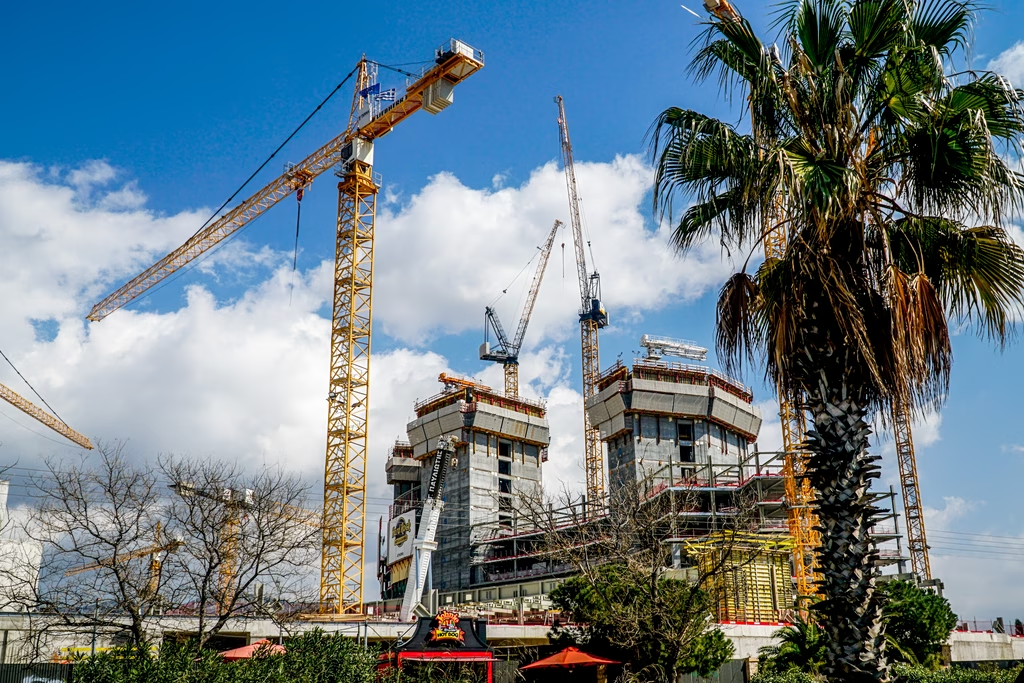
Looming over the Riviera’s transformation is The Ellinikon, the redevelopment of Athens’ former airport into a vast new coastal district with homes, hotels, shops, leisure facilities and a large park. At its centre is a new beachfront residential skyscraper. “It will be a mini-Dubai,” Ioannou says. “It will take 10 years to finish.”
Some 850-900 of the 1,300 residential units have sold, according to Alex Moulas, chief commercial officer. Greek buyers account for 55 per cent, with the Greek diaspora making up another 20-25 per cent.
International buyers, who accounted for around 20 per cent of sales in the project’s early years, have represented as much as 40 per cent since 2023. Americans lead, followed by Britons, Germans and Swiss. Roughly a third intend to make Ellinikon their primary residence, says Moulas, another third will use it as a holiday home and the remainder are buying as an investment.
Inspired Education, which operates 127 schools across six continents, is building a school there, scheduled to open in September 2028. “When we won the project, we expected it to be mostly Greek families,” says chief executive Nadim Nsouli. “But today we’re seeing a growth of international families.” He now expects Greek pupils to account for 60-70 per cent of enrolment.
House & Home Unlocked
Don’t miss our weekly newsletter, an inspiring, informative edit of the news and trends in global property, interiors, architecture and gardens. Sign up here.
But waiting years for the entire Ellinikon development to be completed makes little sense for those looking to relocate now, Ioannou says. Instead, they are buying nearby: “Glyfada, Voula, Kavouri.”
The paradox is that some of the qualities drawing wealthy foreigners to southern Athens — its low-rise neighbourhoods, gardens, proximity to the sea and a sense that it remains less manicured than rival Mediterranean resorts — are being altered by the demand for new apartments.
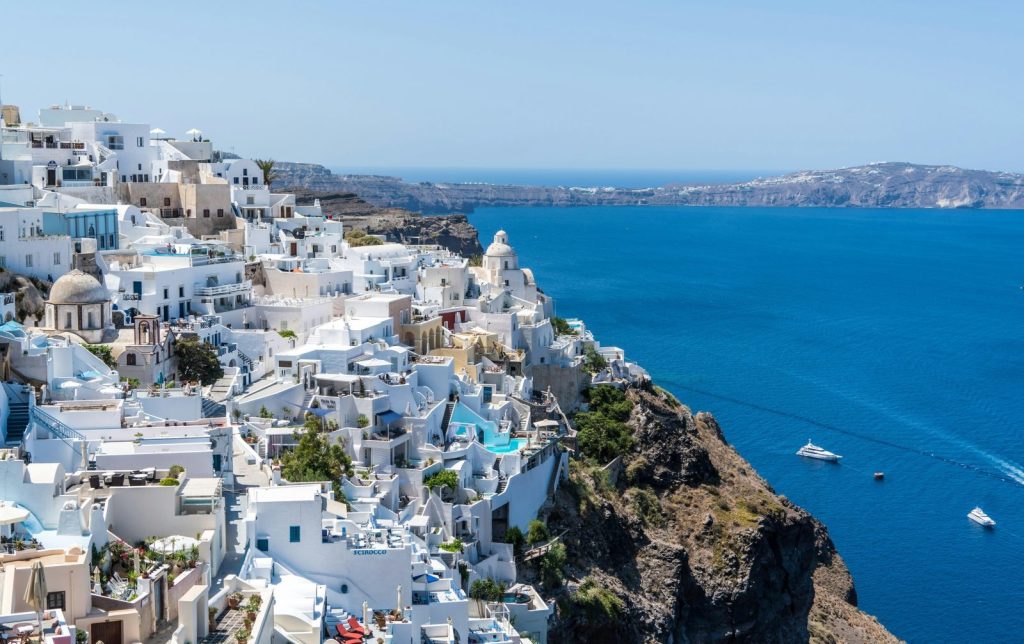
The iconic Caldera on the island of Santorini (Thira)
For Greece, the principal challenge, however, is not simply attracting wealthy residents but persuading them to stay. “How stable are these tax regimes?” is among the first questions prospective clients ask private wealth manager Filippou. She says the incentives enjoy broad political support, despite Greece’s history of frequent changes to its tax rules.
But tax breaks alone will not be enough. “It is early days,” Filippou says of efforts to create an international financial services industry. International families need the homes, offices, schools and services they are accustomed to elsewhere. “That is what we are missing — more good real estate for offices and homes and more foreign schools,” she says.
“The first thing you do is see if there’s a good school before you decide to move,” says Nsouli. He points to Monaco, where some families decided against relocating because international school places were unavailable.
For the family who moved from Germany, the tax benefits were a welcome bonus rather than the deciding factor. “It’s of course a nice benefit, but I’m fairly certain we would still have chosen Athens over, let’s say, Barcelona,” the mother says.
Settling in has not been without difficulties. Although delighted with her children’s school and the accessibility of local doctors, she has found Greek bureaucracy difficult to navigate without professional help.
And despite enjoying life on the Riviera, with family still in Germany and the language proving difficult to master, she does not envisage staying indefinitely. “It’s probably more a three to five-year experiment than a permanent move,” she says.
For Glyfada resident Papadopoulou, meanwhile, the changes to the Riviera are more permanent. The villas she photographs are disappearing, taking with them a way of life that once defined the neighbourhood.
“All these stories I heard from my parents, about whose summer house was whose — how they lived — they are demolished in an instant.”
Eleni Varvitsioti is the FT’s Greece and Cyprus correspondent
Link To FT.com: https://www.ft.com/content/89dffe1c-d1bf-4f63-a281-0aecf69796bd
Find out about our latest stories first — follow on Instagram
Copyright The Financial Times Limited 2026
© 2026 The Financial Times Ltd. All rights reserved. Please do not copy and paste FT articles and redistribute by email or post to the web.