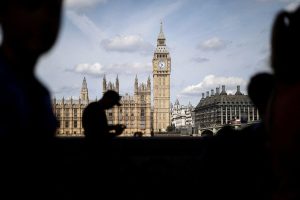
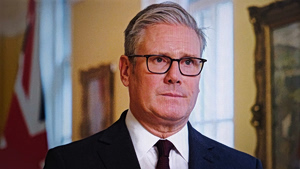
The image was striking. Outside Number 10 Downing Street, Sir Keir Starmer stood behind the familiar lectern, his face etched with emotion, acknowledging what had become unavoidable. Behind the black door of Britain’s most famous address, aides and ministers were already contemplating a future without him. Inside Westminster, Labour MPs who only two years earlier had celebrated a historic election victory were now discussing succession. It was not a fall triggered by scandal or economic catastrophe. It was a political collapse born from something arguably more damaging: the loss of confidence among his own party.
Starmer’s departure marks one of the most extraordinary reversals in modern British politics. The man who returned Labour to power after fourteen years of Conservative rule leaves office after a remarkably short period, despite securing one of the largest parliamentary majorities in recent history.
Yet the seeds of his downfall were planted long before he entered Downing Street.
Speaking exclusively to TO VIMA, some of Britain’s leading political scientists argue that Starmer’s downfall was not the result of a single mistake but the culmination of political, electoral and personal failures that steadily eroded his authority.
‘Labour MPs had lost confidence’
No one explains Starmer’s downfall more bluntly than Professor Sir John Curtice, Britain’s leading political scientist and Professor of Politics at the University of Strathclyde. “Labour MPs had lost confidence in his ability to win the next one,” Curtice tells TO VIMA. “He might have won the last election, but Labour MPs had lost confidence in his ability to meet the challenge being posed by Reform. Labour MPs don’t want to lose their seats. It’s all politics.”
For Curtice, the decisive moment came after Labour’s disastrous performances in the local and devolved elections.
“The local and devolved elections were terrible for Labour,” he says. “Labour recorded its worst result in Scotland since 1910, its worst result in Wales since 1906 and its worst result in English local elections since the politicisation of local elections in the 1970s.”
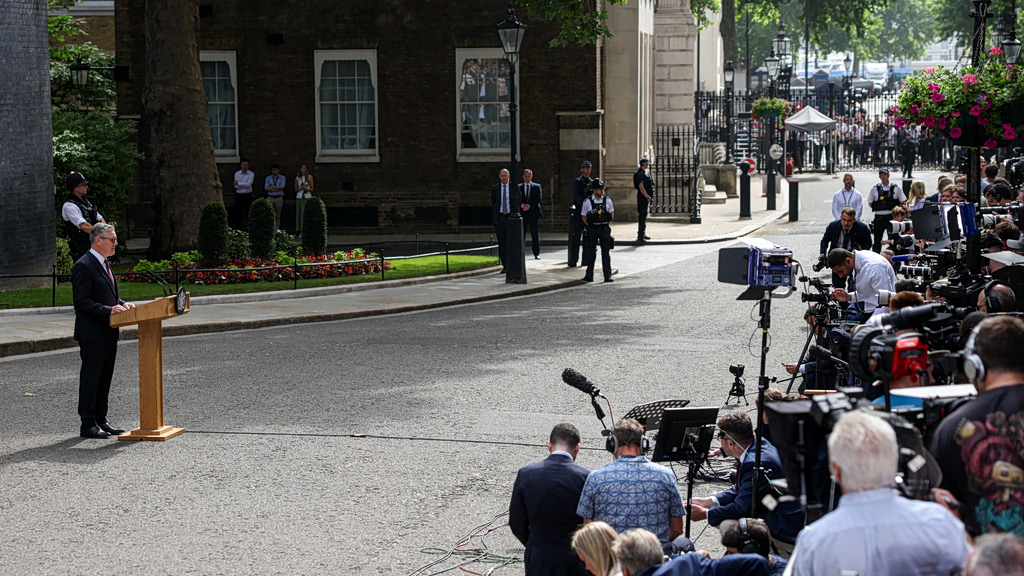
British Prime Minister Keir Starmer speaks as he announces the timeline for his resignation, outside 10 Downing Street, in London, Britain, June 22, 2026. REUTERS/Toby Shepheard
The significance went far beyond the statistics.
“These elections took place primarily in places that are predominantly Labour,” Curtice explains. “Unlike the previous year’s elections, they took place in Labour MPs’ own backyards. MPs saw what happened to their local activists and councillors.”
Curtice believes Starmer briefly attempted to fight back.
“He made a statement saying he was going to carry on and fight. But by then the process had already begun. Cabinet ministers were trying to persuade him to go.”
The election Labour never truly won
According to Curtice, one of the biggest misconceptions surrounding Starmer’s premiership concerns Labour’s landslide victory in 2024.
“The electorate did not embrace Labour in 2024,” he argues. “The Conservatives lost in 2024.”
He believes Britain’s electoral system exaggerated Labour’s success.
“Labour’s share of the vote at 35 per cent was the lowest share of the vote for any majority government in British electoral history.”
Instead, Curtice says, Labour benefited from the collapse of Conservative support.
“Nigel Farage paved the way for Starmer’s landslide. Reform took votes away from the Conservatives in exactly the places where they had previously been strongest. That reduced what Labour needed to win those seats.”
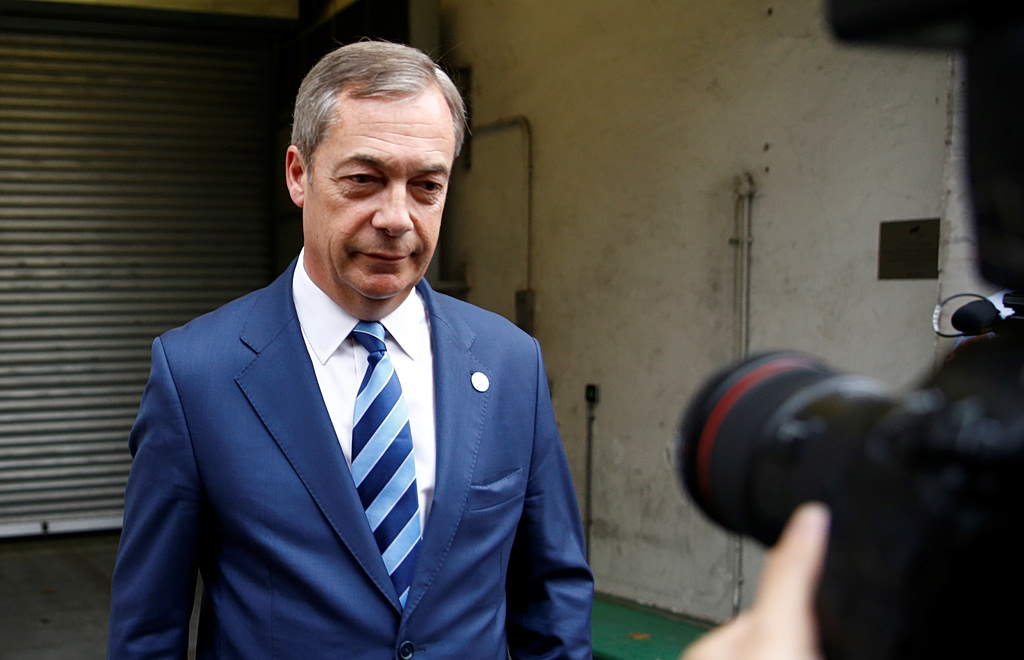
Britain’s Brexit Party leader Nigel Farage leaves a TV studio in Westminster, London, Britain September 25, 2019. REUTERS/Henry Nicholls
Professor John Bartle, from the Department of Government at the University of Essex, reaches a similar conclusion.
“Labour won in 2024 because it was the most effective vehicle for removing the Conservatives,” he tells VIMA. “The Labour program was moderate and dull. It inspired few people.”
Dr Jasper Miles, from the University of Nottingham, says Labour’s support lacked depth from the very beginning. Quoting veteran broadcaster Andrew Neil, he describes Labour’s coalition as “as wide as an ocean but as shallow as a pond.”
“Winning by virtue of not being Conservative or being the least bad option only takes you so far and stores up problems down the line,” Miles says.
A lawyer in a political world
While Labour’s electoral coalition was fragile, several experts argue that Starmer’s own leadership style accelerated his decline.
Speaking exclusively to TO VIMA, Professor Charles Lees, Executive Dean of the School of Policy and Global Affairs at City St George’s, University of London, says Starmer entered politics with significant disadvantages.
“Starmer is not a natural politician,” Lees explains. “His skill set was forged as a lawyer, eventually becoming Director of Public Prosecutions. This meant that he lacked a ‘tribe’ of politicians who had known him for years and on which he could rely from within the party.” That isolation became increasingly visible inside Parliament.
“He was not good at visiting the Commons tea room and other backbench social areas in order to press the flesh and garner support,” Lees says. “This made him seem distant, which made the problem worse.” For Lees, policy mistakes were compounded by weak political management.
“The government was too cautious in some of its policy proposals but remarkably clumsy in implementing others. The withdrawal of winter fuel payments became the clearest example. It reflected problems of communication as much as policy.”
Death by political miscalculation
Professor Bartle believes Starmer’s authority slowly ebbed away rather than collapsing overnight. “Starmer’s authority was gradually eroded,” he says. “Removing the winter fuel allowance from most pensioners, failing to lift the two-child cap, imposing a tax on farms – all contributed to his unpopularity.”
Equally damaging, Bartle argues, was Labour’s inability to communicate its achievements. “His government failed to act consistently and failed to communicate its goals. His speeches were delivered without passion and failed to convince or excite.”
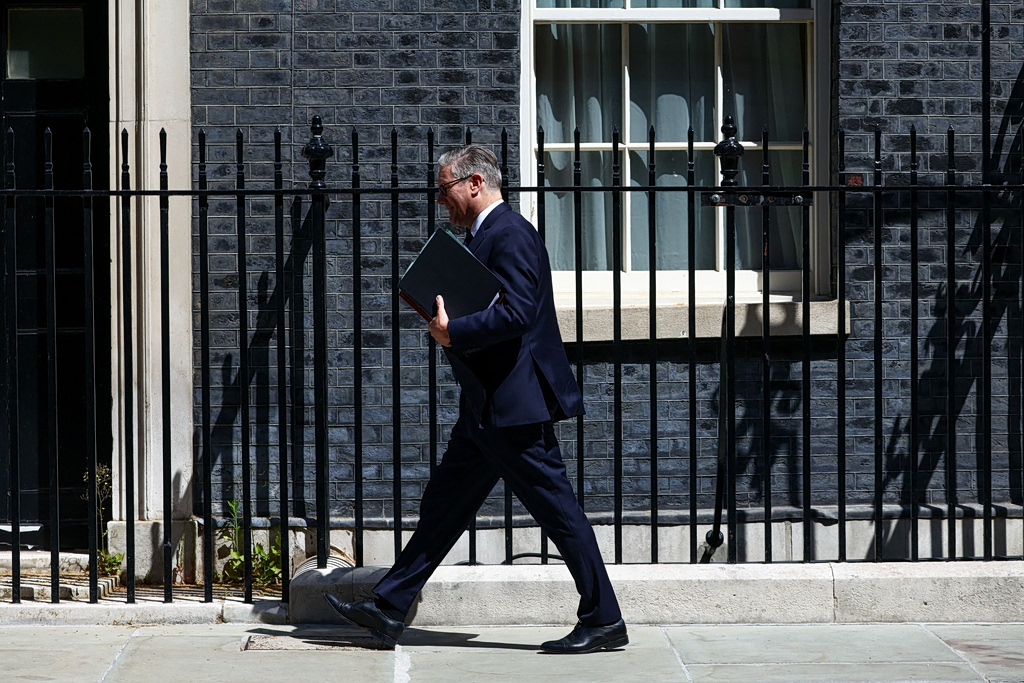
Britain’s Prime Minister Keir Starmer departs Downing Street to attend Prime Minister’s Questions at the House of Commons, following his announcement of the timeline for his resignation, in London, Britain, June 24, 2026. REUTERS/Guglielmo Mangiapane
Dr Miles agrees. “For all the talk of governing in the national interest and prioritizing working people, none of it appeared to cut through,” he says. “He often appeared to have no feel for politics.”
Repeated policy reversals only reinforced that perception.
“Voters like politicians to stick to what they say,” Miles argues. “The repeated U-turns strengthened a negative image of both Starmer and Labour.”
The Burnham moment
Ultimately, however, Sir John Curtice believes one event made Starmer’s position impossible to defend: Andy Burnham’s victory in Makerfield.
“Burnham managed to win handsomely in a pro-Leave constituency where any other Labour candidate would have been expected to lose to Reform,” Curtice tells TO VIMA.
That victory transformed the leadership debate.
“At that point enough cabinet ministers were saying to Starmer, ‘the game’s up’.”
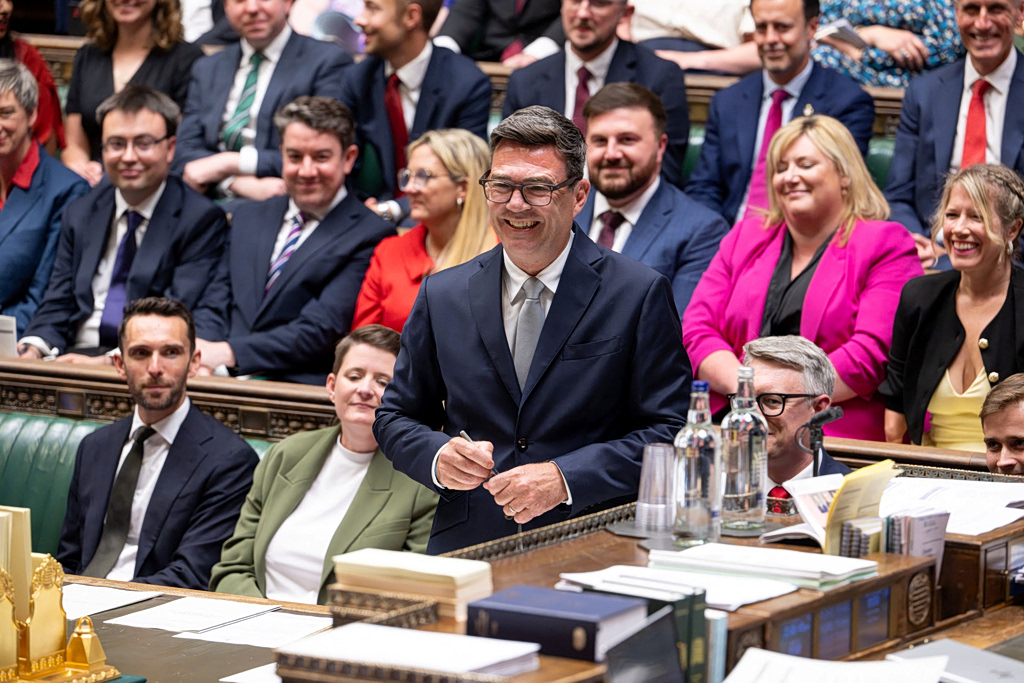
British new Member of Parliament (MP) for Makerfield, Andy Burnham, reacts as he attends his swearing-in ceremony at the House of Commons, in London, Britain, June 22, 2026. © House of Commons/Handout via REUTERS THIS IMAGE HAS BEEN SUPPLIED BY A THIRD PARTY. MANDATORY CREDIT. IMAGE MUST NOT BE ALTERED.
For Labour MPs, Burnham had demonstrated something Starmer no longer could: the ability to win back voters drifting towards Reform UK.
A legacy of achievement – and unfulfilled promise
Starmer’s resignation closes one of the shortest yet most consequential premierships in recent British history.
He rebuilt Labour after its worst defeat in generations and returned the party to government.
Yet, as every expert interviewed by TO VIMA makes clear, electoral victory proved only the beginning of the challenge.
Once Labour MPs concluded that the man who had delivered power could no longer protect it, his fate was sealed.
As Sir John Curtice puts it, “Labour MPs had lost confidence in his ability to win the next one.” In Westminster, there is rarely a harsher political verdict.
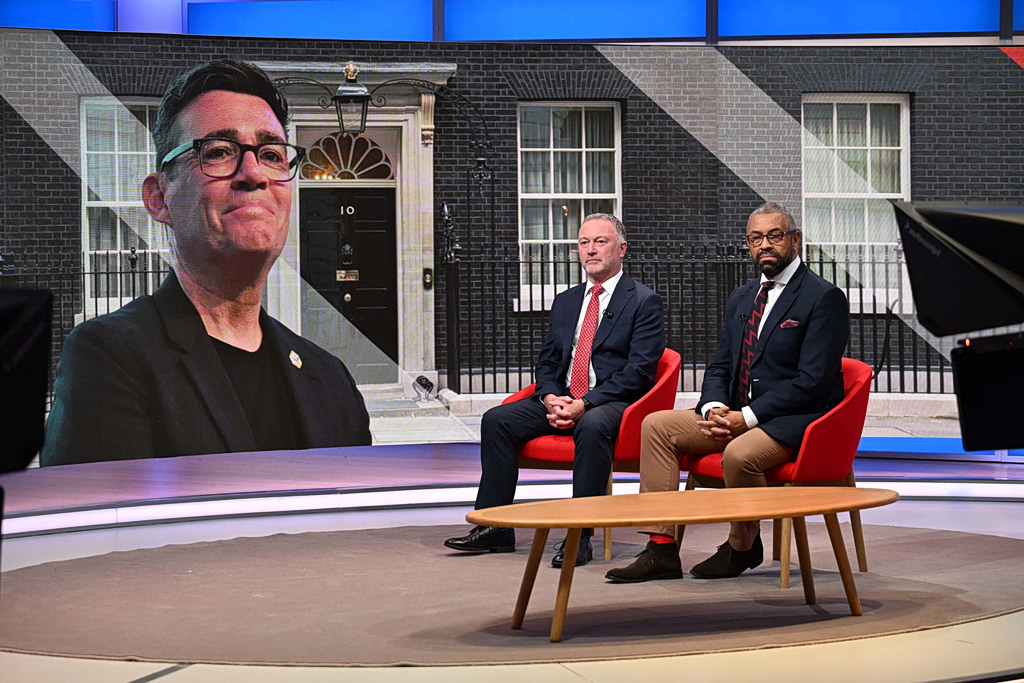
British Housing Secretary Steve Reed and British Shadow Housing Secretary James Cleverly appear on BBC TV’s Sunday with Laura Kuenssberg, as the image of Makerfield’s MP Andy Burnham is displayed in the background, in London, Britain, June 28, 2026. Jeff Overs/BBC/Handout via REUTERS THIS IMAGE HAS BEEN SUPPLIED BY A THIRD PARTY. NO RESALES. NO ARCHIVES. MANDATORY CREDIT. NOT FOR USE MORE THAN 21 DAYS AFTER ISSUE. ANY USE AFTER THAT TIME MUST BE CLEARED THROUGH BBC PICTURE PUBLICITY.
Andy Burnham and Labour’s Next Chapter: Can He Turn Momentum into Power?
Makerfield and the return of a political story
The mood in Westminster on the day Andy Burnham returned to frontline national politics was not one of routine transition, but of acceleration. In Makerfield, the symbolism of his by-election victory was already being read far beyond the constituency itself. It was treated less as a local result and more as a signal of direction.
The sense in political circles was that Labour’s center of gravity had begun to shift – away from Downing Street and towards the North-West.
One academic described the atmosphere as “a moment where expectation begins to outpace structure,” capturing the speed with which Burnham has moved from regional figure to national focal point.
What is striking is not simply his popularity, but the way in which it is being interpreted inside the Labour movement: not as a protest vote or passing surge, but as the outline of an alternative governing style.
A different kind of Labour politics
For Professor Andy Westwood Professor of Public Policy at the University of Manchester, and former government adviser, Burnham’s rise is best understood not as a break with Labour’s direction, but as a change in tone and philosophy.
Burnham, he argues, begins from a fundamentally different political geography – both literally and intellectually.
“He starts from a different city and a different philosophy of government,” Westwood said, describing what is increasingly referred to as “Manchesterism”.
At its core, this approach is about a more active state, but also a more spatially aware one – shifting economic attention away from the traditional Westminster center of gravity.
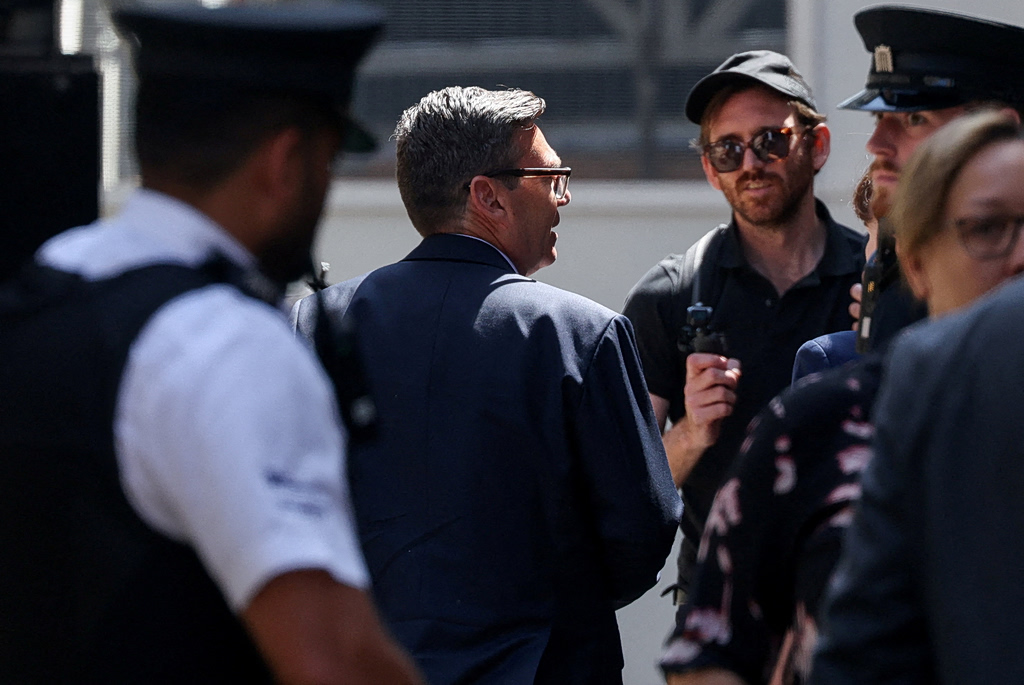
Newly elected Makerfield MP and former Greater Manchester Mayor Andy Burnham arrives at the Houses of Parliament following Britain’s Prime Minister Keir Starmer’s announcement of the timeline for his resignation, in London, Britain, June 22, 2026. REUTERS/Toby Shepheard TPX IMAGES OF THE DAY
Westwood explained that this translates into a governing instinct that is more interventionist and locally rooted. “It means more devolution and more power directed towards regions, towns and cities that have been structurally overlooked.”
But he also stressed that this is not simply ideological branding. It is a political attempt to reshape how government feels to voters.
“It comes with added civic confidence and ambition,” he said, suggesting that Burnham’s appeal lies as much in tone as in policy.
Still, Westwood is careful not to overstate the ease of transition. Governing nationally, he notes, is not an extension of regional leadership. It is a different order of scale entirely.
The challenge of scale and credibility
That gap between regional success and national authority is where many analysts locate the central risk in Burnham’s rise.
David Marshall, Professor of Public Policy at the University of Reading, argues that while Burnham has clear political strengths, they are tightly bounded by expectation.
“He has a good political antenna,” Marshall said, noting his ability to read public mood and communicate directly. “But there is still a big step from running Manchester to running the country.”
For Marshall, the defining constraint is not ideological resistance but economic reality.
“There is very little fiscal headroom,” he said. “So even if expectations rise, the capacity to deliver radical change is limited.”
That mismatch between political energy and economic constraint is, in his view, where most modern British governments come under strain.
Can Labour’s coalition hold together?
If Burnham is now the dominant figure in Labour’s internal conversation, the question becomes whether he can hold together the party’s competing instincts.
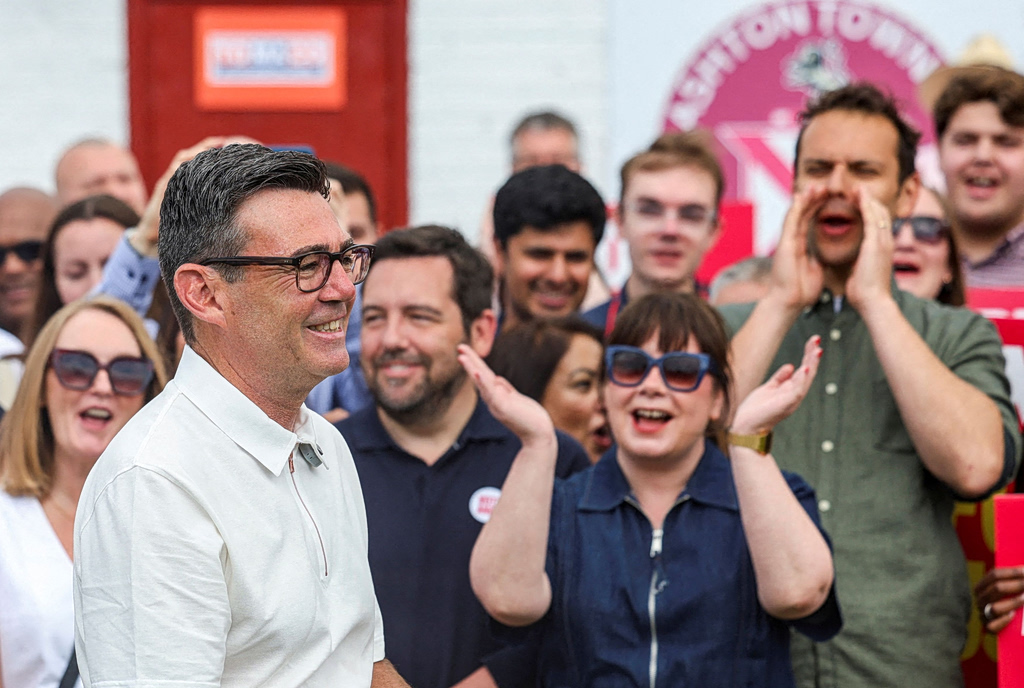
Former Labour MP Josh Simons reacts as outgoing Greater Manchester Mayor and newly elected Makerfield MP Andy Burnham addresses members and supporters of the Labour Party after he won the Makerfield by-election, at the Bartons Group Stadium in Ashton-in-Makerfield, Britain, June 19, 2026. REUTERS/Temilade Adelaja TPX IMAGES OF THE DAY
John Bartle Professor of Government at the University of Essex, suggests that this is far from guaranteed. Labour, he argues, remains a coalition rather than a unified political project.
He describes the party’s electoral base as broad but fragile – held together more by circumstance than ideological cohesion.
“Labour’s support was wide but not deep,” he observed, pointing to the difficulty of sustaining momentum once electoral pressure recedes.
The challenge for any leader, he suggests, is converting that breadth into something more durable once in government.
Expectation politics and the Burnham dilemma
Across the interviews, a consistent theme emerges: Burnham’s rise is driven less by a settled political program and more by expectation.
Dr Jasper Miles Teaching Associate in Politics at the University of Nottingham, notes that Labour’s recent electoral success was never underpinned by strong emotional attachment.
“It held together a coalition sufficient to win,” he said, describing it as a pragmatic rather than passionate alliance.
That distinction matters now, because governing requires something more stable than electoral convenience.
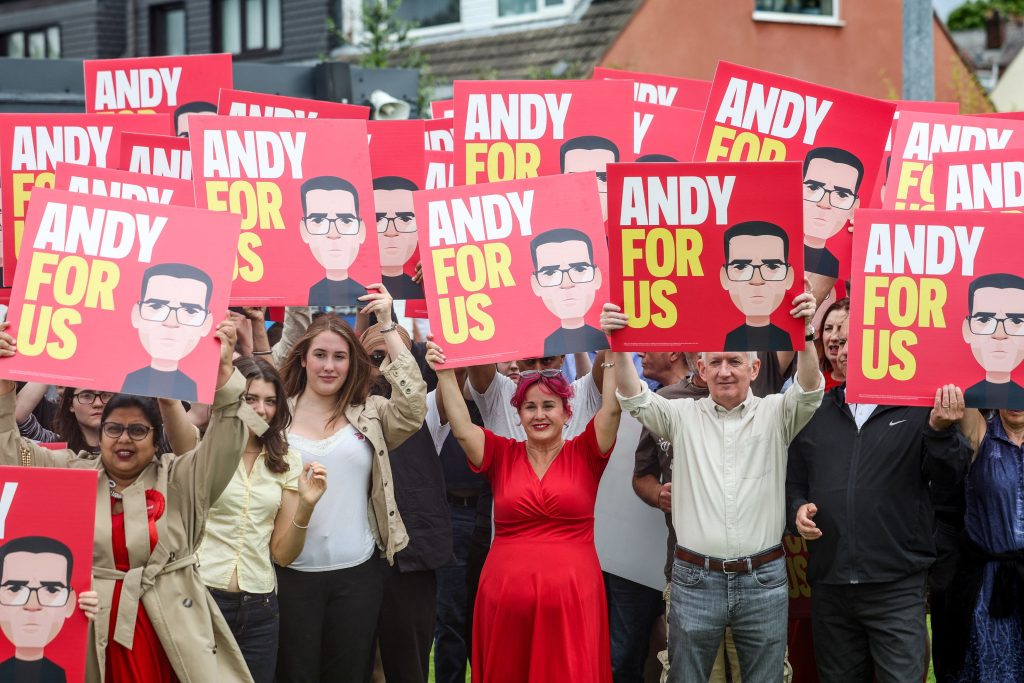
Supporters of the outgoing Greater Manchester Mayor and newly elected Makerfield MP Andy Burnham hold placards at the Bartons Group Stadium ahead of Burnham’s arrival, after he won the Makerfield by-election, in Ashton-in-Makerfield, Britain, June 19, 2026. REUTERS/Temilade Adelaja
Burnham’s difficulty, Miles suggests, will be converting expectation into delivery without the cushion of surplus goodwill.
A party in search of direction
Taken together, the academic and political assessments point to a Labour Party entering a new but uncertain phase.
There is no consensus on Burnham’s political identity beyond a broad sense that he communicates differently, and that he connects more easily with parts of the electorate Labour has struggled to reach.
What is clearer is the scale of the task ahead. Governing constraints remain tight, internal Labour divisions remain latent, and public expectations – if anything – are rising.
As one academic put it, the defining question is no longer whether Burnham can win support, but whether he can sustain it once the pressures of office return in full.
Because in British politics, momentum is rarely the problem.
Sustaining it is.