 Μake us preferred on Google
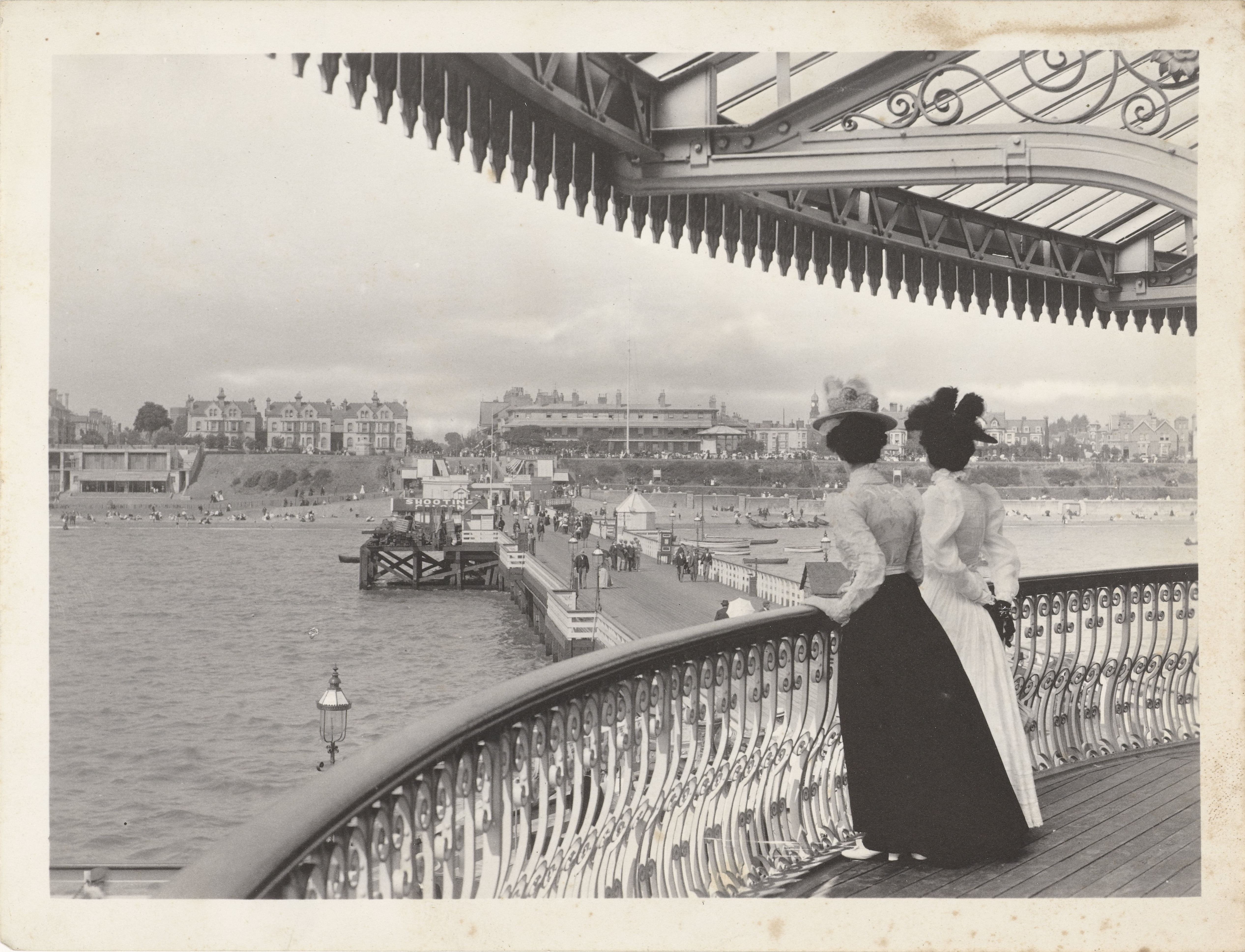
 The sea is calm along Clacton Pier, families drift between amusement arcades and fish-and-chip shops, and holidaymakers stroll across one of England’s oldest seaside resorts. At first glance, little appears unusual in this corner of Essex, where sandy beaches and Victorian promenades have attracted visitors for more than a century. Yet beneath the summer calm, Clacton-on-Sea has become the centre of Britain’s political conversation.
On 13 August, voters in the constituency will elect a new Member of Parliament in a by-election unlike any in recent history.
The contest, triggered by Reform UK leader Nigel Farage after he resigned his seat, has drawn an unprecedented 34 candidates – the highest number ever recorded in a British parliamentary election.
The main Westminster parties have refused to take part, dismissing the vote as a political stunt, leaving Farage facing an eclectic field that ranges from actor-turned-politician Laurence Fox to satirical campaigner Count Binface, alongside a host of independents and candidates from the Official Monster Raving Loony Party.
Farage had hoped the election would reinforce his anti-establishment credentials. Instead, political analysts argue it has become a referendum on his judgement, his leadership and the future direction of Reform UK.
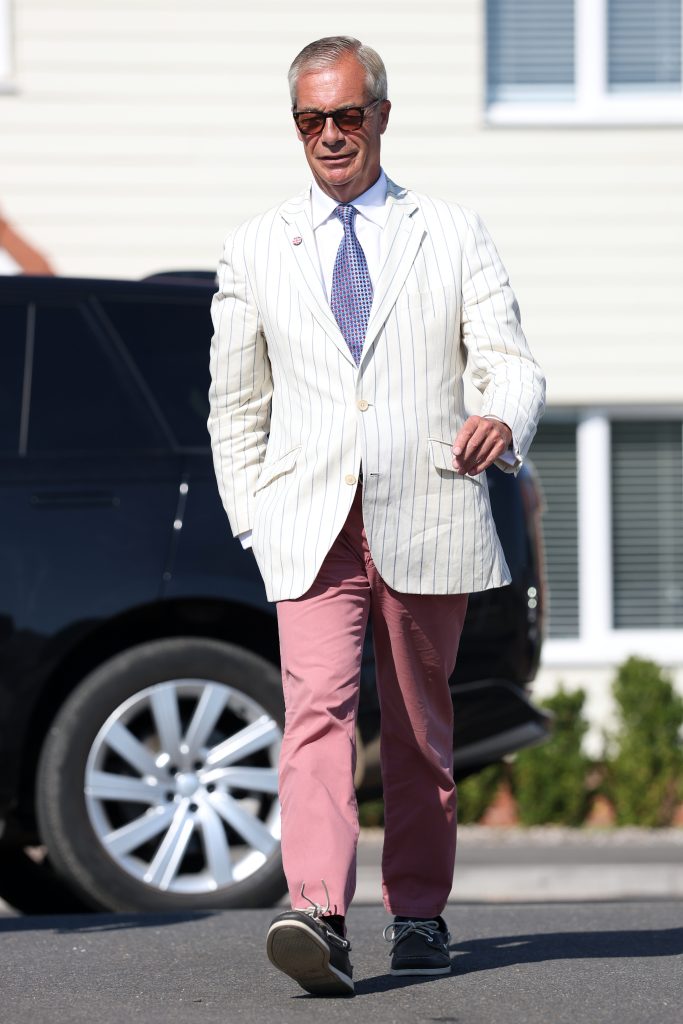
Britain’s Reform UK party leader Nigel Farage arrives at a polling station in Walton on the Naze, Thursday, Aug. 13, 2026 to cast his vote for the Clacton on Sea by-election.(AP Photo/Richard Pelham)
A town with promise – and problems
Despite its sudden political prominence, Clacton remains defined as much by its economic challenges as its coastline.
Will Lodge, Corporate Communications Manager at Tendring District Council, describes the district as “a really beautiful part of England” with a coastline known as the Essex Sunshine Coast. Historic Harwich, the departure point of the Mayflower, sits nearby, while Clacton itself remains a traditional Victorian seaside resort whose sandy beaches continue to attract visitors. “People have been coming here since the Victorian era,” Lodge told TO VIMA. “The railway first came to Clacton to bring holidaymakers to enjoy those beaches.”
Tourism remains one of the area’s principal industries, alongside an expanding care sector serving one of Britain’s oldest populations. Nearby Harwich also benefits from the economic opportunities created by Freeport East and Britain’s offshore wind industry.
Yet behind the postcard image lie deep structural problems.
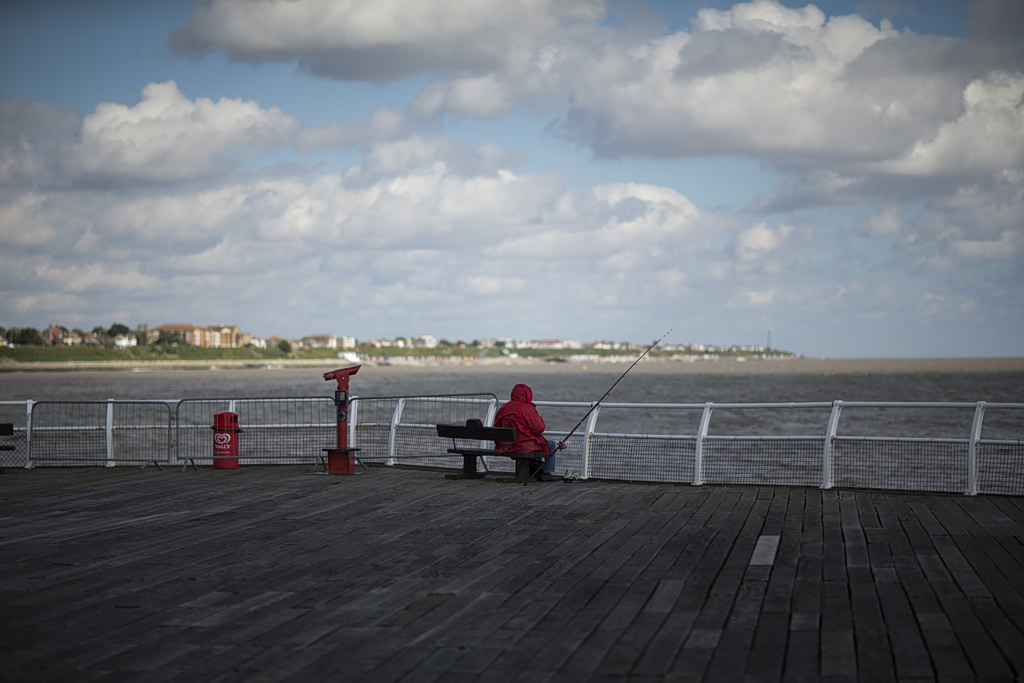
In this picture taken a man fishes off the side of Clacton Pier, which dates back to the 1870s, in Clacton-on-Sea, England. (AP Photo/Matt Dunham)
Jaywick Sands, within the constituency, is regularly identified among the most deprived communities in England. Parts of Clacton town center also rank among the country’s poorest neighborhoods.
Lodge argues that local residents are less concerned with Westminster politics than with restoring “pride in place”.
Significant government investment has funded improvements including a new urgent treatment center, grants for local businesses and community transport projects. “Working with the community,” he said, “we can create a really lovely sense of place here.”
Those local concerns, however, have largely disappeared beneath the national political drama.
The by-election that wasn’t supposed to happen
Farage’s decision to resign surprised Westminster.
The Reform UK leader presented the move as an opportunity to take his case directly to voters. Critics, however, argue it was primarily designed to interrupt parliamentary and media scrutiny surrounding questions over his financial affairs.
Instead of producing the anticipated confrontation between Reform and Britain’s political establishment, the boycott by Labor, the Conservatives, the Liberal Democrats and the Greens transformed the election into an unusual contest featuring independents, novelty candidates and political activists.
The sheer scale of the ballot has created logistical challenges.
Tendring District Council says almost 80,000 electors will vote using ballot papers stretching nearly one meter in length, across 51 polling stations.
For Lodge, the election is historic not only because Britain’s major parties have stayed away, but because of the record number of candidates.
“We’ve smashed that record,” he said, describing the practical challenges of administering such an unprecedented contest.
Political miscalculation?
Among political scientists, there is remarkable agreement that Farage is likely to retain the seat, but disagreement over whether victory would amount to success.
Tim Bale, Professor of Politics at Queen Mary University of London, believes the by-election has already damaged Farage politically.
“Farage will win,” Bale told TO VIMA, “but his decision to resign and call a by-election has backfired badly because the other parties refused to play ball, leaving him looking foolish.”
According to Bale, the Reform leader faces an uncomfortable prospect upon returning to Parliament: renewed scrutiny of the very financial investigation he sought to escape.
“There’s a risk he faces a second by-election,” Bale said, adding that even if loyal supporters continue to back him, he would emerge “a somewhat diminished figure”. “Diminished,” he concluded, “does not mean destroyed.”
Dr Laura Richards-Gray, Senior Lecturer in British Politics at Birkbeck, University of London, reaches a similar conclusion.
“On the face of it this by-election looks insignificant,” she said. “However, this may end up having significant implications for Farage and Reform UK.”
She argues the election has failed to achieve either of Farage’s objectives: ending questions over his finances or creating a straightforward battle against the political establishment.
“The latter is particularly difficult,” she observed, “when his main opposition dresses as a bin.”
Instead, she believes Farage has surrendered control of the wider political narrative while Reform’s national polling has weakened.
Ben Worthy, Lecturer of Birkbeck, offers a similar assessment.
“The by-election was intended to be battle against the establishment, and a way for Farage to escape ongoing investigations,” he said. “So far, it has succeeded in doing neither of these things.” Rather than confronting Westminster, Worthy noted, Farage finds himself “facing a man dressed in a bin”, while renewed attention has focused on his financial affairs.
“It may prove to be a Pyrrhic victory,” he concluded.
Polls suggest resilience – but also warning signs
Polling suggests Farage remains overwhelmingly popular within Clacton itself.
PJ Stock, Research and Data Analyst at Survation, says the Reform leader is expected to secure around 73 per cent of likely votes, with Count Binface trailing on 20 per cent and Laurence Fox polling just 2 per cent.
Perhaps more importantly, 95 per cent of those who backed Reform in 2024 intend to support him again.
Yet the broader national picture appears more complicated.
Public First polling indicates Farage’s net approval rating has fallen from minus 16 in early May to minus 21 by the end of July, with particularly sharp declines among former Conservative voters – a demographic crucial to Reform UK’s long-term ambitions.
Seb Wride, Head of Opinion Research at Public First, believes this represents the by-election’s greatest political consequence. “Farage’s approval has ticked down slightly over the course of the by-election process,” he said. His greatest weakness, Wride argued, now lies among historic Conservative supporters.
“When he was being compared to Keir Starmer, his own approval problems seemed less important. But stood next to Badenoch and Burnham, he starts to look much less popular than the other leaders.”
The by-election, Wride added, has also distracted Reform during an important period for Labor’s new leadership, allowing Labor to define its agenda while Farage remains preoccupied by Clacton.
A debate that extends far beyond Clacton
For some observers, the election has evolved into something larger than a contest for a parliamentary seat.
Alan Sked, founder of the UK Independence Party and Professor Emeritus at the London School of Economics, expects Farage to win comfortably but predicts low turnout.
“I suspect that Farage will be returned again as MP for Clacton on a very low voter turnout and with a respectable showing for Count Binface,” he said.
“Will this be seen as a significant event? No. It will be written off as a political joke.”
Nevertheless, Sked argues Farage faces three substantial political tests after the election: possible cooperation with Rupert Lowe, the consequences of the parliamentary investigation into his finances, and competition from Labour’s Andy Burnham.
Peter Cook, leader of the independent advocacy group Reboot Britain, interprets the contest differently.
Speaking to TO VIMA, Cook argued that the election has become “a test of Farage’s Brexit”, describing Britain’s departure from the European Union as “an unmitigated disaster”.
He contends that the vote represents a wider referendum on Britain’s future relationship with Europe rather than simply another parliamentary contest.
Peter Cook said: “This mock election is really a test of Farage’s Brexit, which has been an unmitigated disaster for Britain. Having promised to take back control of our money, borders and laws, our pound is 15% less valuable after Brexit. Britain has more migration not less. And we have hardly changed any laws as Britain discovered that markets trump populist slogans. Brexit costs Britain between 4–8% GDP loss, or £240 billion lost every year. This trickles down into our cost of living, our NHS, social care and so on. British people know this, and it is causing considerable voter apathy.”
Cook also points to former Conservative MEP John Stevens as “the only serious candidate”, arguing that Clacton voters increasingly recognize the economic consequences of Brexit.
“Brexit’s no joke,” he said.
More than a local contest
Whatever the outcome, Clacton’s by-election has already achieved something unusual.
It has transformed a seaside constituency better known for its beaches than its politics into the focal point of Britain’s national debate.
The irony is difficult to ignore.
A contest intended to strengthen Nigel Farage’s political position has instead become an examination of his judgement, his leadership and his ability to control the political agenda.
Victory now appears highly likely.
Vindication, however, remains far less certain.