What do we do when injustice unfolds before our eyes? Do we persist until something changes, or do we hand power exactly what it is counting on – our forgetfulness? It is easy to point at governments, political parties and institutions. It is harder to examine our own conduct: how we inform ourselves, how we choose, how we remain silent and, above all, how we forget. Power is not sustained only by those who wield it. It is also sustained by those who abandon the task of holding it to account.
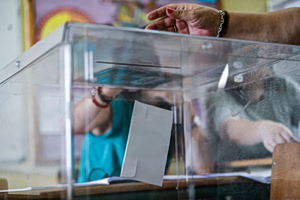
A citizen’s responsibility does not end at the ballot box. Voting is democracy’s most visible moment, but it is not its only one. Information, judgement and comparison must come before it; scrutiny, demands for accountability and a continuous presence in public life must follow. When citizens appear politically once every four years and, in the meantime, surrender their thought, memory and voice, democracy is reduced to a formal procedure for selecting the managers of power.
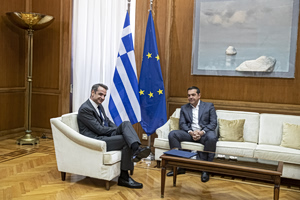
Yet a large part of society continues to vote for the person it recognizes, not the one it has genuinely assessed. Familiarity is recast as competence, a well-known surname becomes proof of credibility, and party identity is inherited like family property. Record, policies and consistency retreat before the power of repetition and the comfort of the familiar. Political recycling is presented as stability, political dynasties as experience, and the absence of genuine renewal as ‘realism’.
This is not simply indifference. Poor information often meets political fatigue, disillusionment and the conviction that ‘they are all the same’. The phrase may sound like distrust of the system, but in practice it shields it. If everyone is presumed identical from the outset, no one needs to be seriously scrutinized, no distinction matters and the citizen is relieved of the burden of choosing. Surrender disguises itself as maturity, while in reality becoming the most convenient form of political paralysis.
Silence is not always neutral. It may spring from fear, exhaustion or genuine powerlessness; but when it becomes a permanent posture, it turns into tolerance. When injustice happens beside us and we do not speak because it does not yet threaten our own job, family or safety, we are not simply standing outside the problem. We are allowing it to take root. We make the naive calculation that we can live in an unjust society without injustice eventually reaching our own door.
This division between ‘my problem’ and ‘someone else’s’ is one of the greatest victories of any system that evades accountability. The unemployed person is left alone because those in work believe it does not concern them. The worker who is wronged is left alone because everyone else fears losing their position. The family confronting an institution is left alone because others hope they will never need that same institution. Then the roles reverse, and each person discovers, too late, that the injustice left unchallenged when it affected someone else had already become the rule.
The public response to the Tempi train disaster challenged, if only for a while, the image of a society that had surrendered for good. Citizens of different ages, political backgrounds and social groups took to the streets with a shared demand: truth, justice and accountability. The scale of the mobilization mattered because it showed that society can still recognize an event that transcends partisan boundaries. It proved that collective conscience has not disappeared.
But it also proved something harsher: anger, however justified, is not enough. A vast demonstration may force power to look towards society; on its own, it cannot compel those in office to account for themselves or change course. Unless mobilization acquires duration, organization, concrete demands and political memory, it becomes a powerful image without equivalent political weight. Daily life returns, exhaustion accumulates, attention shifts and power waits. It has learned that society erupts quickly and forgets even faster.
That is why protest cannot be a momentary release or a ritual that ends when the streets empty. It is a process. It means following developments, checking whether commitments are honored, supporting those who demand justice, applying institutional pressure, participating in collective action and refusing to treat a case as closed merely because it no longer dominates public debate. Persistence is not obsession. It is democracy’s defense against the strategy of delay and oblivion.
What, then, keeps the citizen passive? There is no single answer. Clientelism trains people to see the state not as a system of equal rules, but as a network of personal favors. Weak political literacy leaves them vulnerable to easy slogans and ready-made certainties. Fear convinces them that resistance carries a price. Disappointment whispers that nothing ever changes. And daily economic pressure limits the time and energy they can devote to public life.
There is also a less visible mechanism of inertia: the pace of life itself. Many people have retreated into their own small worlds because they are exhausted. They work, pay bills, care for their families and try to salvage something of a private life. They believe that if they do their job properly, disturb no one and keep their heads down, they may protect what they have. It is human; but it is not enough. Private decency cannot cure public decay. No one can fence off normality within a society that is failing, because sooner or later collective failure breaks into even the most carefully locked private world.
Inside that small world, our personal moments assume enormous weight. A deadline, a bill, a professional setback or a family conflict demands all our attention. On the larger historical scale, however, most of these moments leave no trace. That does not make them unimportant to our lives; it reveals the trap of total withdrawal into private concerns. When all our energy is consumed by managing personal emergencies, the shaping of our common world is handed over to those who possess time, organization and power.
The disappearance of power relations is not a realistic goal. Such relations arise within human coexistence and become even more pronounced in hierarchical systems, where some decide, others execute and others depend. There is therefore no final victory after which power ceases to require scrutiny. A democratic society can only keep restraining its arbitrariness, challenging its abuses and preventing temporary advantage from hardening into permanent domination.
Resistance begins when we refuse to treat as natural what is socially constructed. Hierarchies, clientelist dependencies, political inertia and the belief that ‘this is simply how things work’ are not laws of nature. They are rules, habits and relationships created by people and preserved through repetition. One person’s refusal may appear negligible. But when it meets the refusal of a second, a third and thousands more, it can form a ‘constellation of resistances’: a social counterweight to domination.
History has proved as much. The rights we now treat as self-evident were not granted because power suddenly became generous. They were won through persistent, organized and often painful struggles by people who rejected the rule of their time. The vote, labor rights, equality before the law, access to education and women’s political participation all carry behind them conflict, loss and endurance. Every established right is the memory of a resistance that did not stop when the first mobilization ended.
These conditions explain passivity; they do not politically absolve it. The system does not need everyone to support it actively. It is enough for most people to be convinced that they cannot influence it. It does not require belief; it requires resignation. It need not prove that it works well; it need only present every act of resistance as futile, every collective effort as doomed and every alternative as equally corrupt. The most useful citizen to unchecked power is not its fanatical supporter. It is the person who has abandoned the idea that power can be restrained.
This is where political complicity begins. Not through the convenient equation of the ordinary citizen with those who legislate, govern, control institutions or manage public money. Their power is not equal, and their responsibility cannot be equal either. But citizens cease to be only victims when they trade their vote for a favor, excuse in their own party what they condemn in its opponents, accept patronage as a necessary means of survival, and re-elect without demanding an account. At that point, the clientelist system is not merely imposed upon them. It is reproduced with their participation.
Responsibility, of course, is not confined to those who take part in a transaction. It also lies in forgetting. A society may erupt in anger at every new revelation and still change nothing if it treats each event as an isolated episode. Without political memory, no overall judgement is formed, recurring patterns are not recognized and no real political cost emerges. Every case begins again from zero, and every government acquires the privilege of an endless second chance.
What, then, is the citizen’s real power beyond the vote? It is the ability to turn individual outrage into a collective demand. To consult more than one source, ask for evidence, participate in unions, associations, local initiatives and public consultations, appeal to institutions, support judicial and journalistic investigation, protest peacefully and persist. None of these acts is all-powerful on its own. But when they acquire duration and collective force, they create the one thing every unchecked authority seeks to avoid: political cost.
Political literacy does not mean merely knowing names, parties and election percentages. It means being able to distinguish a right from a favor, an institution from a person, accountability from revenge, and criticism from partisan fanaticism. It also means defending a rule when it is violated against someone with whom we disagree. The institution we allowed to be bypassed for our opponent will already be weakened when we need it ourselves.
We do not need a society in a permanent state of rage. We need one that is demanding, informed and suspicious of every form of power – including the power it voted into office. Democratic maturity is not measured by how fiercely we defend our political camp, but by whether we are willing to demand an account from it. A vote is neither a blank cheque nor an act of faith. It is a temporary delegation of power under continuous scrutiny.
Power does not fear a society that rages for a day and returns obediently to silence the next. It has learned to manage eruptions, wait out exhaustion and invest in forgetting. It fears a society that informs itself, organizes, persists and remembers. A society that does not abandon a demand when the lights go out, that does not wait to suffer injustice before recognizing it, and that grants no one the right to govern without accountability.
The crucial question, therefore, is not only whether we have the politicians we deserve. It is whether we are prepared to become the citizens democracy requires: citizens who do not stop at outrage, but persist after outrage is no longer news; who do not wait to be personally wronged before reacting; and who understand that their forgetfulness is not merely a human weakness, but power’s safest refuge. Yet can citizens truly inform themselves, judge and ultimately resist when the version of reality that reaches them has already been selected, repeated and shaped on their behalf?