 Μake us preferred on Google
 The claim that “every people gets the politicians it deserves” has been repeated so often that it has almost acquired the authority of a self-evident truth. It is a convenient, succinct and ostensibly democratic phrase: since citizens vote, they must bear responsibility for those who govern them. In reality, it often serves as an alibi for power. In a single sentence, responsibility is shifted from the organized political system to the individual citizen; the mechanisms that shape the available choices remain in the dark; and the debate ends before it has even begun.
Citizens are, of course, not without responsibility. They choose, tolerate, re-elect, abstain or remain silent. A large part of society does not seek meaningful information about public affairs and ends up voting for the person it already knows, the person who appears most often, or the person whose name has become an established political reference point. Citizens may denounce the clientelist state while simultaneously seeking a personal favor; condemn political dynasties and then choose a familiar surname; demand meritocracy while taking it for granted that “someone with connections” must intervene on their behalf.
Their responsibility does not end at the ballot box. It begins the moment they remain silent in the face of injustice because it does not affect them directly—or so they believe. When yet another case of mismanagement or institutional abuse comes to light and society responds as though it were happening in some distant country, silence ceases to be neutrality; it becomes the tolerance that power needs in order to carry on. Is this the product of clientelism, poor political education, fear, or the comforting belief that nothing can change? It is probably a combination of all four. Whatever its cause, indifference always has political consequences—and it almost never benefits the powerless.
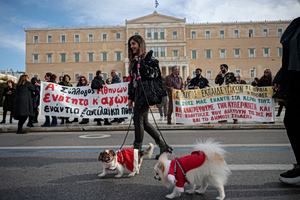
The Tempi tragedy showed that this silence can be broken. For a moment, society moved beyond party divisions and took to the streets en masse, demanding justice, answers and accountability. The mobilization cut across society and revealed the power that public protest still possesses. Yet it also exposed its limits: an uncoordinated reaction, however large, erodes over time unless it acquires continuity, organization and a concrete political demand. Outrage is not enough; we must persist.
Yet that is only half the truth—and perhaps the half most convenient for those in power. Citizens do not choose in a political vacuum or from a genuinely open field of possibilities. They choose among figures who have already passed through the filters of party machinery, funding, name recognition and media exposure. Before a ballot reaches their hands, an invisible process has already determined who will be heard, who will be funded, who will be presented as a “serious choice”, and who will remain politically non-existent. The crucial question, therefore, is not only whom citizens vote for. It is who has already decided from whom they will meaningfully be allowed to choose.
This is where the political system bears the heavier responsibility. A system that endlessly recycles the same faces, the same family networks and the same party dependencies does not merely reflect society’s weaknesses; it organises, cultivates and turns them into a mechanism of self-preservation. It does not passively wait for citizens to become clients. It trains them to believe that, without access to a political office, they are not entitled even to what impersonal institutions should guarantee them. When personal connections become the prerequisite for obtaining what should be self-evident, clientelism ceases to be a deviation: it becomes the unofficial system of government in everyday life. At that point, the system is not malfunctioning. It is functioning exactly as it was designed to function—keeping citizens dependent and its operators indispensable.
This is how the vicious circle closes. Citizens are compelled to turn to a politician to resolve a problem that a functioning institution should resolve as a matter of course. The politician appropriates the institution and presents a right as a personal favour. The favour creates an obligation; the obligation is converted into a vote; and the vote keeps in power those who have every interest in preserving weak institutions. This is not simply a failure of the state. It is the political exploitation of that failure: the less the institution functions, the more valuable the political intermediary becomes.
The same method prevails within political parties. Advancement does not always reward knowledge, consistency, public service or the ability to govern. It often rewards discipline, silence and accommodation to internal party balances. Those who genuinely dissent are treated as a problem; those who obey are treated as an investment. Parties therefore risk functioning less as places where policy is produced and more as mechanisms for selecting the most manageable. The system does not necessarily seek the most capable. It seeks those who will not disturb the conditions of its own survival.
In such an environment, even political identity becomes negotiable. Transfers of figures between parties with entirely different ideological origins are presented as broadening or political maturity, even when they are accompanied by no convincing explanation. Yesterday’s opponents adopt the language of their new party almost overnight, as though convictions were merely clothes to be changed whenever opportunity demands it. This is how the political chameleon is born: not the person who honestly revises their ideas, but the one who sacrifices them on the altar of access to power. When governing becomes an end in itself, ideology ceases to be a commitment and becomes a career tool.
The machinery of public exposure is equally decisive. In contemporary politics, those who are not seen often enough risk being treated as though they do not exist. Visibility, however, is neither distributed equally nor a neutral reflection of merit. Some figures receive relentless exposure, become familiar and are presented as obvious or “safe” choices. Others are excluded from the public arena before their positions and competence are ever assessed. Name recognition is thus manufactured and then offered as proof of suitability. First the political protagonist is constructed; then the citizen is asked to confirm at the ballot box that they recognize the character.
Television retains particular power here, especially among older generations, for whom it remains the principal source of political information. When the same faces, the same interpretations and the same narrative are repeated day after day, television ceases merely to report reality and begins to manufacture it. Repetition replaces evidence, familiarity is rebranded as credibility, and constant exposure is disguised as democratic acceptance. There is no need to censor dissent formally; it is enough to give it so little space that it appears extreme, irrelevant or absurd. When one version occupies almost the entire public sphere, it prevails not because it has been proven true, but because competing versions were never allowed to be heard with equal force.
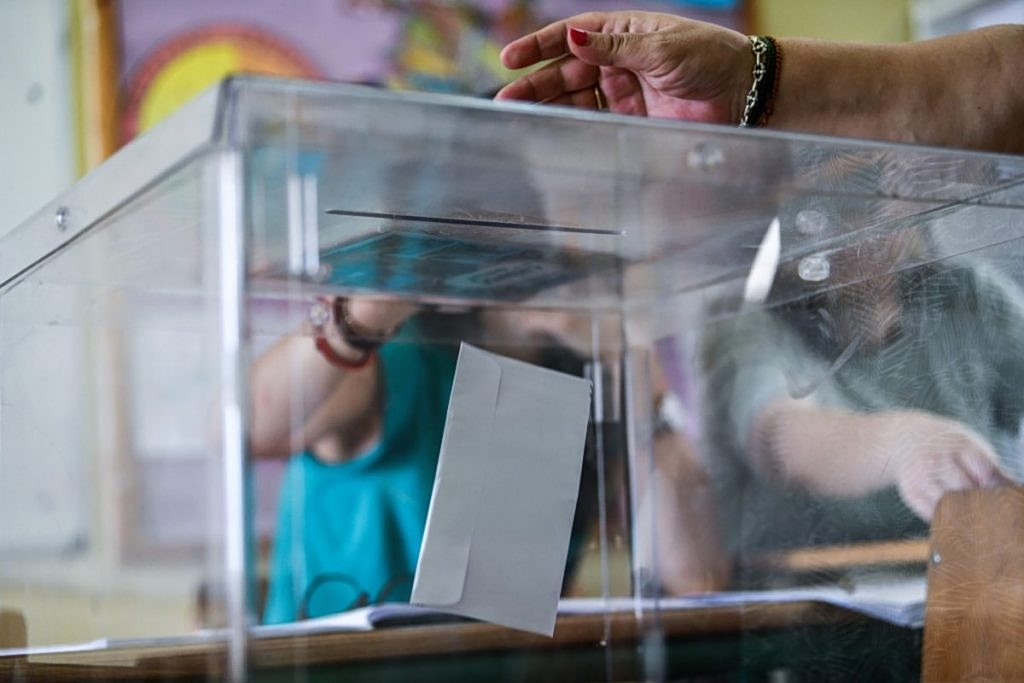
This does not mean that every politician is a product of corruption or that every election result is predetermined. It does mean, however, that the formal freedom to vote can coexist with a profoundly restricted political choice. Democracy is not exhausted by placing a ballot box before the public every four years. It requires open access to politics, transparent funding, internal party democracy, genuine pluralism in the media, and institutions strong enough to ensure that citizens need no patron to preserve their dignity. Otherwise, we retain the procedure of democracy while steadily hollowing out its substance.
Where these conditions are absent, even an honest and capable person faces an almost prohibitive cost of entry. Political dynasties inherit a surname, a network, funding and immediate access to publicity—political capital that is often presented as personal merit. The party pipeline demands years of discipline and accommodation, while the financial cost deters those without money or sponsors. Politics, which is supposedly open to every citizen, therefore becomes far more accessible in practice to those born close to power, financed by it, or willing to accept its terms.
The barriers are social as well. The composition of the political class often bears little resemblance to the society it claims to represent. Workers from less privileged backgrounds, people without financial or party networks, and citizens with first-hand experience of everyday insecurity find it far harder to gain a public voice. Women still face unequal starting points, greater scrutiny and additional obstacles to entering and remaining in politics. The result is not merely a deficit of representation. It is a political class at risk of legislating for lives it has never lived.
These barriers do not merely determine who will be elected. They determine who will ever reach the point of asking for our vote with a realistic chance of success. Some withdraw; others never attempt to participate; and some are forced to assimilate in order to survive. Politics thus expels those who might renew it and rewards those who have learned not to threaten its internal balance. A democracy in which access to politics is inherited, purchased or approved by closed mechanisms may retain the formal shell of democracy, but in substance it operates as a closed profession.
In this environment, abstention is not always indifference. It may reflect disappointment, powerlessness or the belief that replacing individual faces will not change the machinery. Yet withdrawal, however understandable, does not punish the system. It makes the system’s work easier. When the most demanding citizens retreat, politics is left even more firmly in the hands of disciplined party electorates and organized networks. Disillusionment thereby becomes power’s cheapest fuel: citizens withdraw believing they are rejecting it, while in practice surrendering even more space to it.
Responsibility, then, cannot be artificially divided into two equal halves between “bad politicians” and “immature citizens”. There is interaction, but there is no equality of power. The political system controls the institutions, public resources, selection mechanisms and networks of exposure; it also has the power to define the framework within which citizens are called upon to decide. It is not simply another link in the vicious circle. It is the strongest link and often its architect. It therefore bears the greatest responsibility for the circle’s endurance.
Change, consequently, cannot be reduced to the moralizing injunction that we should “vote better”. It is easy to scold citizens for their choices while refusing to change the machinery that limits and directs those choices. The terms on which people enter, remain and advance in politics must change. Access to rights must cease to pass through political offices; parties must develop genuine systems of internal accountability; and wealth or family power must no longer serve as an unofficial passport to public life. Otherwise, we will demand a different vote while stubbornly protecting the system that almost invariably produces the same range of choices.
Perhaps, then, we do not simply have the politicians we deserve. Perhaps we have, above all, the politicians whom a closed system selects, promotes and permits to survive. Until that system changes, assigning responsibility exclusively to the citizen will not merely be unjust. It will remain one more device through which power evades accountability.
No government truly fears a society that is outraged for one day and forgets the next. It fears a society that informs itself, organizes, persists and refuses to return to the normality imposed upon it. Tempi showed that collective silence can be broken. But it also showed that anger, when it acquires neither endurance nor political memory, can dissipate without ever touching the system that produced it. The next question, therefore, is not only which politicians we are allowed to choose. It is also what we do when injustice unfolds before us: do we persist until something changes, or do we offer power precisely what it is counting on—our capacity to forget?