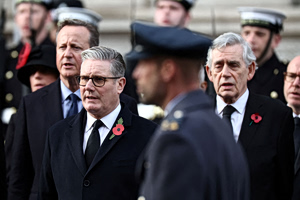
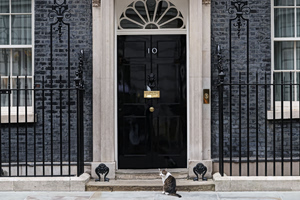
LONDON – The scene in Westminster is one of striking contrasts. Along The Mall, scarlet tunics gleam beneath the June sun, cavalry horses step with practiced precision and thousands of spectators gather to witness one of Britain’s oldest and most treasured ceremonies. The regimental Colours of the British Army – the historic flags once used as rallying points amid the confusion of battle – are carried proudly through the ranks as Trooping the Colour once again marks the Sovereign’s Official Birthday.
Yet behind the pageantry, another drama is unfolding.
As King Charles III prepares to inspect more than 1,400 officers and soldiers on Horse Guards Parade before joining members of the Royal Family on the Buckingham Palace balcony, Westminster finds itself gripped by a deep political crisis. The long-awaited Defense Investment Plan has triggered one of the most serious internal rebellions of Sir Keir Starmer’s premiership, leaving questions not only about Britain’s military future but also about the Prime Minister’s political survival.
A Tradition Forged by War
Trooping the Colour remains one of the most enduring symbols of British statehood.
The ceremony dates back to the seventeenth century, when regimental Colours served a practical military purpose. Before modern communications, soldiers relied upon these flags to identify and regroup with their units on the battlefield. Young officers would march between assembled ranks carrying the Colours high above their heads – a practice that became known as “trooping”.
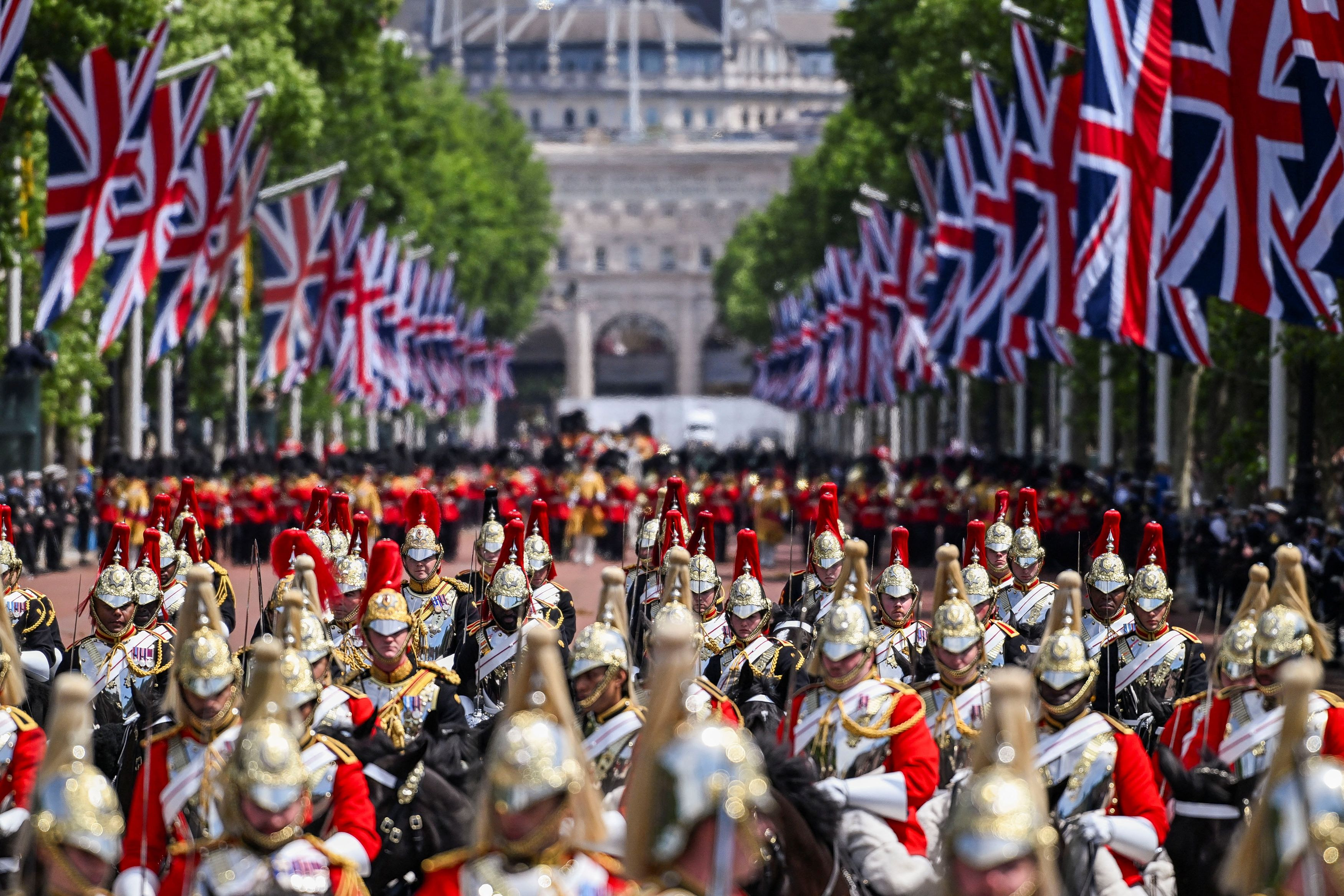
Members of the Household Division march along The Mall during the Trooping the Colour parade to honour Britain’s King Charles, as part of the official birthday celebrations, in London, Britain, June 13, 2026. REUTERS/Chris J. Ratcliffe
Since 1820, with only a handful of interruptions, the parade has marked the Sovereign’s Official Birthday. Today, it remains a spectacular demonstration of continuity, involving more than 1,400 troops, 200 horses and over 400 musicians.
This year, however, the symbolism appears especially powerful.
Sources speaking to TO VIMA suggest that the atmosphere surrounding the event feels markedly different from previous years, reflecting growing public anxiety over international security, war in Europe and Britain’s military preparedness.
Professor Anna Whitelock, Executive Dean, School of Communication and Creativity and Professor of History of Modern Monarchy at City St George’s, University of London, believes the ceremony continues to play an important constitutional role.
“Fundamentally the meaning of Trooping the Colour has not changed and it remains a formal display of military precision celebrating the British monarch’s official birthday. However some changes have been made eg The event has increasingly been used to signal solidarity and contemporary awareness. For example, the King requested the Royal Family wear black armbands during the parade to honor global tragedies, and since 2023 the parade has evolved so that all five regiments of the Foot Guards are now routinely in attendance together as a unified showcase of contemporary British Armed Forces rather than rotating isolated units as had previously been the case for decades.”
She adds that royal ceremonies continue to reinforce national identity and continuity, while public attitudes toward defence have shifted since Russia’s invasion of Ukraine, reflecting a growing belief “that investment is needed and the strength of the armed forces wasn’t what it once was.”
Defense Revolt at the Heart of Government
That concern now lies at the center of an escalating political battle.
The government’s proposed Defense Investment Plan, designed to implement the ambitions outlined in the Strategic Defense Review, has become the source of extraordinary tension between the Ministry of Defence, the Treasury and Downing Street.
The dispute culminated in the departures of Defense Secretary John Healey and Armed Forces Minister Al Carns after disagreements over military funding.
The plan was a crucial component of Britain’s efforts to meet a NATO target agreed by the Prime Minister a year earlier, under which defense spending would rise from 2.6 per cent of GDP in 2027 to 3.5 per cent by 2035 — an increase estimated to be worth almost £30 billion in real terms.
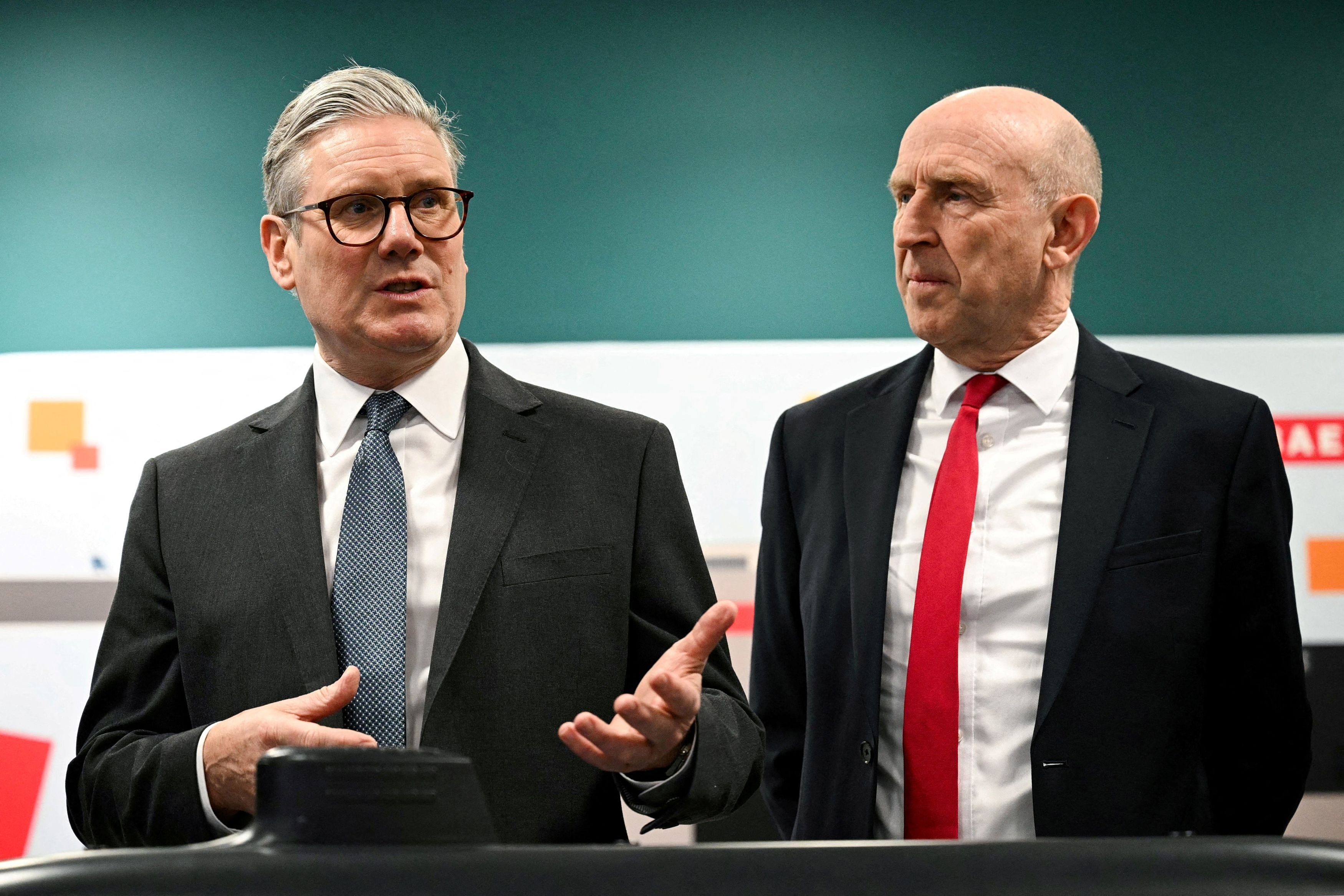
FILE PHOTO: Britain’s Prime Minister Keir Starmer and Britain’s Defence Secretary John Healey meet with BAE system apprentices during a joint visit in Barrow-in-Furness, Britain, on March 20, 2025. OLI SCARFF/Pool via REUTERS/File Photo
Despite declaring in February that Britain “needs to go faster” on defense spending, Starmer reportedly offered Defense Secretary John Healey only an additional £2 billion by 2030 – equivalent to just 0.08 per cent of GDP.
Healey argued that the proposed spending package failed to match Britain’s strategic ambitions, while Carns warned that the Defense Investment Plan was “neither transformative enough nor sufficiently funded”.
The resignations have intensified scrutiny of Sir Keir Starmer’s leadership at a moment when Britain faces increasing geopolitical uncertainty and mounting NATO expectations.
Officials acknowledge that the government has struggled to reconcile ambitious military commitments with broader fiscal constraints. The Defense Review outlined plans ranging from support for NATO commitments and expanded munitions production to major programmes such as AUKUS and the Global Combat Air Program.
The central question remains simple: how can Britain afford all of it?
The Cost of Security
For some experts, the issue is not simply how much Britain spends but how effectively it spends.
Paul Rogers, Emeritus Professor of Peace Studies at Bradford University, offers a stark assessment.
“The Plan will fail dismally in three main ways.
First, the UK has been a party to four failed wars in barely 25 years: Afghanistan, Iraq, Libya and ISIS (in Syria and Iraq 2014-2018). Without a fundamental understanding of the reasons for this, we will have a very bad basis for an effective security policy.
Second, it has a very poor record of severe cost overruns and failed projects, especially for army and navy equipment.
Third, it fails to recognize and respond to the overwhelming issue of accelerating climate breakdown. Any Defense Investment Plan that fails in that respect alone is little short of worthless.”
Others argue that additional spending is unavoidable but must be targeted more intelligently.
Paolo Surico, Professor of Economics at London Business School, believes the debate has become trapped by short-term fiscal arguments.
“Britain should not ask only whether to borrow for defense, but what that borrowing would finance.”
He argues that borrowing should be directed toward defense innovation, support for high-growth technology firms and investment in critical industrial capabilities rather than simply expanding existing procurement program.
“The real choice is not between guns and butter. It is between investing in the capacity to produce both or paying more for less.”
Strategic Ambition Meets Political Reality
The challenge facing government is therefore both strategic and political.
Speaking to TO VIMA, David J. Galbreath, Professor of War and Technology at the University of Bath, sees merit in the government’s direction but warns that difficult choices remain ahead.
“Basically yes I do think that true government is headed in the right direction but it will not be easy as there is much the UK Government will need to offset against any growth in defe
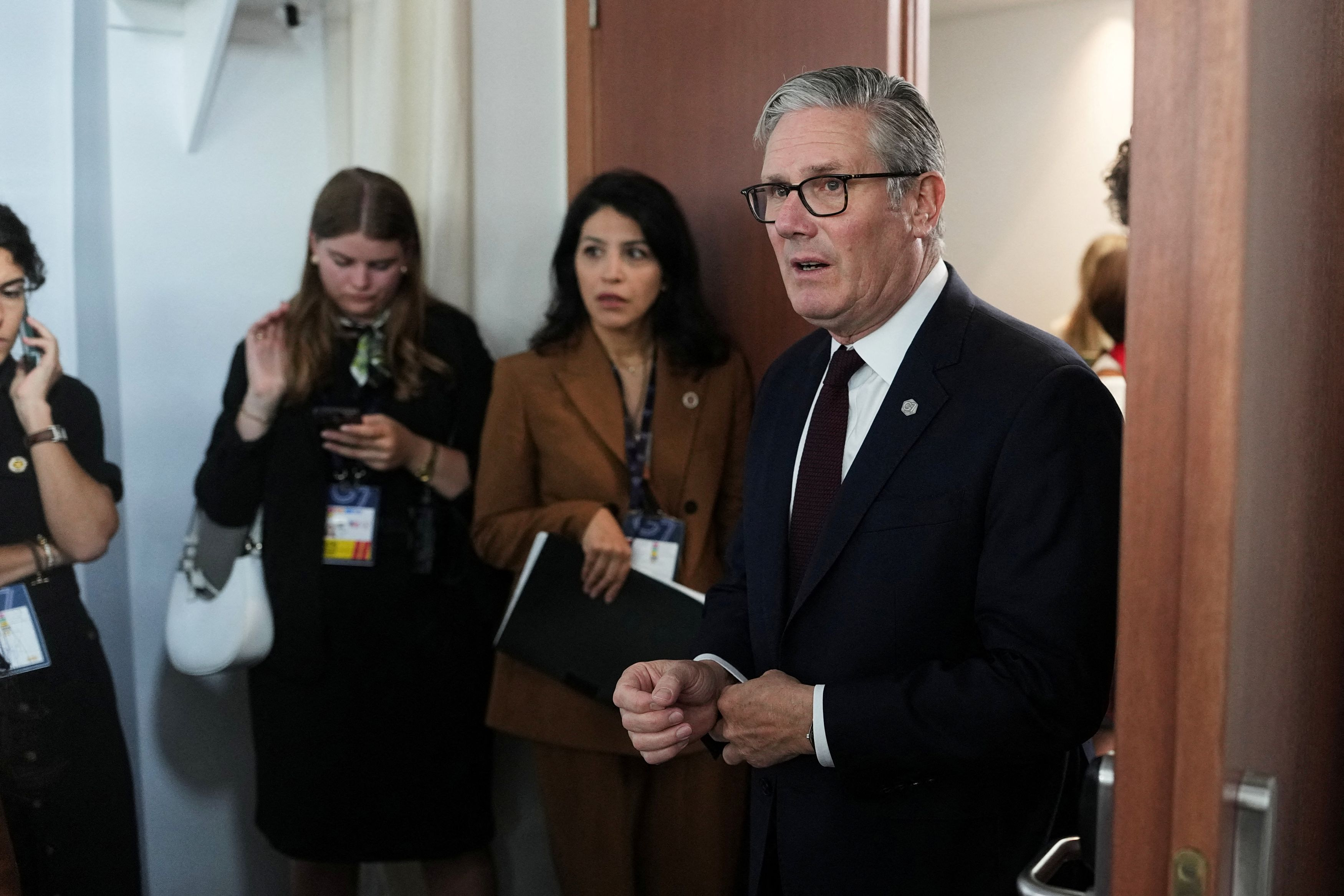
British Prime Minister Keir Starmer arrives for a working session at the G7 summit in Evian-les-Bains, France, June 16, 2026. Thibault Camus/Pool via REUTERS
nse budgets. Saying it is a step in the right direction is one thing, but the biggest challenge is figuring out what exactly is the defense problem. We see the North Atlantic being an issue, Eastern Europe also as well as an increasingly undependable ally in the United States.
So the question is what will we buy with this increased budget and other than a targeting system and new submarines, it is hard at this point to see where that money is going.”
His remarks highlight a broader dilemma confronting policymakers throughout Europe. Defense budgets are rising, yet governments continue to debate precisely what capabilities future conflicts will require.
A Parade Under a Gathering Shadow
As the King’s Guards march down The Mall and military bands echo across central London, Trooping the Colour continues to offer a powerful image of stability, continuity and national resilience.
Yet the symbolism this year extends beyond the monarchy.
The spectacle unfolds against a backdrop of war in Ukraine and Iran, rising geopolitical tensions and a domestic political crisis centered on Britain’s defense future. The historic Colours once guided soldiers through the uncertainty of battle. Today, they serve as a reminder that nations, like armies, require clear direction in moments of danger.
For Sir Keir Starmer, that challenge has become immediate and intensely personal. The Defense Investment Plan was intended to demonstrate strategic vision and strengthen Britain’s security credentials. Instead, it has exposed divisions at the highest levels of government and raised fresh questions about leadership, priorities and political authority.
As aircraft of the Royal Air Force roar over Buckingham Palace and crowds cheer the ancient ceremony below, Westminster faces a very modern question: can Britain find the resources, political will and strategic clarity necessary to meet an increasingly uncertain world?
This year, Trooping the Colour remains a celebration of monarchy and military tradition. But it is also a reminder that beneath the splendor of British pageantry lies an anxious national debate about power, security and the future direction of the state itself.