To Albert Einstein’s hypothesis, rooted in the terror of nuclear weapons, that “World War IV will be fought with stones,” one could add a first element based on lived experience: today’s war is fought with keyboards. This is the beginning of a beginning which one hopes will not lead to a Third World War—and, even more, that the nuclear button will not be pressed. If that were to happen, it would certainly confirm Einstein’s hypothesis.
The hypothesis, not the prophecy. Emmanuel Macron did not turn into a prophet in a suit and tie by promoting the idea of a “nuclear umbrella” that would cover European territory. He too based himself on the assumption that a sequence of escalations can lead a theoretically controlled situation to an uncontrollable catastrophe. What does this mean? That the anarchist student from Serbia probably never imagined that, by assassinating the Archduke of Austria, Europe would end up counting millions of dead in its mud. That just two bullets would turn the Old Continent into a vast cemetery.
Nothing therefore guarantees that a war fought with keyboards will not escalate into a more deadly one—or even the deadliest in history. Nothing ensures that the “safety specifications”—drone operators working from a “remote room,” “locked targets,” and “precision strikes”—will not collapse because of random events and unpredictable factors. Joysticks are all very well, but if one wants greater peace of mind, it would be better to prepare for both the most likely and the most unlikely scenarios.
To gather forces, as has happened, in Cyprus. And yes, to set up a nuclear umbrella as well, just in case. It is probably the minimum one should do when at the head of the most powerful country on the planet there is not only a president accompanied by the certainty that he is “unpredictable,” but also by the well-founded suspicion that he is not at all far-sighted.
Analysts and insiders pointed out from the very first days of the remote operation in Iran that the United States had no plan, and that if someone wanted to diagnose the course of events, they should turn their attention to Israel’s moves and draw information from there. “They know their business,” as one analyst who speaks with the well-informed put it.
Why is this study worth its weight in gold? Because it strengthens the ability to foresee developments. And what one is above all called upon to foresee is the “right side of history.” That is the prediction of predictions—or, more cryptically, the prophecy of prophecies.
The objective becomes even more important now that the camps are no longer entrenched as they once were, nor are alliances taken for granted. A rather short-sighted reading—one that has certainly been disproved in the past—says that to come out unscathed it is enough to placate the monster of the era. It is not so; it never was. Another view argues that it is enough to play with many sides while ensuring that none considers you its own. But if one looks nearby, one will see that Turkey moved from the penthouse of “multi-dimensional foreign policy” to the basements of embarrassment—and not step by step, but by elevator.
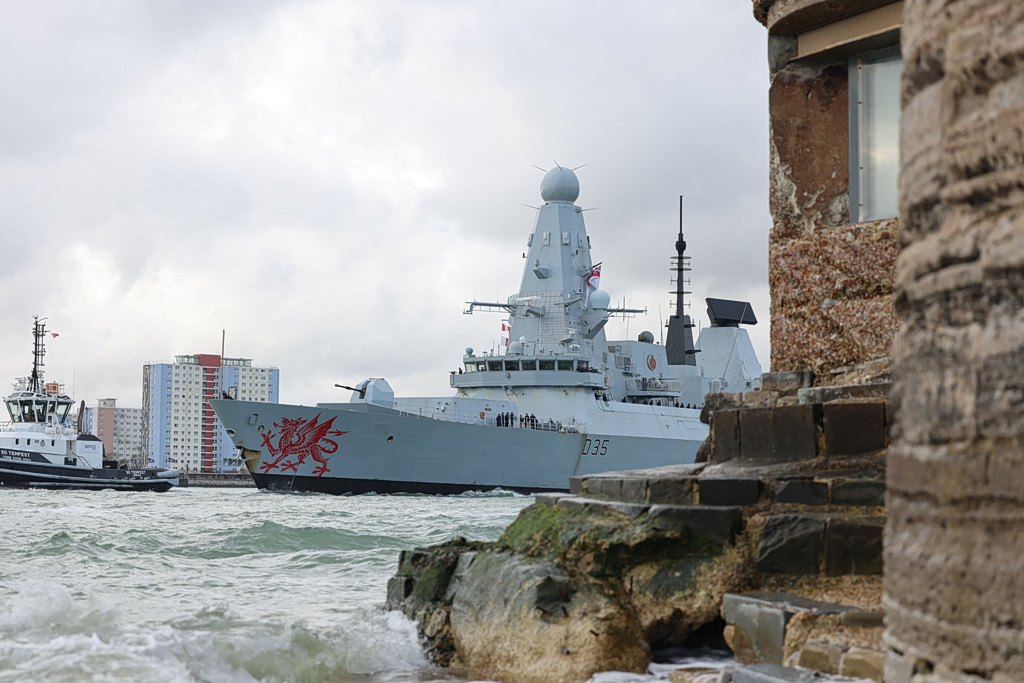
From Venezuela to Greenland, Trump sees the world like a platter—a flat surface where all you have to do is bring your thumb and forefinger together to pick up the morsel you desire. The others see a reality of multiple dimensions: Iran striking the Arabs, Ukraine offering defensive know-how to the Gulf Emirates, and a number of European countries assisting “Kimon” in the Southeastern Mediterranean.
Much has changed in the Third Gulf War, yet nothing has changed since the Russian invasion of Northeastern Europe. Already from that moment, one should have been able to “prophesy” whom you would side with—and whom you would leave behind.