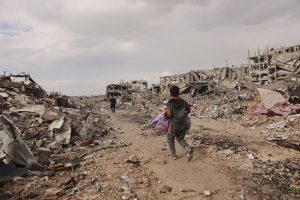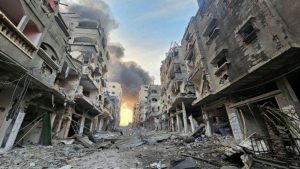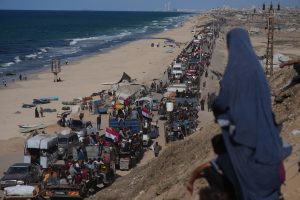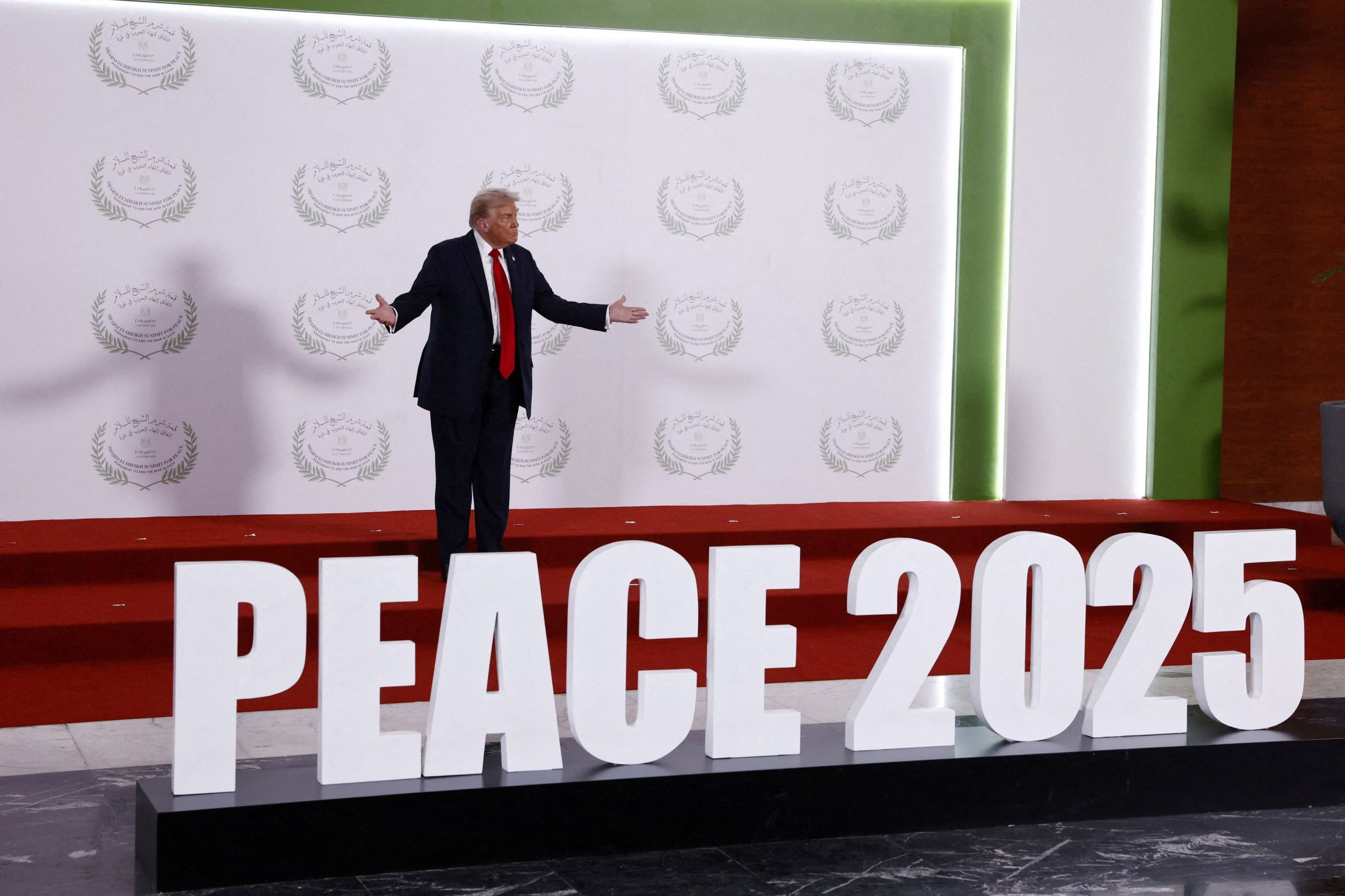
The first phase of the Gaza peace plan promoted by US President Donald Trump seems to be delivering a cessation of hostilities and a partial resumption of humanitarian deliveries to the Palestinians of Gaza, despite occasional hick-ups. It will hopefully be completed soon, with the return of all bodies of deceased Israeli hostages, the unhindered provision of food, water, medical supplies and fuel to the Palestinians, and the further withdrawal of Israeli troops from Gaza. What will follow after that is still unclear, though. The next phase is the most crucial, when peace should be consolidated and reconstruction started from the ruins.
President Trump’s 20-point (formerly 21-point) peace plan provided for a supervisory Board of Peace and an International Stabilization Force, as well as for a committee of Palestinian technocrats running Gaza. Hamas was supposed to disarm and have no role in the governance of the Strip, while the Palestinian Authority (PA) that now basically runs parts of the West Bank, always under Israeli tutelage, would be allowed to take over Gaza too once it (i.e. the PA) had proven that it had reformed itself.
To avoid another conflict, a clear vision for the future of Gaza and of the entire Occupied Palestinian Territory (OPT – West Bank, Gaza Strip and East Jerusalem), needs to be articulated and pursued with vigour. It certainly would not be enough to offer another drawn-out process with numerous hurdles for Palestinians to achieve statehood at some undetermined point in the future. There cannot be another compliance checklist that gets longer instead of shorter with time, essentially managed by the occupying power, Israel, and serving the latter’s declared purpose of never really permitting Palestinian self-determination. The State of Palestine, currently recognized by more than 150 states around the world, needs to move beyond the declaratory stage and take actual shape without Israeli interference.
The Israeli government will not spontaneously agree to that, or to removing the illegal Israeli settlements from the West Bank and East Jerusalem. For political, ideological/religious and economic reasons it won’t easily allow the Palestinians to control their territory, take charge of their imports and exports, and manage their water and other resources. It will be a major scandal, though, if Israel is once again allowed a veto vis-à-vis the process of Palestinian self-determination, be it through the US voting always in support of Israel on the UN Security Council, or through reliance on US or other Western mediators that are clearly partial towards Israel, through the continuing fragmentation of the West Bank and East Jerusalem by Jewish settlements, or through Israeli military superiority.
The real international community should take charge – not the Western governments and media that claim to be it, usurping the title in the hope of also carrying humanity’s collective moral authority with it. Humanity in all its diversity, expressed through the UN’s 193 member states and their numerous General Assembly resolutions, should be overseeing the process of transition to a fully independent and contiguous Palestinian State in the whole of the OPT within a reasonable period of time, say two to three years. The Palestinian Authority would need to get ready for that by strengthening its administrative capacity, political legitimacy and transparency, with a mutual non-aggression pact concluded with Israel. Israel clearly needs to undergo a transition and reform itself too, to atone for the decades-old legacy of occupation, apartheid and genocidal suppression, complying with UN General Assembly resolutions, as well as with the current and future decisions of the International Criminal Court (ICC) and the International Court of Justice (ICJ).
It would make sense for the real international community, as defined above, to set milestones for the successful completion of the respective transitions and reward both sides, Palestine and Israel, according to the progress they make, in tandem. For that to happen, privileges bestowed only on Israel as of now need to be frozen, until the same privileges can be bestowed on the State of Palestine. Israel and Palestine were meant to be created at the same time through the UN partition plan of the late 1940s. Israel went ahead and established itself, but needs to slow down a bit, to enable Palestine to catch up.
Here are a couple of symbolically powerful moves that could demonstrate the international community’s seriousness about having two equal states living side by side in peace and prosperity:
- Conditioning Israeli participation in the UN with Palestine also becoming a full UN member
The UN General Assembly’s Credentials Committee could stop accepting the representatives of Israel till the Security Council recommends that Palestine becomes a UN member.
- Israel and Palestine participate in the Eurovision song contest
In this less “serious” but popularly very meaningful move, Israel’s participation in the next Eurovision Song Contest due to take place in Vienna in May 2026 would be made conditional by the contest organizers, the European Broadcasting Union (EBU), on the participation of Palestine too.
If handled decisively by objective third parties, in both of the above cases the penalization of Israel would be avoided by the latter starting to share its privileges with its lost-and-found “twin sister”, Palestine. There needs to be innovative and determined action to make the two-state solution a reality, as this may be the last window of opportunity before utter disaster befalls the parties, the region and the world.