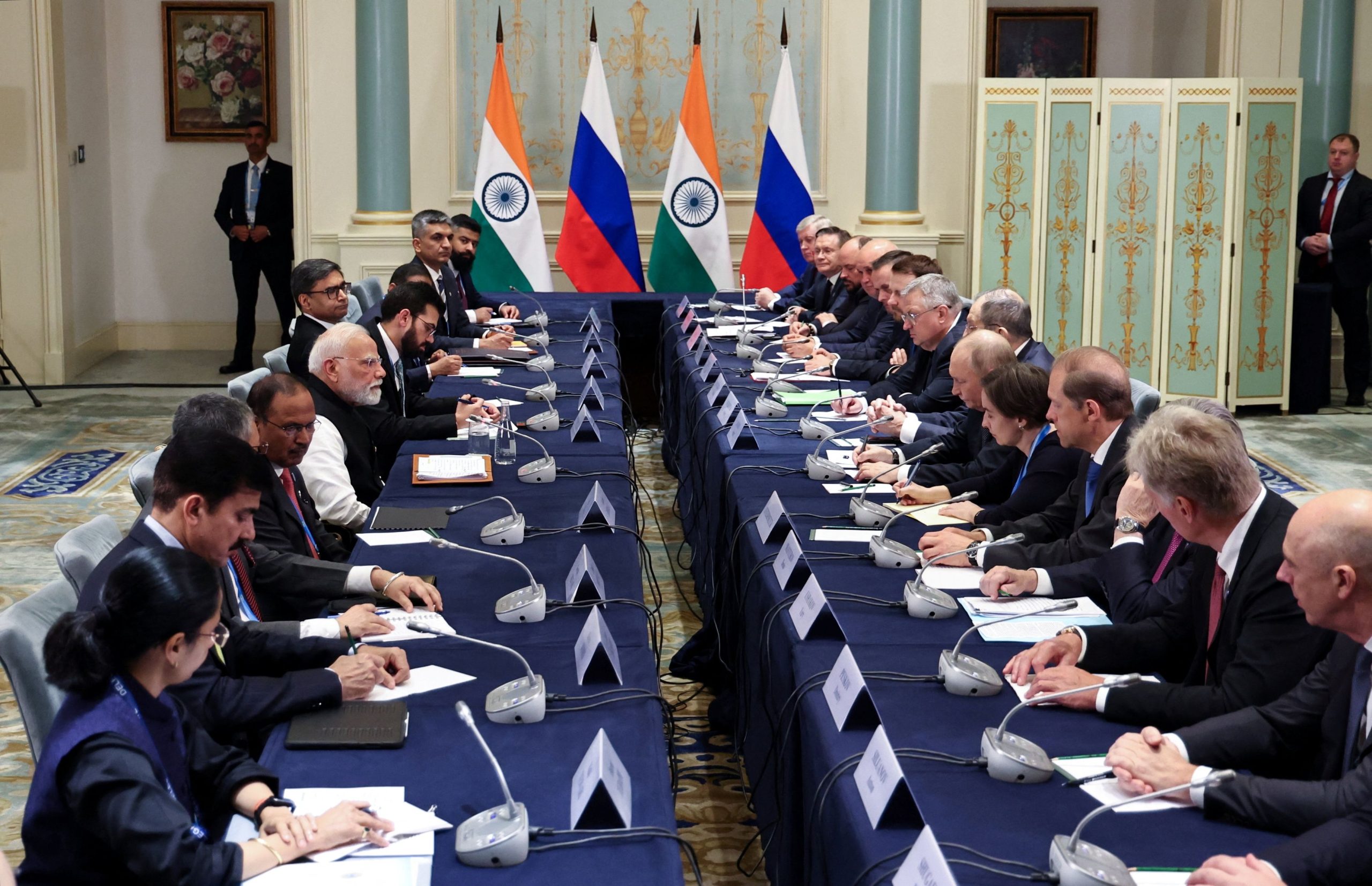
The Shanghai Cooperation Organization (SCO) summit in Tianjin this week is far more than a routine diplomatic gathering. It is a carefully choreographed demonstration of China’s ambition to shape a new global order — one less dependent on Western institutions and rules.
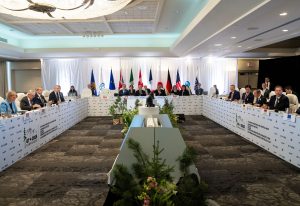
The presence of Xi Jinping, Vladimir Putin, and India’s Prime Minister Narendra Modi at the same table sends a deliberate signal: Beijing wants the SCO to stand as an alternative pole of influence to NATO, the EU, and the G7. The summit is accompanied by a grand military parade in Beijing, underscoring that China now seeks to combine economic clout with military symbolism — something it had previously avoided projecting so openly.
The economic message: the SCO Development Bank
The most notable outcome is the announcement of a new SCO Development Bank. More than a financial instrument, it is a political declaration. Modeled on the Asian Infrastructure Investment Bank and the BRICS New Development Bank, the new institution aims to:
- Provide financing to states with limited access to Western capital,
- Promote large-scale infrastructure and energy projects, and
- Advance the internationalization of the yuan, gradually reducing reliance on the US dollar.
In essence, China is not merely funding projects. It is building parallel institutions to those that have long underpinned the Western-led order.
The SCO embodies multipolarity in practice, the reality of a multipolar world. For Russia, it is a stage to escape isolation. For India, it is a venue to recalibrate relations amid tariff tensions with Washington. For Central Asian states, it is a forum that bypasses Western “gatekeepers.” And for China, it is the ultimate platform to project itself as a global power broker capable of convening leaders who might otherwise keep their distance.
This reflects a broader trend: the emergence of dual geopolitical architectures. On one side, traditional Western institutions. On the other, an expanding Sino-Russian ecosystem of banks, forums, and security frameworks.
Consequences for the international system
- Monetary competition — moves toward de-dollarization could alter trade flows worldwide.
- New dependencies — SCO financing may bind countries more tightly to Beijing’s orbit.
- Institutional fragmentation — parallel systems risk deepening instability rather than creating balance.
A Greek perspective
From Greece, these shifts may feel distant, yet they are not. The country is deeply embedded in the EU’s economic and political fabric, but also hosts one of the flagship projects of China’s Belt & Road Initiative: the Port of Piraeus. Greece has witnessed firsthand how Beijing couples investment with long-term strategic influence.
Moreover, as an Eastern Mediterranean state, Greece sits at a crossroads where global trade, energy corridors, and great power competition intersect. The potential rise of SCO-linked financing for infrastructure and energy projects could indirectly affect the region’s balance of power, shaping the options available to smaller states caught between Western institutions and Chinese-backed alternatives.
For Athens, the challenge is not about choosing sides but about understanding the rules of a game that is rapidly changing. The Shanghai summit reminds us that the world is reorganizing itself around competing centers of power. For Greece — and for Europe more broadly — strategic relevance will depend on whether we engage with these shifts as passive observers or as active players capable of promoting our values and interests.
Nikos S. Panagiotou; Professor, Director Peace Journalism Lab, School of Journalism and Mass Communications Aristotle University of Thessaloniki.
Christos Frangkonikolopoulos; Dean of the Faculty of Social and Economic Sciences, Professor, School of Journalism and Mass Communications. Aristotle University of Thessaloniki