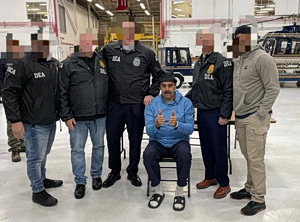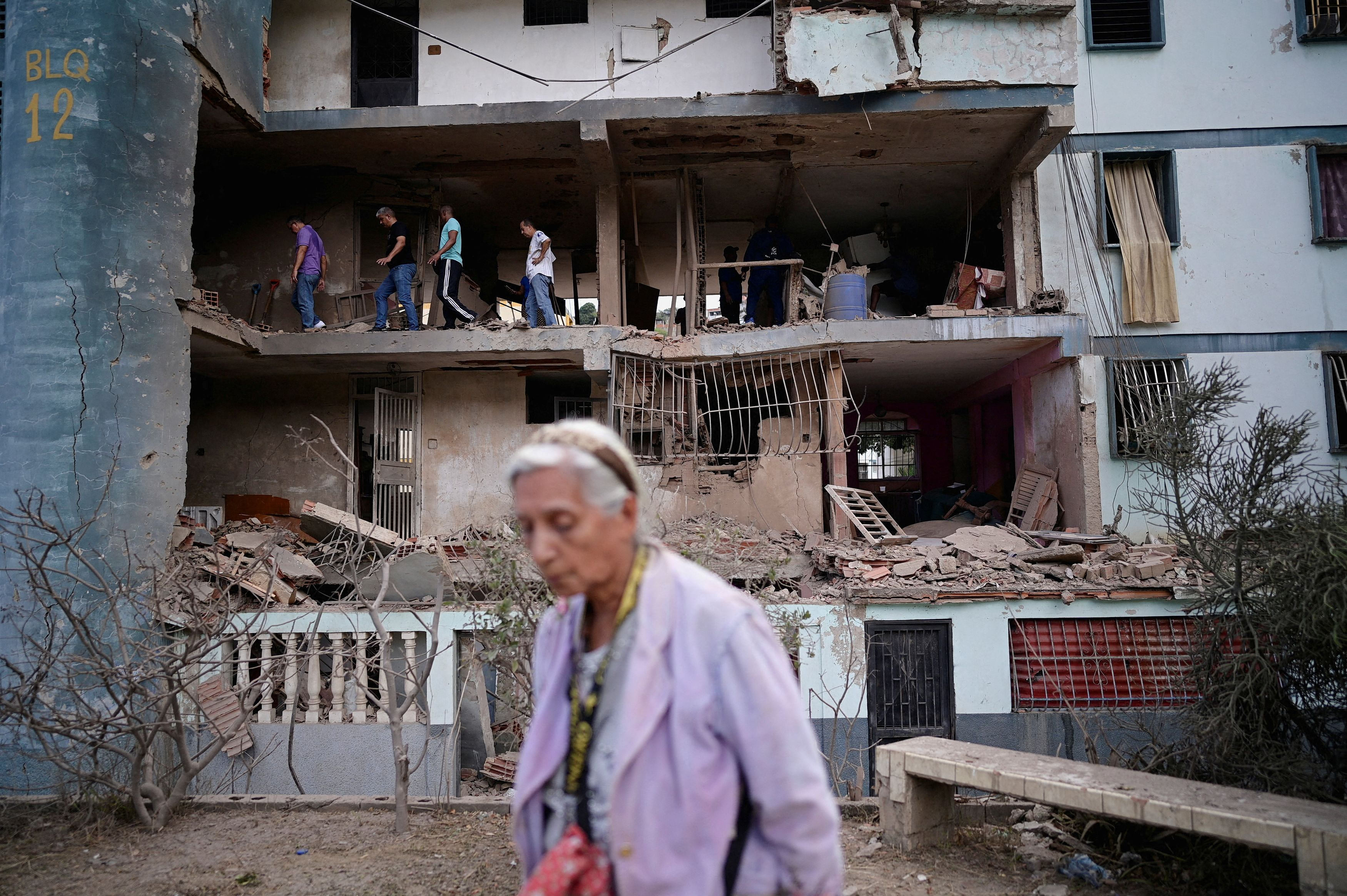
The fireworks welcoming the new calendar year around the world had barely ended, when another kind of firework display started, sponsored by the US taxpayer and directed by Donald Trump: America struck key Venezuelan military installations and abducted President Maduro and his wife, to try them in US courts as leaders of a “narco-terrorism conspiracy” that cost thousands of US lives from drug abuse every year; a clear case of self-defence, according to the US Administration.
Some kind of US intervention in Venezuela had been brewing for a while, with the US military amassing forces in the Caribbean over the past several months. The multiple strikes off South America’s Caribbean and Pacific coasts at vessels, which Mr. Trump and his government claimed were transporting drugs, were a modest preview. The situation apparently matured in the early morning of Saturday, 3 January 2026, when the bombing of Venezuela and the abduction of the Maduros took place (“maduro” means “mature” in Spanish, so earlier pan intended).
In the stream-of-thought press conference that President Trump gave a few hours after the act, quite a few things became clear:
- The US would “run” Venezuela till a proper democratic transition could take place. This would preferably happen without another military intervention or “boots on the ground” but rather through Maduro’s remaining government, headed by Vice President Delcy Rodríguez, working under the supervision of a team of senior US officials, including Spanish-speaking, Cuba-originating Secretary of State Marco Rubio. No mentioning of a role for the Venezuelan opposition, interestingly enough.
- US oil companies would be brought in to modernize the Venezuelan oil sector. They would install the latest extraction technology and use part of the oil sale revenues to compensate themselves for their investment, and for their presumed losses because of the nationalization of the Venezuelan oil industry many decades earlier. Oil production would be increased to reflect Venezuela’s modernized capacity and the fact that it sits on the world’s largest oil reserves.
- By carrying out such a demanding operation without any loss of American life or asset, the US military machinery proved that it has reached a level of professionalism, precision and stealthiness that puts almost every world leader and country within its reach.
- The US Congress had not been briefed on the military operation in advance, because Congress “leaks” and therefore cannot be trusted, so its members were informed post facto.
Reactions predictably included condemnations of the US invasion of a sovereign country by China, Russia – rather surreally, in view of what is happening in Ukraine, and Iran that is the recipient of recent US threats. Prime Minister Netanyahu congratulated President Trump for his bold leadership, no doubt thinking also of Israel’s own claims of “self-defence” in Gaza. Europe’s leaders, the EU and individual countries, as well as the UK, once again chose to bend their professed international law standards by avoiding to criticize the US and focusing on Mr. Maduro’s disputed democratic legitimacy instead. The concerns and condemnations expressed by Latin American governments like those of Brazil, Colombia and Mexico, reflected the region’s painful experiences with past US interventions and uncertainty about the future.
The UN Secretary-General spoke of a “dangerous precedent” created by the US actions, forgetting perhaps already established precedents, through the US invasion of Iraq in 2003, the Russian invasions of Ukraine in 2014 and 2022, the Israeli strikes all around the Middle East before and after Hamas’ murderous incursion into Southern Israel on 7 October 2023, and more. No official condemnation of the US should be expected from the UN Security Council emergency meeting on 5 January, because of the US veto, but the “international community” will hopefully speak clearly and with a large majority on this latest, egregious violation of international law.
Of course, condemnation of the US aggression against Venezuela does not mean support for President Maduro, his government or his policies. There is a lot to be said about the miserable state that Venezuela and Venezuelan democracy have been in for a while. One evil does not cancel out another, though. Whatever one may think of the Venezuelan, Russian, Ukrainian, Israeli, Iranian, Saudi, or for that matter the US leadership, there are legitimate ways of bringing complaints against and pursuing positive change in other countries. Chapters VI and VII of the UN Charter, the statutes of the International Court of Justice and the International Criminal Court, numerous other adjudication and conflict resolution mechanisms, along with the key principles of non-aggression and non-interference by states in the affairs of other states, offer a panoply of means that have been and can again be effective, if used inclusively and fairly.
A lot remains unclear at this point, regarding the hold of the Venezuelan government onto power, even without Maduro; the degree of the government’s cooperation with the US and the possibility of a further US military intervention (but remember the traumatic experiences of Afghanistan and Iraq); the reaction of the Venezuelan people, divided between critics and supporters of the regime; control over Venezuela’s rich fossil fuel and other mineral resources. No matter what comes next, the rule of law has been seriously compromised once again, both internationally and internally in the US. In the latter case, President Trump’s sidelining of Congress and concentration of power increasingly resembles the drift from the Roman Republic to dictatorship and imperial rule. At the international level, the armed intervention in Venezuela shatters any pretense of moral superiority of the US and its allies, attempts to project a Big-Brother model of militarily-enforced order, but actually legitimizes unilateral acts by other big and smaller powers, potentially leading to generalized anarchy. Not the most mature and responsible way to start the new year…
Dr. Georgios Kostakos, a former UN Secretariat official, is Executive Director of the Brussels-based Foundation for Global Governance and Sustainability (FOGGS) and a Research Associate of the Hellenic Foundation for European and Foreign Policy (ELIAMEP).