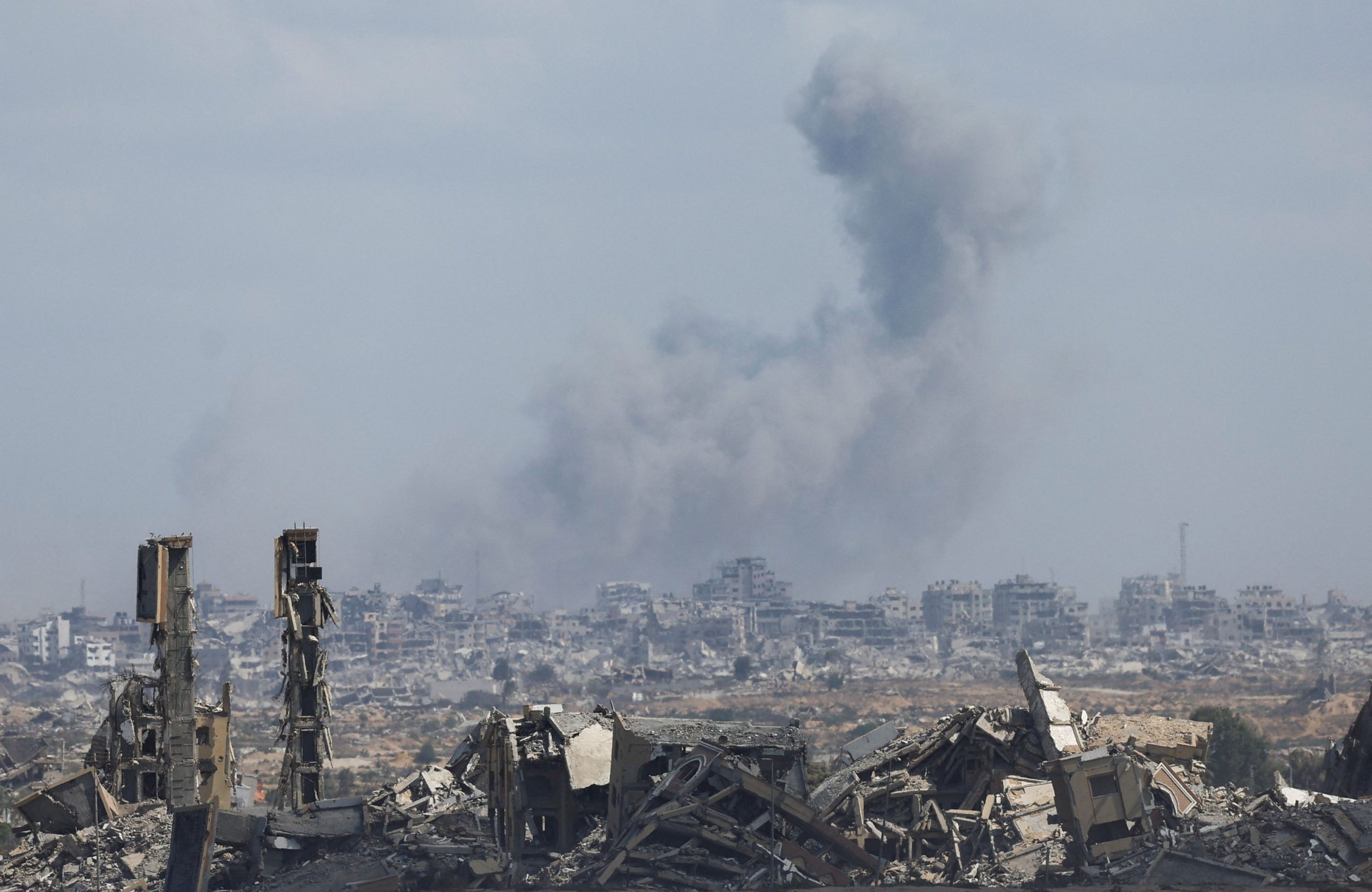
From Asia to Europe, an arch of tensions has thrust the world into a perilous spiral of violence. The liberal international order is teetering on the brink of collapse as fundamental norms, which have underpinned it since the end of the Cold War, are overtly called into question.
The most alarming paradigm shift that is currently underway relates to the gradual departure from the condemnation of the use of force as a means of resolving one’s disputes. The erosion of the anti-war norm threatens to remove the ballast to global peace opening the Pandora’s box to uncontrollable military escalation, the indefinite uprooting of mutual trust, as well as to the reemergence of the law of the strong, traits of an international system reminiscent of that in 18th century Europe.
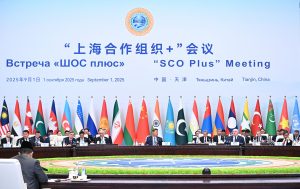
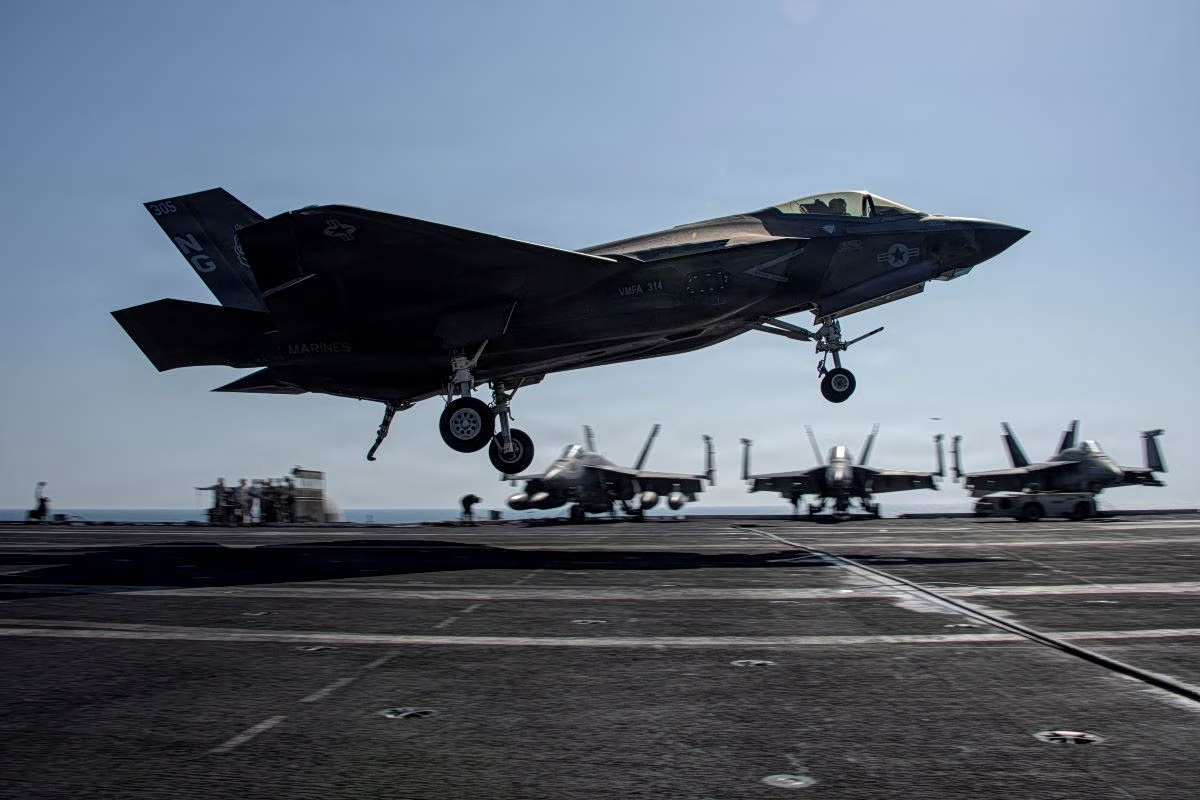
For starters, the return of great power competition after an unprecedented respite of roughly three decades brings with it the hitherto dormant specter of nuclear holocaust. The Russia-NATO brinkmanship in Eastern Europe, the reignited India-Pakistan conflict, and the China-U.S. growing antagonism in the Indo-Pacific, all involve nuclear powers on both ends of the feuding pairs magnifying the risk of catastrophic escalation with far-reaching ramifications on a global scale.
Although the so-called ‘Mutual Assured Destruction’ (MAD) mantra- coined to describe the balance of terror between the United States and the Soviet Union during the Cold War- might still hold some conceptual value in spelling out the power of nuclear deterrence in today’s conflicts, part of its relevance will gradually falters in the face of the liberal norms’ retreat.
Despite their rivalry, Washington and Moscow had forged a strong consensus on the necessity to eschew a direct armed confrontation. In the wake of the Cuban missile crisis, the two superpowers of the time turned this tacit realization into concrete cooperation leading to landmark agreements, such as the Test Ban Treaty (1963) and the Non-Proliferation Treaty (1968), before the mutual spirit of non-aggression was encapsulated in the Helsinki Act (1975), which also involved the majority of the international community.
In parallel with their fierce ideological and strategic competition, it is apparent that both powers were following a course of de-escalation in their differences except for certain instances of Soviet bravado mostly fueled by Khrushchev’s adventurism. The easing of tensions was not dictated just by the looming nuclear fear but also by a psychological factor in conformity to the zeitgeist of the era that demonized the recurrence of the total war. Today, should this normative aspect be removed, unbridled escalation in an intricately interconnected world might not stop short of a nuclear standoff as the use of force emerges anew as the norm.
Further, violence has long-lasting effects on bilateral relations between states. An armed invasion, a bombing campaign, or surgical strikes on a rival’s territory might leave an indelible mark on the collective memory of the victim. Decades of confidence building efforts, talks, and cultivation of mutual trust may be completely negated by a single act of aggression. It is inherent in state-to-state relations that disputes occur for time to time.
The way these disputes are managed though is key to maintaining the bilateral rapports and to re-starting them once the tension is lowered. By resorting to force in order to settle a dispute with another state, the aggressor sows the seeds of hatred and mistrust among the population of the victim-state entrenching generations of opposition against it. Unlike in cases when tensions are treated with prudence and restraint, the use of force would leave a lingering sentiment of loathing among the affected populations, which would make a rapprochement much harder.
Moreover, smaller nations entangled in feuds with militarily superior states might incur disastrous consequences during the cascading phase of the norm life cycle. As the use of force becomes the habitual method of pursuing one’s claims, increasingly more countries are likely to mimic assertive behaviors employing force in their own foreign policy conduct. If violence goes largely unanswered and it is widely utilized even in the context of smaller scale border differences, states with strong militaries will feel less constrained to use them and more emboldened to flout the principles of non-aggression calculating that the opprobrium against them will not be vociferous.
In other words, the behavioral imitation, intrinsic to the process of progressive substitution of one norm with another, will eventually lead to a world where the law of the jungle prevails allowing the strong to impose their will to the weak; the lawless to exploit the righteous; the unruly to tyrannize the just.
In conclusion, the ongoing re-legitimization of the use of force in international relations currently taking place by practice sets ominous standards for state-to-state dispute settlement. As the world moves towards abandoning the norms that laid the groundwork for the most peaceful time since the dawn of the modern, post-Westphalian state-centric international system, violence resurfaces to the forefront. This tendency resurrects the ghost of nuclear holocaust, especially when nuclear powers stand in opposing camps. It also undermines the future of state-to-state cooperation feeding generational hatred. Last but not least, it takes the world to a different set of rules whereby the strong is encouraged to dictate its will to the weak irrespective of the validity of their claims.
*Vasilis Petropoulos is a Junior Research Fellow at ELIAMEP’s Foreign Policy and Security program. He is a holder of a Master’s degree in Law and Diplomacy from the Fletcher School at Tufts University, with a specialization in great power competition and conflict resolution.