Picture the scene: members of a powerful European body rise one after another, cross a long conference room, and drop their secret vote into a ballot box. The silence is monastic. It could be a description of a Vatican conclave—except the Eurogroup’s procedure is even stricter. No interim results are ever announced. Only the final winner is revealed, to avoid sowing divisions among members.
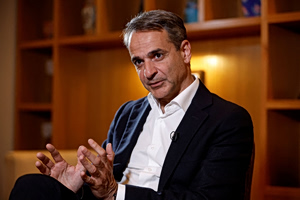
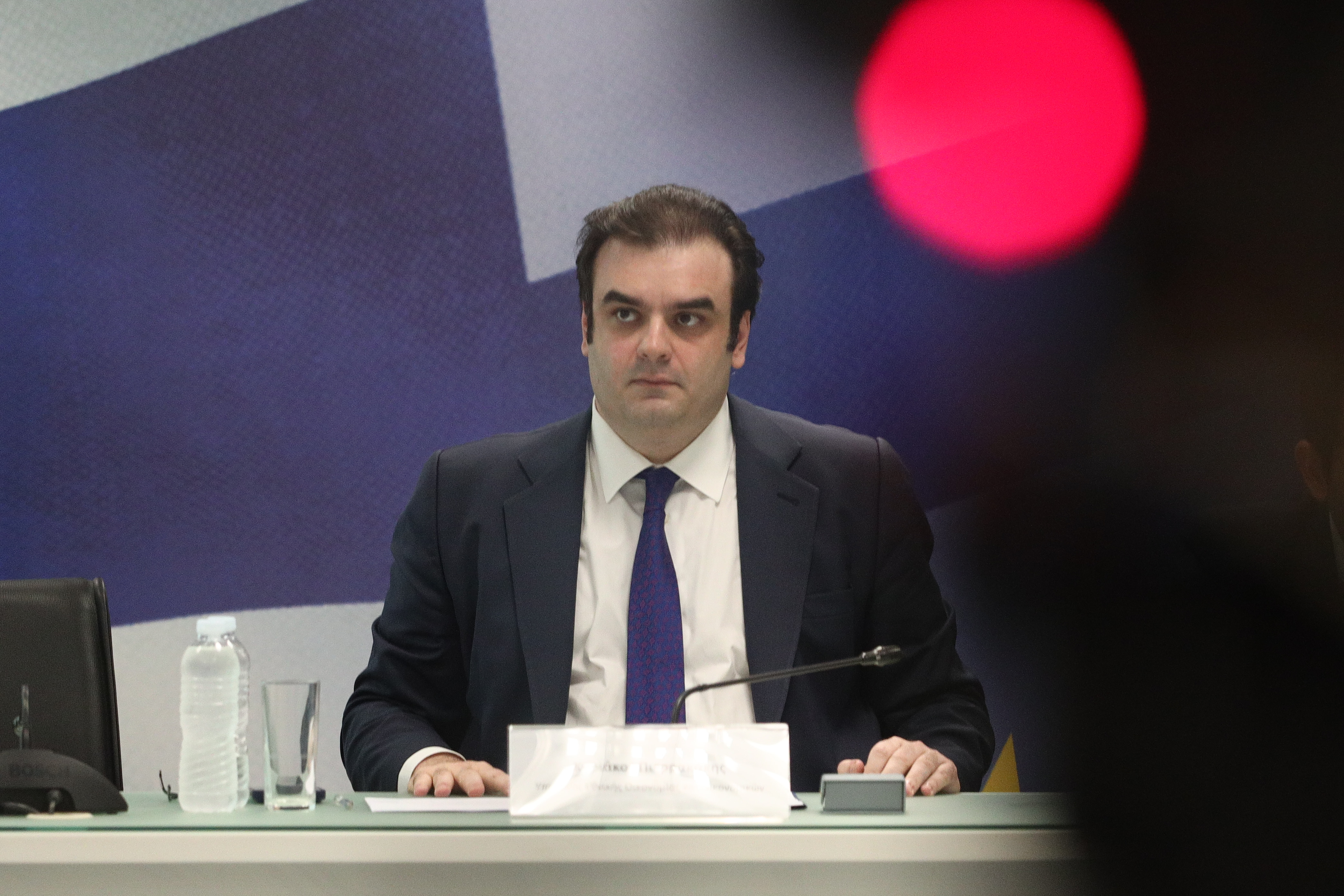
This will be the atmosphere next Thursday in Brussels, when Greece’s Kyriakos Pierrakakis, the country’s relatively new finance minister, faces off against Belgium’s Vincent Van Peteghem.
What happened in previous elections
Eurogroup elections involve fewer candidates than a papal conclave, but the political intrigue rivals that of the Vatican.
In the last race, in July 2020, the then–45-year-old Irish finance minister Paschal Donohoe pulled off an upset in the second round against the favourite, Spain’s Nadia Calviño, who had the backing of major EU powers. In the first round, none of the three candidates reached the required ten votes. The third contender, Luxembourg’s Pierre Gramegna, dropped out after failing to gather momentum.
Crucially, the votes of the smaller countries made the difference. Donohoe resigned on 18 November this year, his departure widely linked to his move to the World Bank.
In October 2018, Portugal’s Mário Centeno emerged victorious after three rounds of voting, again defeating Gramegna. Centeno won not only his socialist bloc but, in the final round, secured crucial support from centre-right finance ministers who shifted their votes to him.
Centeno succeeded Dutchman Jeroen Dijsselbloem, whose tenure was turbulent for several countries—including his own and Greece. One unforgettable episode: the joint press conference with Greece’s finance minister Yanis Varoufakis, when a leaked whisper from Dijsselbloem to Varoufakis—“You just killed the troika”—became infamous.
In 2015, Dijsselbloem faced a strong potential challenger, Spain’s Luis de Guindos, who ultimately chose not to run, preferring the vice-presidency of the European Central Bank.
Shaping Europe’s economic policy
In 2017, when the Dutch Labour Party lost national elections and Dijsselbloem was no longer finance minister, the Eurogroup decided that its president would henceforth always complete the 2.5-year term regardless of political changes at home. Stability came first.
Before him, Luxembourg’s former prime minister and finance minister Jean-Claude Juncker had been the Eurogroup’s dominant figure. During the eurozone crisis—which caught Europe unprepared—he played a central role in steering economic policy.
From 1997 to 2009, before the Lisbon Treaty formally defined the Eurogroup’s status, it functioned informally with a rotating six-month presidency. The European—and especially the Greek—debt crisis forced member states to strengthen it, giving the body of 20 eurozone finance ministers decisive influence over the EU’s economic direction.
Next Thursday’s election will involve 20 ministers. Had it been held in January 2026, Bulgaria—expected to join the eurozone by then—would have made it 21. The meeting will be chaired by Cyprus’s finance minister Makis Keravnos, currently serving as acting president.
Although Pierrakakis is the newest finance minister in the group, he has built personal relationships with many colleagues. The process, however, is complicated: voting is secret, and candidates are prohibited—by long-standing custom—from campaigning. As a result, there are no reliable predictions.
A positive development for Greece is the withdrawal of Spain’s Carlos Cuerpo, who likely calculated that the socialist bloc did not have enough numbers to carry him.
The behind-the-scenes manoeuvring
The contest has now become an internal battle within the European People’s Party (EPP), the centre-right European political family to which both Pierrakakis and Van Peteghem belong.
The Belgian minister—and the Belgian government more broadly—has resisted the European Commission’s proposal to use frozen Russian assets, many of which are held in Belgium, to finance a reparation loan for Ukraine. Belgium fears destabilising its financial system.
Other ministers may be eager to pressure Van Peteghem by backing a strong challenger—but last-minute deals, even on the eve of the vote, are entirely possible. It is also worth noting that Van Peteghem does not hold the full finance portfolio at home but only the budget component.
Although formal campaigning is banned, Pierrakakis has recently visited Germany, where media coverage was notably favourable, as well as Italy and Ireland, following invitations from his counterparts. These trips coincided with pre-scheduled meetings, but they helped him communicate his candidacy.
Because next week includes a parliamentary vote in Athens on Tuesday and the Eurogroup meeting on Wednesday, Monday is his only available day for another potential visit—France being the most plausible option.
Meanwhile, Pierrakakis has spoken by phone with all 20 ministers—just as his rival reportedly has. Active behind the scenes at their own level are Greece’s Prime Minister Kyriakos Mitsotakis, Foreign Minister Giorgos Gerapetritis, and the country’s MEPs from the ruling New Democracy party.
Greece’s strengths—and political irony
Greece’s main asset is how its image has transformed in Europe. Once a country on the brink of bankruptcy, it has stabilised its public finances and accelerated its digital transformation—much of it associated with Pierrakakis’s previous work as minister for digital governance.
If elected, Pierrakakis would hold the highest EU position ever obtained by a Greek politician. He would then need to prove his reputation as a reformer at a time when Europe faces enormous challenges—from financial integration to strategic autonomy.
And no one can miss the irony of history: a Greek minister chairing the very Eurogroup that once brutally expelled another Greek minister, Yanis Varoufakis, on a freezing night in Riga, Latvia.