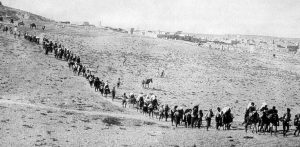
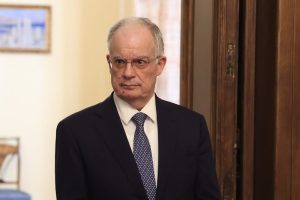
Greece marked May 19 with renewed calls to preserve the memory of the Genocide of the Pontic Greeks, as Defense Minister Nikos Dendias described the tragedy not as a distant historical episode, but as “a living and crying truth” that continues to resonate through modern Greek identity.
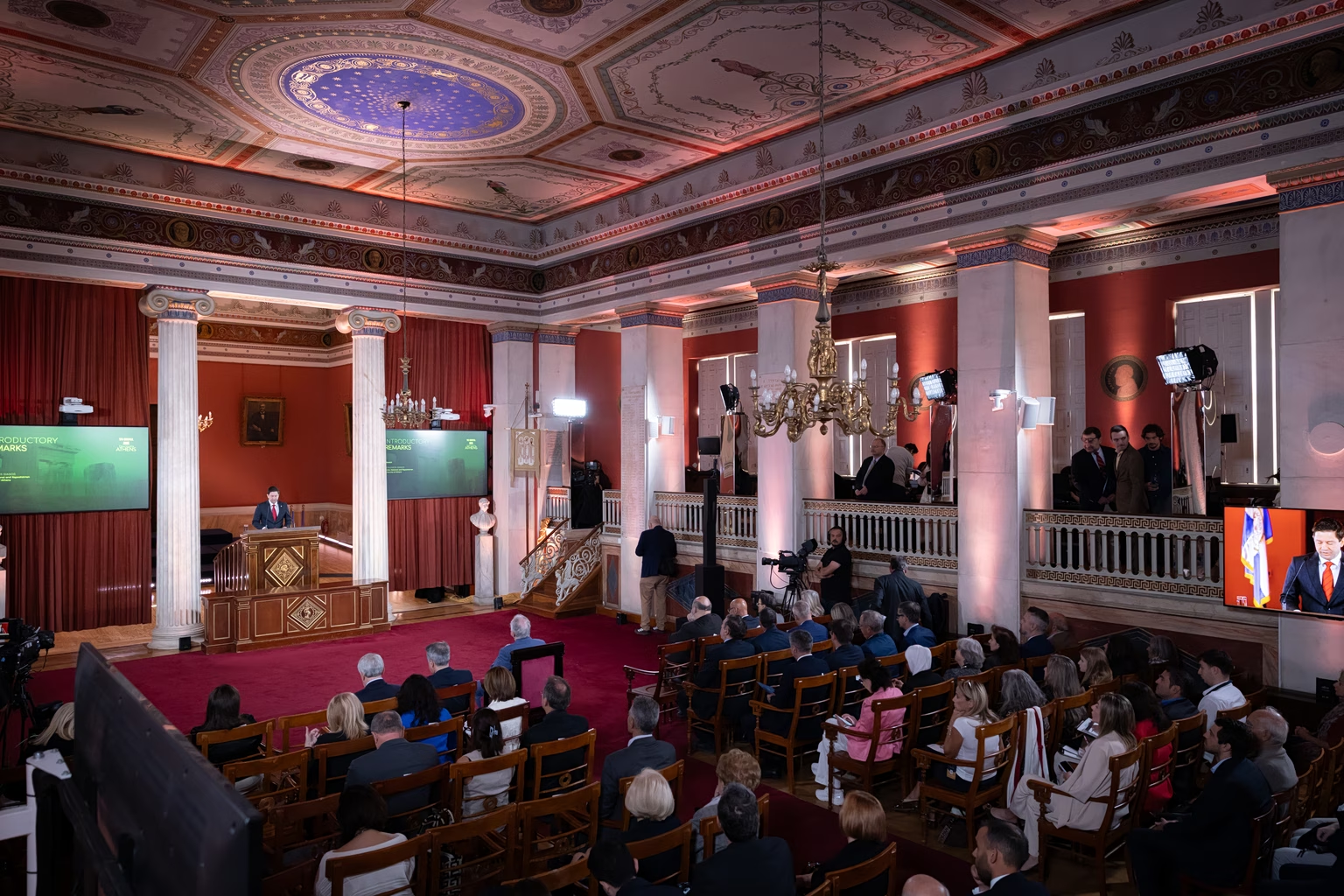
Speaking at an event organized by the Pan-Pontian Federation of Greece in the Senate Hall of the Hellenic Parliament, Dendias said the annual commemoration honors not only the victims of the genocide, but also the enduring legacy of the Pontic Greeks themselves — a community he described as a vital and living part of Hellenism.
The event, titled “The Genocide of the Greeks of Pontus: Memory, Strategy and the Internationalization of Historical Responsibility,” focused on historical remembrance and the international recognition of the crimes committed against the Pontic Greek population.
Dendias referred to the genocide as a “mass organized murder and violent uprooting” of the Pontic people from their ancestral homeland. He noted that the arrival of Mustafa Kemal in Samsun on May 19, 1919, marked the beginning of the bloodiest phase of the campaign, though the persecution had already started before World War I and continued for nearly a decade.
According to the minister, the atrocities formed part of a broader effort aimed at eliminating Armenians, Greeks and Assyrians — the Christian populations of the region. He described the campaign as “organized, calculated and centrally directed.”
Reflecting on the rise of the Young Turks movement, Dendias argued that a nationalist project initially inspired by 19th-century ideals of statehood evolved into what he called “a violent and abhorrent narrative of ethnic cleansing.”
He also emphasized the historical and cultural significance of Pontus, calling it “a cradle of universal Hellenism,” while stressing that Greece’s parliamentary recognition of the genocide was “an act of truth and respect for the dead.”
Dendias further noted that many historians and researchers believe the widely cited figure of 353,000 victims likely underestimates the true scale of the tragedy, as it excludes numerous victims from the genocide’s earlier phase.
Today, he said, extensive documentation exists, including “names and indisputable testimonies from Greeks, foreigners and even Turks regarding the organized crime that took place in our East.”
He also criticized countries that insist such issues should be left solely to historians, “as though history were merely a laboratory phenomenon,” detached from “human blood and bones — from women, children and our fellow human beings.”
Concluding his remarks, Dendias praised the resilience of the Pontic Greeks, saying that despite exile and persecution, “they did not lose their identity in uprooting.” Instead, he said, they carried it with them and offered it “as another cornerstone in the foundation of modern Greece.”