Behind the scenes, intense maneuvering is underway in US-Greek relations. But it is not unfolding through traditional diplomatic channels.
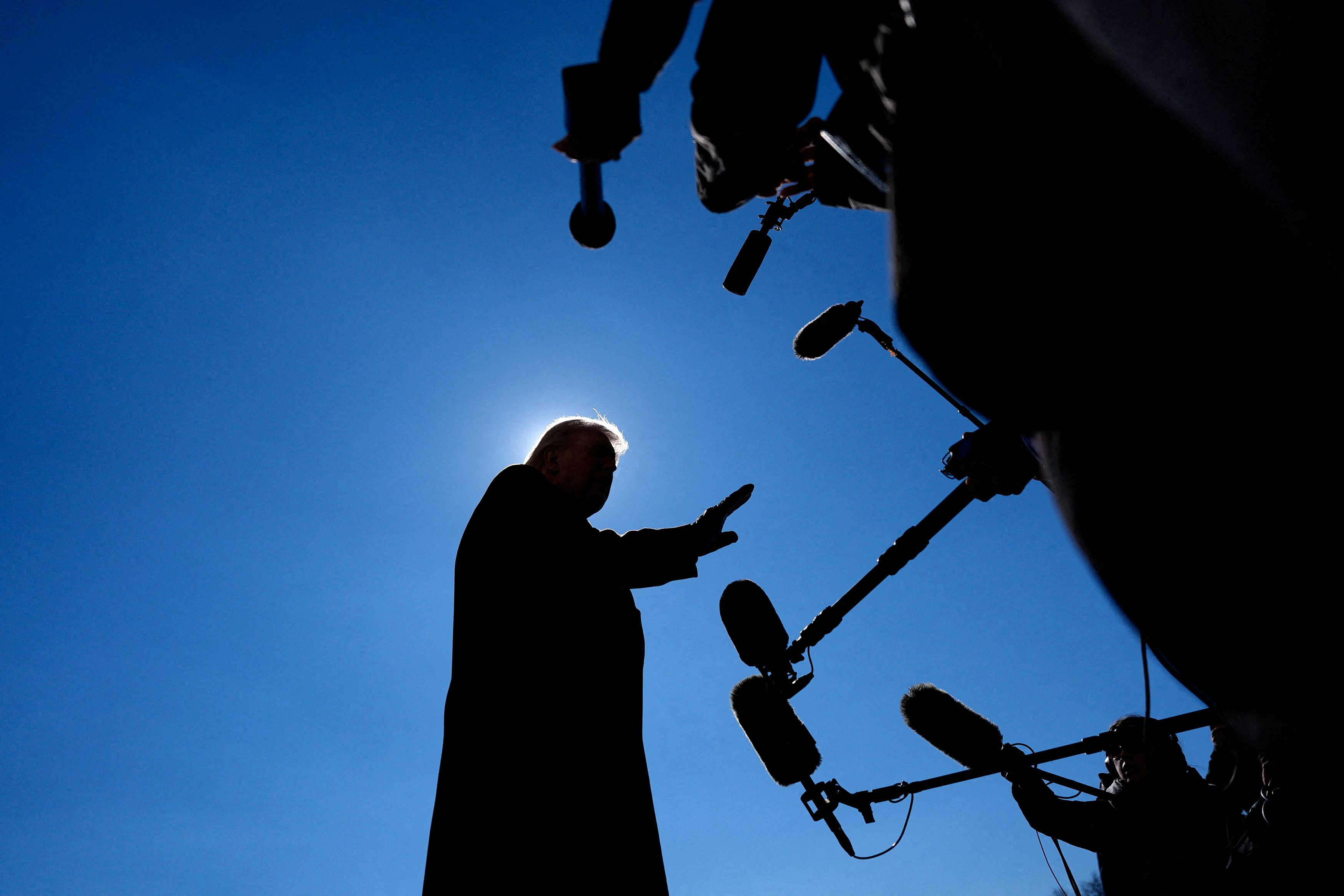
Instead, it reflects the alternative path favored by US President Donald Trump: high-profile initiatives led by figures from his inner circle, usually trusted envoys who operate publicly, yet outside the rigid structures of institutional diplomacy.
In recent days, two such presidential envoys -different in stature but closely aligned with Trump- have appeared in Athens. Both share a long-standing relationship with US Ambassador to Greece Kimberly Guilfoyle.
According to converging reports from Athens and Washington, one of them was Richard Grenell, Trump’s adviser and special envoy for foreign policy.
Grenell’s Discreet Stop in Athens
Grenell, who served as US ambassador to Germany from 2018 to 2020 and later as Washington’s envoy in the Serbia–Kosovo peace negotiations (2019–2021), has frequently been tasked with politically sensitive assignments. Last summer, media reports linked him to a purported US initiative aimed at easing tensions between Greece and Turkey, allegedly in coordination with US Ambassador to Greece Kimberly Guilfoyle and US Ambassador to Turkey Tom Barrack. Grenell publicly denied any involvement at the time.
According to sources, his recent visit to Athens, though unofficial and reportedly private, is believed to have included meetings with senior government officials and prominent business leaders. The agenda remains undisclosed.
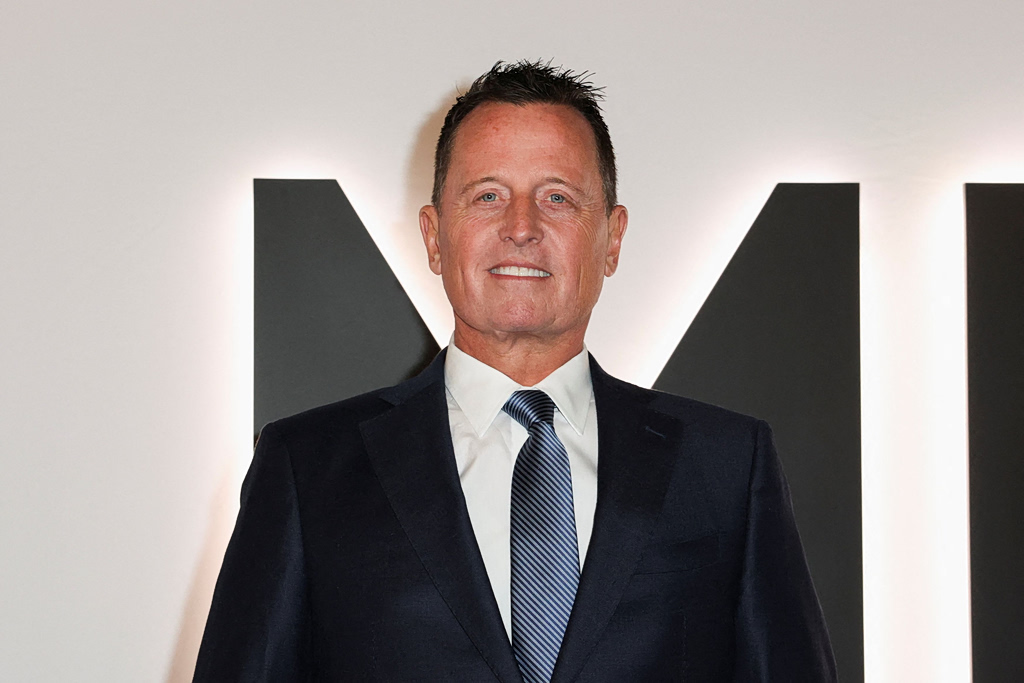
Richard Grenell arrives for the premiere of the documentary film “Melania” at the John F. Kennedy Center for the Performing Arts, recently renamed to include U.S. President Donald Trump’s name, in Washington, D.C., U.S., January 29, 2026. REUTERS/Kylie Cooper
Grenell’s visit to Athens came shortly before he traveled to Bavaria to attend the Munich Security Conference, one of the most prominent global gatherings on security and foreign policy. This year, US Secretary of State Marco Rubio was among its central figures.
Greece was represented by Energy Minister Stavros Papastavrou, reflecting the growing strategic importance of energy within the broader US–Greek agenda.
Unconfirmed reports also suggest that Grenell is expected to return to Athens in the coming days, again in a private capacity.
Energy Deals and the “Freedom 250” Initiative
Around the same time, another Trump envoy arrived in the Greek capital: Paolo Zampolli, a businessman of Italian origin tasked with overseeing international cultural and sports partnerships. His official title is Special Envoy of the President of the United States for Global Partnership.
Zampolli, who reportedly knew Trump and his wife Melania Trump prior to their marriage, met Energy Minister Stavros Papastavrou during a geopolitical conference organized by Greek financial news outlet Capital.gr. The talks reportedly focused on US-Greek energy cooperation, and took place in the presence of Ambassador Guilfoyle.
View this post on Instagram
Zampolli also traveled to Munich as part of Rubio’s delegation. In Athens, he reportedly met with Shipping Minister Vasilis Kikilias and Deputy Sports Minister Giannis Vroutsis.
View this post on Instagram
According to well-placed sources, Zampolli had previously held a brief discussion with Mitsotakis on topics including child online protection. Although the Prime Minister’s office has not confirmed the meeting.
One of Zampolli’s key responsibilities, insiders say, is coordinating international events marking the 250th anniversary of the signing of the US Declaration of Independence on July 4, 1776. As part of the “Freedom 250” initiative, US embassies worldwide are expected to organize commemorative celebrations.
Greek interlocutors of Ambassador Kimberly Guilfoyle say they have been left with the impression that she is planning a particularly grand Independence Day celebration this year at a venue outside the US ambassador’s residence.
The event, according to those contacts, is not expected to take place at the embassy itself nor at the nearby Athens Concert Hall—a major cultural venue next door to the US Embassy where July 4 celebrations were held in previous years while the embassy complex and residence were undergoing renovations.
A Possible Trump Visit?
Under current planning, Donald Trump is expected to travel to Ankara on July 8 to attend a NATO summit. Just days ago, US Ambassador to Greece Kimberly Guilfoyle publicly suggested that the American president could also visit Greece. However, no such trip has been confirmed by either US or Greek officials.
Although Trump is not known for strictly following diplomatic convention, it has traditionally been common for a US president visiting Turkey to include a stop in Greece as well. In November, speaking more broadly about bilateral ties, Ambassador Guilfoyle said she could envision the US president delivering a speech with the Acropolis as a backdrop—an image laden with symbolism in the birthplace of democracy.
For now, the only visit formally pending is that of US Secretary of State Marco Rubio, expected in Athens for the next round of the US–Greece Strategic Dialogue. Officially, and according to corroborated information, no concrete preparations have been announced. Yet a senior source told To Vima that Rubio could travel to Greece in the near future, possibly as early as the spring.
Athens Between Washington and Brussels
As To Vima has repeatedly noted, the Greek government is engaged in a delicate and ongoing balancing act. On the one hand, it seeks to keep relations with Washington at an exceptionally strong level. On the other, it is careful not to drift from the core of the European Union or from the principles of international law that have long guided Greek foreign policy.
The latest example of this tightrope walk was the hesitation within the Prime Minister’s office over whether Kyriakos Mitsotakis should attend the inaugural session of a Peace Council in Washington, following an invitation from Donald Trump.
In reality, Athens would prefer a direct line of communication with the White House, rather than operating primarily at ministerial level—between Foreign Minister Giorgos Gerapetritis and US Secretary of State Marco Rubio, or between Energy Minister Stavros Papastavrou and his American counterpart. It would be even less inclined to rely exclusively on communication through the US Embassy in Athens.
Against that backdrop, the presence in Greece -even in a private capacity- of two of Trump’s special envoys is significant. It suggests not only a shift in how bilateral relations may be conducted, but also signals both the intensity and the distinctive style of renewed US interest in developments in Greece.
At the same time, there is a clear understanding that, within Trump’s political orbit, attracting presidential attention often requires more than diplomatic alignment. It requires business proposals or, better yet, ready-made deals.