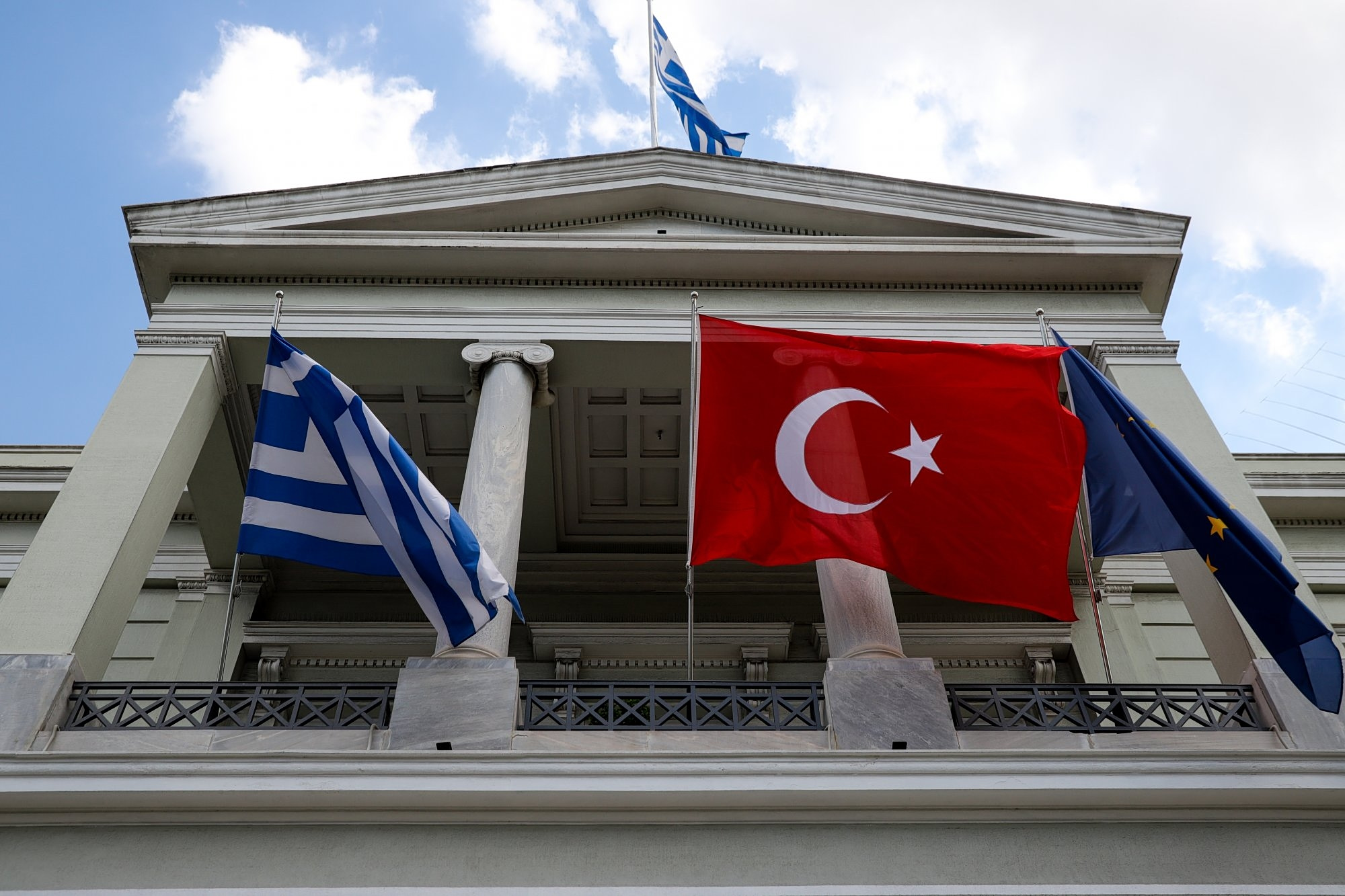
A Greek foreign ministry spokeswoman on Friday revisited Ankara’s sharp reaction this week to an updated maritime spatial planning map (MSP) uploaded on a European Commission platform, with the former merely emphasizing that the development comes fully within the Law of Sea’s provisions and bilateral agreements.
“Turkey’s reaction has no basis in EU and international law,” foreign ministry spokeswoman Lana Zochiou said, in answer to a reporter’s question referring to official Turkey’s same-day displeasure.
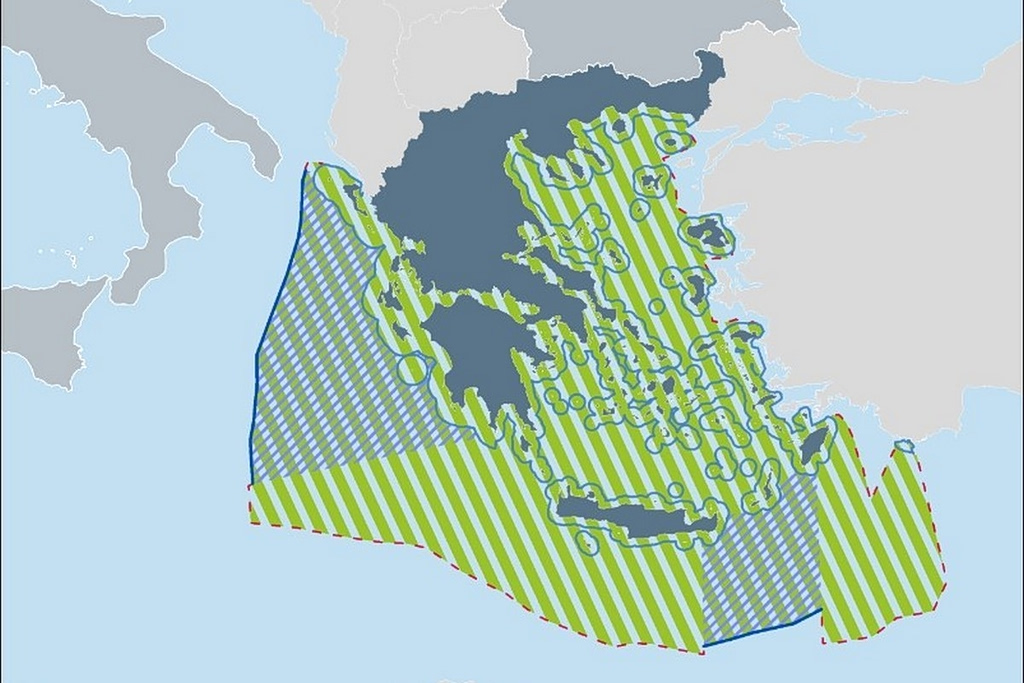
In response to a similar press question, a Turkish foreign ministry spokesman in Ankara claimed that it was “…Greece, which continues to disregard the fundamental principles of international maritime law, is attempting to have the Eastern Mediterranean exclusive economic zone (EEZ) —which it has not officially declared— validated through the EU by instrumentalizing the MSP map. Türkiye rejects this unlawful fait accompli attempt.”
Spokesman Öncü Keçeli also went so far as to claim that the “…so-called EEZ depicted in the Greek MSP map lies within the Turkish continental shelf.”
Greece is a signatory of the 1982 UN Convention on the Law of the Sea (UNCLOS), has ratified the landmark treaty and insists on its application in all settings. Turkey, conversely, has not signed the convention and has for decades opposed key provisions of UNCLOS to delimitate the geographic concepts of continental shelf and Exclusive Economic Zones (EEZ). A controversial 2019 agreement signed with one of two governments in Libya to delimitate maritime zones between them in the central and eastern Mediterranean, for instance, essentially “erased” all Greek island territory in order to achieve the perception of “bordering zones”.
Greece, the EU and other regional countries have dismissed the Turkey-Libya pact as illegal and baseless.
Back in Athens on Friday, the Greek spokeswoman said “…The update of Greece’s Maritime Spatial Planning map on the European Commission’s platform was carried out in accordance with Directive 2014/89, international maritime law and bilateral agreements concluded by our country,” she said, adding that in the absence of bilateral agreements to delimitate an EEZ, then the farthest potential boundaries are reflected in accordance with the median line.
“Greece’s positions on this issue have been repeatedly expressed, both bilaterally and within the framework of the European Union and the United Nations,” she concluded.