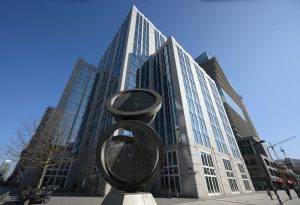
The stunning Christiansborg Palace in Copenhagen, instantly recognizable to fans of the Danish political drama Borgen, made for a striking backdrop as European leaders gathered on Wednesday to discuss the big issues that the EU is facing. Yet the grandeur of the setting only highlighted the contrast with what followed: hours of debate on defense, frozen Russian assets, and Ukraine’s EU membership that produced little progress.
The informal summit, the first among the 27 since June, was meant to lay the groundwork for urgent decisions. Instead, leaders left empty-handed, deferring choices once again to their October 23–24 meeting in Brussels, which European Council President António Costa optimistically dubbed “decision day.”
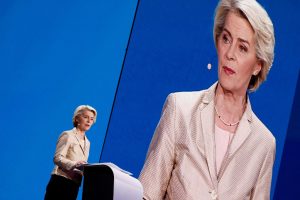
The gap between declarations and action was evident throughout. What was billed as a two-hour session on defense stretched to four, as EU leaders went off script. German Chancellor Friedrich Merz mocked the idea of a European “drone wall” — but even as he spoke, his government was forced to confirm drone sightings over German critical infrastructure. The contrast between rhetoric and reality could hardly have been sharper.
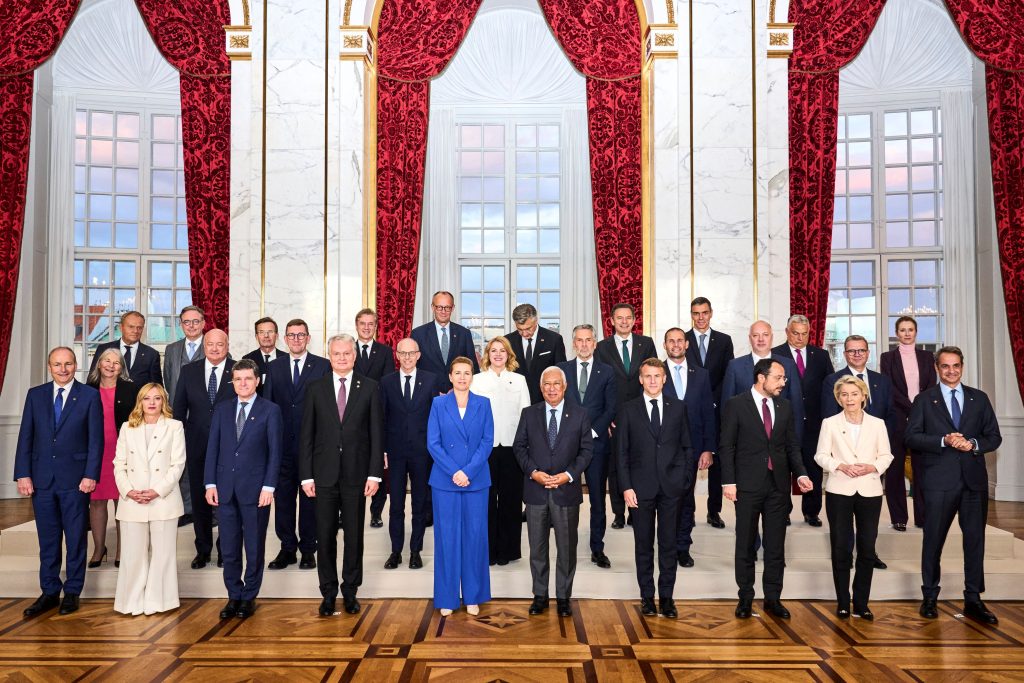
Family photo during the informal meeting of European Union leaders at Christiansborg Palace in Copenhagen, Denmark, October 1, 2025. Ritzau Scanpix/Thomas Traasdahl via REUTERS .
Greek Position: Emphasis on the South
Greek Prime Minister Kyriakos Mitsotakis used the debate to underline that Europe’s security challenges are not limited to the eastern front. According to sources, he argued that the EU must also protect its southern borders, linking migration pressures and instability in the Mediterranean to the broader discussion on European defense.
Mitsotakis also pointed to lessons from the war in Ukraine, stressing the growing role of advanced technologies in modern conflict. He said Europe must strengthen its capacity for innovation and production in the defense sector, noting Greece’s own efforts through the Hellenic Center for Defence Innovation S.A (HCDI)
Greece Opposes Rule Change on Enlargement
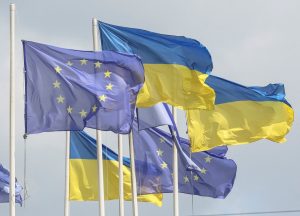
Divisions were also clear on Ukraine’s EU bid. According to Politico, Costa’s proposal to replace unanimity with qualified majority voting for launching accession talks was strongly opposed by Hungary which was expected but was also rejected by Greece, alongside France and the Netherlands.
For Athens, the objection is more about preserving veto power in future enlargement rounds, particularly given Turkey’s long-standing candidacy. Yet this stance places Kyriakos Mitsotakis in an uncomfortable alignment with Viktor Orbán, the EU leader most openly aligned with Moscow.
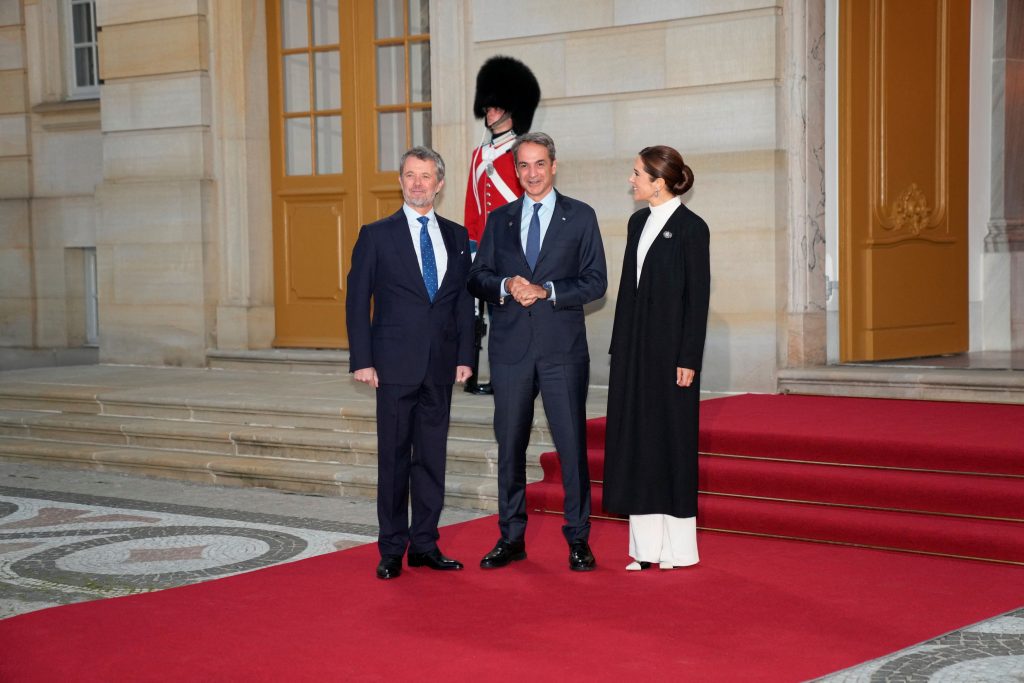
Denmark’s King Frederik and Queen Mary welcome Greece’s Prime Minister Kyriakos Mitsotakis to dinner on the occasion of a meeting of the European Political Community, at Amalienborg Palace, in Copenhagen, Denmark, October 1, 2025. Ritzau Scanpix/Ida Marie Odgaard via REUTERS
European Political Community Meets Today
Attention now turns to today’s gathering of nearly 50 leaders at the European Political Community (EPC) summit, also in Copenhagen. The forum, first proposed by French President Emmanuel Macron, brings together both EU and non-EU states to discuss security, migration, and regional stability outside the formal EU framework.
Ukrainian President Volodymyr Zelenskyy is expected to deliver a speech and hold a joint press conference with Danish Prime Minister Mette Frederiksen. Leaders will focus on support for Ukraine, energy resilience, and broader security concerns ranging from drug trafficking to migration. NATO Secretary-General Mark Rutte and leaders from the UK, Moldova, Switzerland and Georgia are also attending, while Russia and Belarus remain excluded.
Whether the EPC can generate more momentum than the EU summit remains an open question. For Greece, the emphasis will likely remain on ensuring that Europe’s security debate does not overlook the Mediterranean, even as its insistence on retaining veto power leaves it uncomfortably aligned with Budapest.