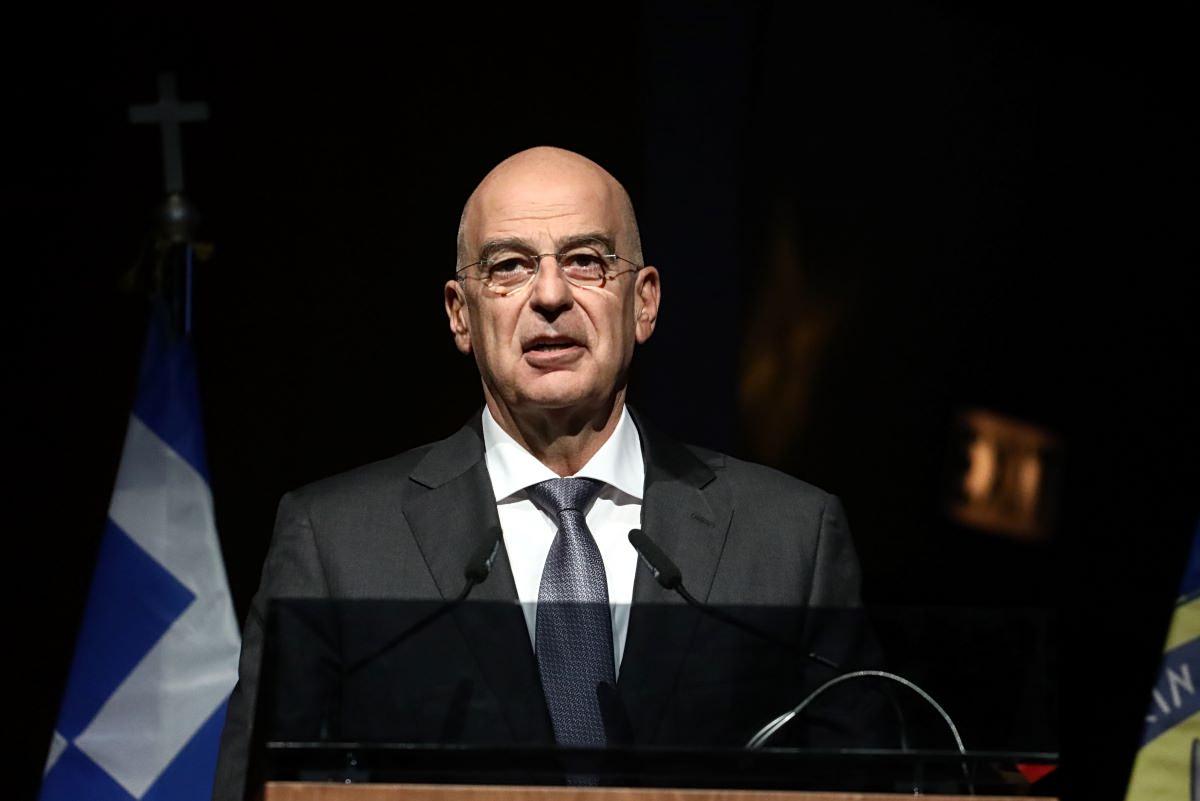
Greek Defense Minister Nikos Dendias says Greece will not participate in military operations against Iran, while reaffirming Athens’ commitment to protect Cyprus during the ongoing Middle East crisis.
In an interview with TO BHMA , Dendias also says Greece is moving ahead with renewing its defense cooperation agreement with France and argues that the security guarantees offered by alliances require active participation in the field.
Minister, allow me to start with a direct question: Does Greece’s presence in the Eastern Mediterranean also send a message to Europeans — and especially to Americans — that Greece is now willing, unlike in the past, to participate in military operations?
“Over the past few years, Greece has expanded its geopolitical footprint in the broader Eastern Mediterranean region. For the first time in our history, we are conducting five operations outside our borders.
Guided by the values derived from international law and the law of the sea, Greece’s role as a guarantor of stability and security in the region is being upgraded beyond its narrow geographic boundaries, while still serving European and Greek interests.
At the same time, our role within the European Union and NATO is being strengthened as a reliable partner and an ally that is active on the ground.
It is self-evident that the security guarantees provided through participation in bilateral, trilateral or multilateral frameworks and organizations require active engagement in the field. Only in this way can a country meaningfully consolidate and strengthen its geostrategic position.
In an era of rapid geopolitical developments, Greece is present. The era of short-sighted thinking has irreversibly passed.”
However, opposition parties have expressed concern that sending frigates to Cyprus amounts to Greece becoming involved in war operations. What is your response to these claims?
“It would be historically and nationally unforgivable, if at such a difficult moment, Greece would turn its back on Cyprus.
When we say we stand by Cyprus, we must mean it; not simply engage in empty rhetoric. Rapid and tangible defensive support for the Republic of Cyprus is a national obligation.
With our actions we demonstrated in practice that Cyprus is not ‘far away.’ Cyprus is close.
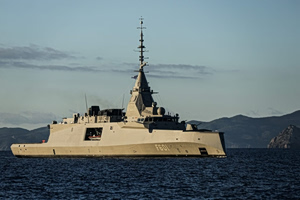
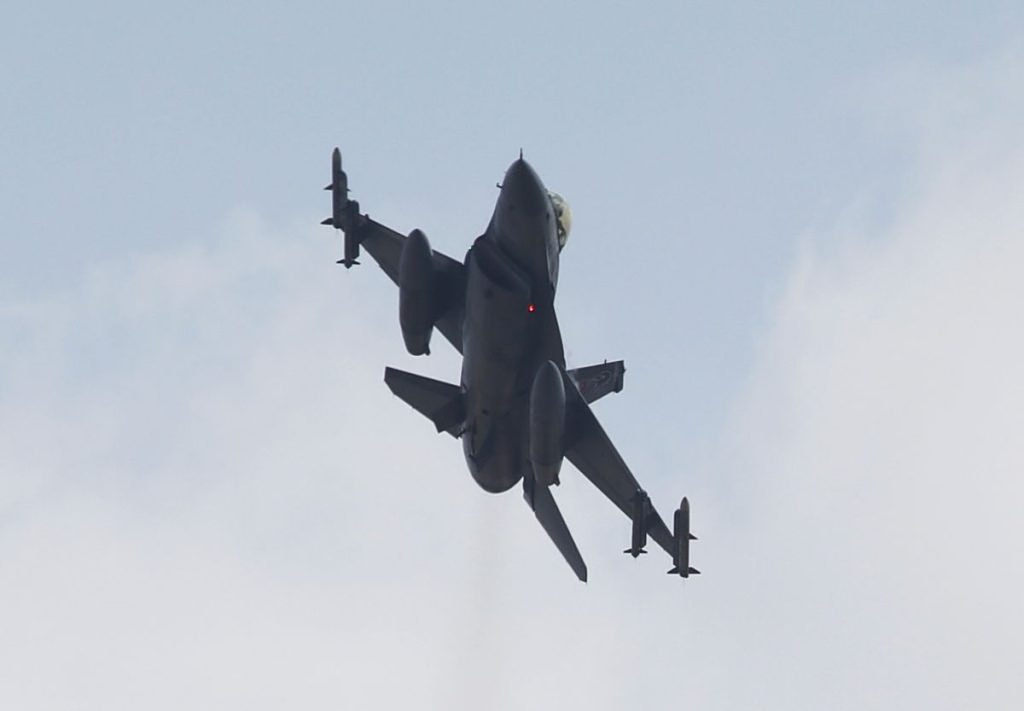
The deployment of four F-16 fighter jets and the most modern frigate of the Hellenic Navy, Kimon, as well as the second frigate Psara — which carries the Centaur anti-drone system — aims solely at protecting the Republic of Cyprus. We are raising a protective shield over Cyprus, which can now feel secure.
I pledge that Greece will stand firmly by the Republic of Cyprus and its lawful residents throughout the crisis, supporting its defense and the safety of its inhabitants with every available means.
As for the opposition’s criticism, I would point to the public ‘thank you’ Greece received during my visit to Cyprus from President Nikos Christodoulides and my counterpart, Defense Minister Vasilis Palmas.
Greece’s immediate mobilization prompted a response at the European level, with several countries following our lead by sending forces to help protect Cyprus. Greece’s initiative highlights the importance of European solidarity. I would also like to take this opportunity and congratulate the personnel of the Armed Forces, who with just a few hours notice prepared the support mission to Cyprus. Very few militaries in the world could organize such an operation in so little time — relocating aircraft and ships within hours.”
What would you say if Greece were asked to contribute troops on the ground, for example as part of a mission to Gaza?
“As you know, there is no participation or involvement of the Greek Armed Forces in military operations against Iran. Historically, Greece participates in peacekeeping missions.
Regarding Gaza itself, as a member of the United Nations Security Council Greece supported the American plan. But it is important to coordinate with our European partners on humanitarian issues as well as reconstruction and rebuilding.
This is a “historic opportunity” to ensure the ceasefire holds in a deeply troubled region and to support the Palestinian people.”
Was the decision to send Greek military units to Cyprus made following a request from Nicosia, or was it an Athens initiative?
“From the very first moment the crisis broke out in the region, I have been in constant contact with Prime Minister Kyriakos Mitsotakis and in continuous communication and close coordination with the Cypriot defense minister, Vasilis Palmas.
After the unprovoked drone attacks on Akrotiri, and at the request of Defense Minister Vasilis Palmas, I immediately agreed to send an air and naval defensive force to Cyprus.
Subsequently, following communication between Prime Minister Mitsotakis and President Christodoulides and a decision by Greece’s Government Council for Foreign Affairs and Defense (KYSEA), I announced the deployment of fighter aircraft and frigates.
As President Christodoulides stated, Cyprus requested reinforcement in specific areas. And there was an immediate response.
To improve coordination, I later traveled to Nicosia with the chief of the Hellenic National Defense General Staff, Gen. Dimitrios Choupis, where I met with President Nikos Christodoulides and held both private and broader talks with my Cypriot counterpart.
I would like to express my sincere thanks to the president and the defense minister of Cyprus for their warm welcome and the spirit of substantive cooperation.”
Do you fear terrorist attacks in Europe? Could Souda or other facilities become targets?
“Greece treats these matters with absolute seriousness and maintains a high level of readiness.
Regarding the protection of critical infrastructure, all necessary measures have been taken as far as possible, in full coordination with the Ministry of Citizen Protection and the competent security services.
Souda Bay Naval Base — like other critical military infrastructures in our country — is protected against possible strikes related to the Middle East crisis. Moreover, Greece lies at the outer limits of the range of Iranian weapons. At the same time, we have ensured the deployment of an air-defense battery on the island of Karpathos, while Greek naval vessels with air-defense capabilities are operating in the broader area.
We have also decided to provide assistance and anti-ballistic protection to neighboring Bulgaria following a request from Sofia.”
Do you believe the war will change the balance of power in the Middle East and Eastern Mediterranean? How might it affect relations between Greece and Turkey, given that both seek similar alliances in the region?
“The conflicts in the region over the past two years are reshaping the geopolitical landscape. It is neither appropriate nor useful to interpret everything through the lens of Greece-Turkey relations. And Greece should not base its decisions on an ‘anti-Turkey’ approach.
Greece has a clear European and Western democratic orientation, with particular emphasis on the Christian dimension and close ties with Israel, Egypt, the United Arab Emirates, Saudi Arabia, other Gulf states and India. Turkey has taken a different approach, one more centered on the Islamic world.”
A few hours after the government’s decision to send forces to Cyprus, Greek Foreign Minister George Gerapetritis held a phone call with his Turkish counterpart Hakan Fidan. Do you think it is reasonable for Turkey to have objections to the presence of Greek frigates and F-16s in Cyprus? And what exactly did you mean with your statement in Nicosia that the assistance is being provided to “all lawful residents of the Republic of Cyprus”?
“I believe Turkey understands the need to protect the lawful residents of Cyprus from unprovoked attacks by Iran. I am not referring only to Greek Cypriots. At this moment, we are protecting the lawful residents of the island. We are very proud of that and we believe it was our duty. The deployment of Greek aircraft and naval vessels reflects that European and national responsibility.”
Is there a clear timeline for when the agreement with Israel on the “Achilles Shield” will be signed? Greece is expected to hold elections in about a year, and the contract must also be reviewed by the Court of Audit and be ratified by Parliament.
“These are a number of contracts that follow a defined and institutionally established process designed to ensure legality and transparency. First, the military leadership makes recommendations based on the implementation of defense policy as determined by the government, while the General Directorate for Defense Investments and Armaments negotiates and drafts the contracts.
The political leadership then evaluates and reviews them. The contracts are subsequently submitted to the Greek Parliament for an opinion, and the final decision is taken by the Government Council for Foreign Affairs and Defense (KYSEA).
Our primary concern is respect for the sacrifices of the Greek people and ensuring that every contract and every public expenditure is implemented fully within the law and in the shortest possible time. Adhering to this principle is fundamental to the management of public funds and ensures that procedures follow both the spirit and the letter of the Constitution.
Please note that I have relinquished the Defense Ministry’s right to appoint the head of the General Directorate for Defense Investments and Armaments. The position is now filled by an active-duty officer, following a recommendation from the Hellenic National Defense General Staff.”
Can you outline three key priorities in the new defense agreement with France that is currently being renewed? Specifically, what additional military benefits will Greece gain compared with the existing agreement?
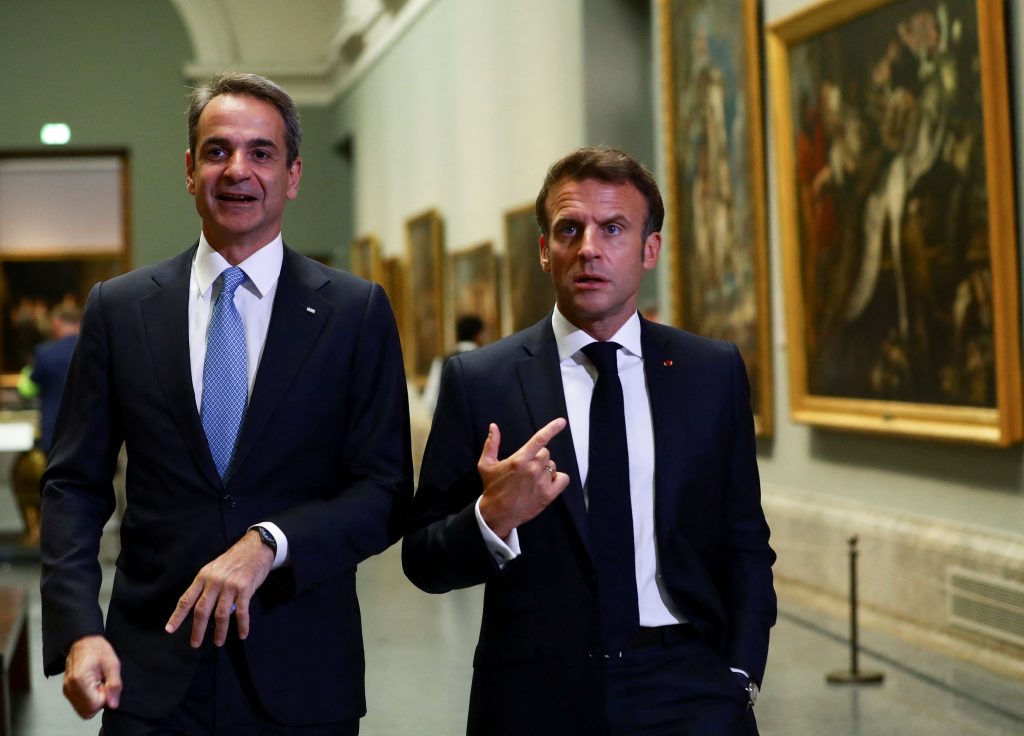
“Allow me to express my satisfaction that the largest military power in the European Union and our strategic ally, France, was among the first countries to respond to Cyprus’ request and is contributing, together with Greece, to its protection during this critical moment for the broader region. This further underscores the strength of the strategic defense partnership between Greece and France in promoting peace, security and stability in the Eastern Mediterranean.
Regarding the renewal of our defense agreement, our shared intention is to expand the existing framework. I have met with my French counterpart, Catherine Vautrin, four times in the past three months, including to advance this effort.
The negotiations are at a very advanced stage and will be finalized in the near future and in light of current developments. I should emphasize that the new agreement will also include a mutual military assistance clause and will place greater emphasis on cooperation in the defense industry, research and innovation.”
What exactly would the extension of France’s nuclear umbrella to Greece mean?
“If such an extension were to take place, it would constitute an interesting parallel and complementary guarantee alongside Article 5 of NATO. Of course, Greece neither seeks the role of a nuclear power nor aims to host nuclear weapons in the country. However, cooperation with France at this level — with a European dimension that complements NATO — is certainly of interest.”
Where does the agreement stand on the acquisition of two Italian Bergamini-class frigates, with an option for two more? Has the memorandum of understanding been signed, and if not, when can it be expected?
“Greece and Italy have signed a memorandum of cooperation on naval collaboration and a letter of intent for the acquisition of two plus two Italian FREMM-type frigates of the Bergamini class.
We hope that negotiations with Italy will be completed by April so that we can proceed with signing the acquisition agreement for the two plus two frigates.
These ships have exceptional capabilities and are in excellent condition, something I confirmed during my visit to La Spezia with the chief of the Hellenic Navy General Staff, Vice Adm. Eleftherios Kataras.
Our main priority is to ensure that the FREMM frigates can also carry the new-generation ELSA missile, which will equip the Belharra frigates as well. With the acquisition of the advanced Belharra and Bergamini frigates under the ‘Agenda 2030’ reform program, the Hellenic Navy is entering a new era. It will be the strongest navy in modern Greece’s history.”
In a world facing new and major challenges, what capabilities and skills should the armed forces of a country like Greece have?
“Let me reiterate that we recognized the changing geopolitical landscape early and developed a comprehensive strategy to strengthen our defenses, with a strong emphasis on innovation — even before many of our European partners. ‘
‘Agenda 2030,’ the reform program currently being implemented in the Armed Forces and running through the end of the decade, was a major decision we made in 2023. It reflects our choice to change everything except our principles and values. This ranges from salaries and logistics to the ‘Achilles Shield’ defense system. It includes the creation of the Hellenic Center for Defense Innovation and the Innovation Directorate of the Hellenic National Defense General Staff, as well as the modern soldier, command-and-control systems, drones and counter-drone technologies, and autonomous systems in the air, at sea and below it.
Only through these changes will the Armed Forces be able to continue providing Greek society with the security it needs —fulfilling their constitutional duty.”