
The European Public Prosecutor’s Office (EPPO) has opened an investigation into potential criminal offenses related to the Greece–Cyprus electricity interconnection project, Cyprus President Nikos Christodoulides revealed on Wednesday.
Speaking at a press briefing, Christodoulides said:
“The position of the Republic of Cyprus is clear. The project is of strategic importance, but its viability depends on the commitments undertaken by the implementing body, ADMIE (Independent Power Transmission Operator of Greece). We expect these commitments to be fulfilled.”
He added that Cyprus’s Legal Service had been formally notified by EPPO that, following several complaints previously examined, a case had been opened. The Cypriot president stressed that the government would not allow “any shadow” over the country’s credibility, urging caution in public statements about the project.
Tensions With Athens
Christodoulides underlined there were no disputes with the Greek government but admitted that Brussels’ prosecutorial intervention “naturally brings delays.”
Earlier, Greek Environment and Energy Minister Stavros Papastavrou urged Nicosia to clarify its stance, warning that the investment plan was currently “in limbo.” He argued that mixed signals from Cypriot officials created uncertainty over the project’s future.
Greek Deputy Prime Minister Kostis Hatzidakis and government spokesman Pavlos Marinakis had already rejected the idea of Greek taxpayers solely funding the project. Both emphasized that, as with all cross-border infrastructure, costs must be shared.
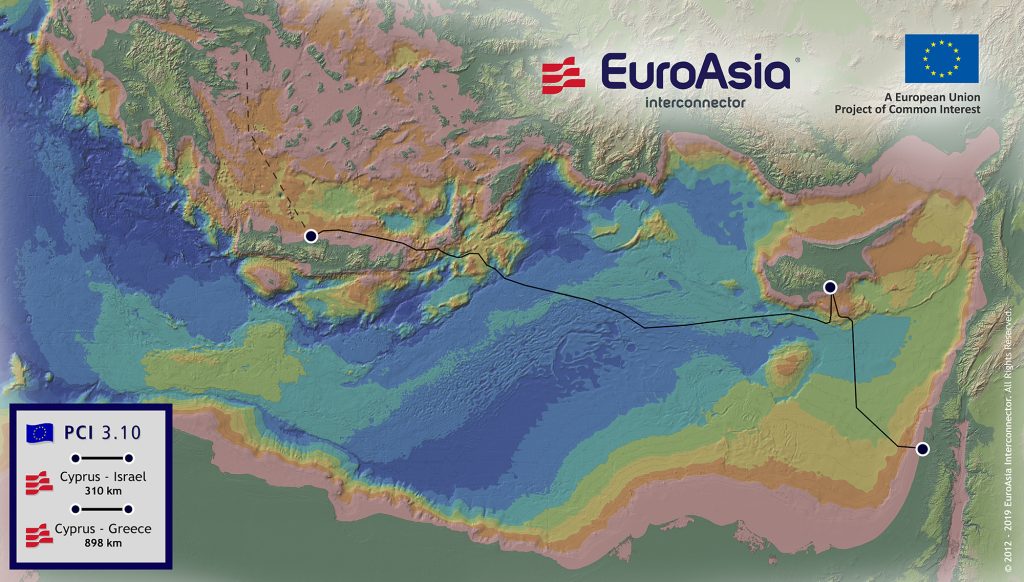
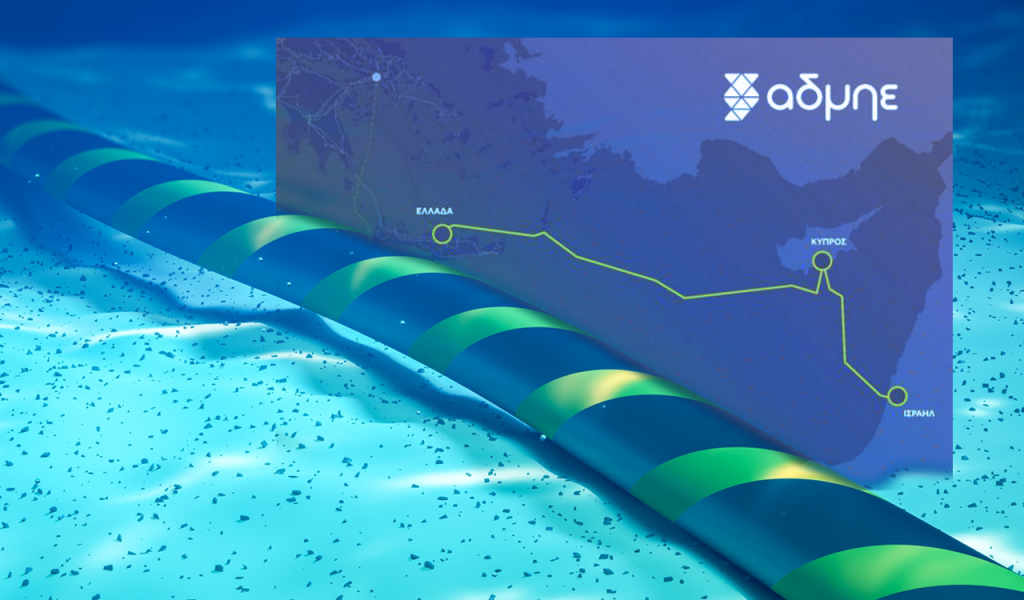
Map of the Greece-Cyprus cable, or the Great Sea Interconnector and EuroAsia Interconnector. By Sara Yard – Own work, CC BY-SA 4.0, https://commons.wikimedia.org/w/index.php?curid=65926326
EPPO’s Position and Funding Concerns
National representatives of EPPO, which were contacted by To Vima, neither confirmed nor denied the investigation but did not dispute Christodoulides’ disclosure.
According to officials cited by To Vima, EPPO’s scrutiny likely focuses on the management of EU funds. The project, dating back to 2010, has received around €650 million in financing.
Cyprus Finance Minister Questions Viability
The controversy escalated after Cypriot Finance Minister Makis Keravnos stated on Wednesday that two independent studies concluded the project “is not viable under current terms.” His remarks triggered political and diplomatic tensions, raising doubts about Cyprus’s long-term commitment.
Strategic and Geopolitical Stakes
The Greece–Cyprus electricity interconnection, part of a wider Mediterranean energy grid plan, has long been presented as a project of strategic significance for both countries and the European Union. The EPPO investigation adds another layer of complexity to a venture already under pressure from financial and political disputes.