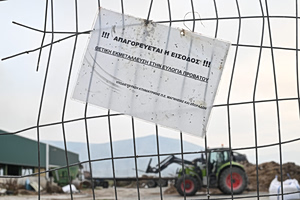
Emergency measures have been put into effect on the Greek island of Lesbos following the confirmation of a case of Foot-and-mouth disease, authorities announced.
The restrictions, introduced by the Ministry of Rural Development and Food, are aimed at preventing the spread of the highly contagious virus, which affects cloven-hoofed animals such as cattle, sheep, goats, and pigs.
Protection and surveillance zones established
Officials have designated multiple control zones across the island. A protection zone with a radius of 3 kilometers and a surveillance zone extending up to 10 kilometers have been established around the affected farm, along with a broader restricted area covering the rest of the island.
These measures are expected to remain in place until at least May 15, 2026.
Ban on animal movement
A total ban has been imposed on the movement of susceptible animals within all designated zones. This includes transportation for slaughter, breeding, grazing, or fattening purposes.
The restriction will initially last for at least ten days and may be extended depending on how the situation evolves.
Strict controls on milk and dairy
Fresh milk and dairy products produced on the island cannot be transported from Lesbos. Milk may only be processed within the same zone where it is produced, under strict biosecurity conditions.
Authorities have also set minimum requirements for heat treatment, including pasteurization standards, while all dairy products produced on the island must be consumed locally until further notice.
Additionally, dairy products already distributed from Lesbos to other parts of the country since January 15, 2026, have been temporarily withdrawn from the market.
Transport vehicles handling milk and dairy must follow strict hygiene protocols, including thorough cleaning, disinfection, and zone-specific operation.
Meat production and trade restrictions
All slaughtering of livestock on the island has been suspended until further notice. Meat products originating from animals raised on Lesbos can only be made available locally and only after appropriate heat treatment.
The export of meat, carcasses, and related products from the island to other regions or countries is strictly prohibited.
Additional biosecurity measures
Further restrictions apply to animal by-products such as hides, wool, manure, and other materials, all of which are banned from leaving the island. Feed transport is also subject to controls.
Veterinary authorities are carrying out inspections in farms within the affected zones, with a focus on enforcing biosecurity measures such as disinfection procedures, controlled access, and protective equipment use.
A highly contagious disease
Foot-and-mouth disease is one of the most infectious viral diseases affecting livestock, capable of spreading rapidly through direct contact, contaminated equipment, vehicles, or even airborne transmission.
While it does not pose a risk to human health, it can have severe consequences for animal populations and agricultural production, making swift containment measures essential.