Greece’s Foreign Ministry voiced deep concern after Israeli police blocked Jerusalem’s Latin Patriarch from entering the Church of the Holy Sepulchre to celebrate Palm Sunday Mass, joining a wave of international condemnation that prompted Israeli Prime Minister Benjamin Netanyahu to reverse the decision by Monday morning.
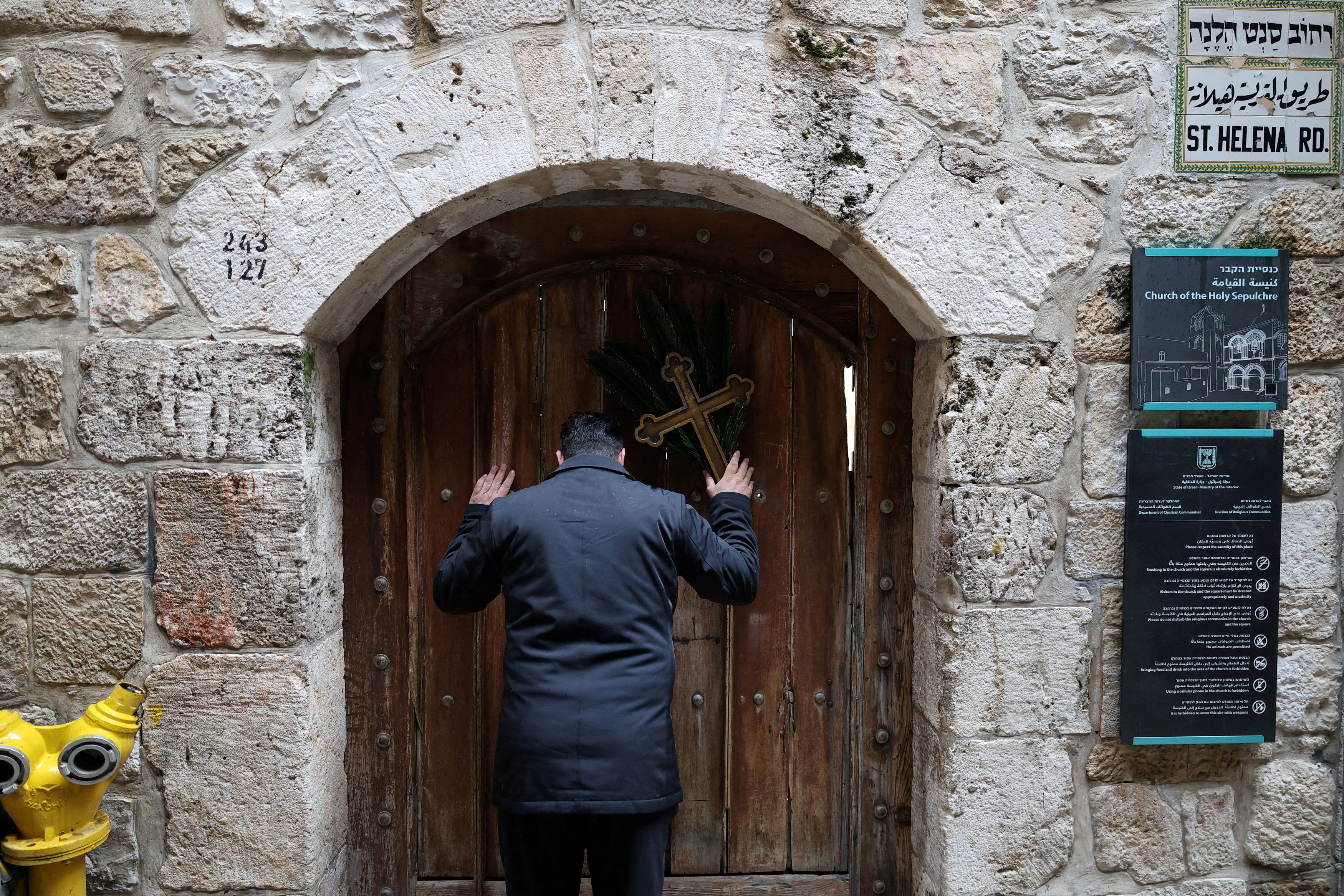
In a statement posted on X, the Greek Foreign Ministry said it was “deeply concerned” that Cardinal Pierbattista Pizzaballa, the Latin Patriarch of Jerusalem and head of the Catholic Church in the Holy Land, had been prevented from entering the Church of the Holy Sepulchre — the site where Christians believe Christ was crucified, buried and resurrected — to celebrate Palm Sunday Mass.
Greece expresses its deep concern over the fact that the Latin Patriarch of Jerusalem was prevented yesterday from entering the Church of the Holy Sepulcher in Jerusalem to celebrate the Catholic Palm Sunday.
— Υπουργείο Εξωτερικών (@GreeceMFA) March 30, 2026
“Despite current circumstances, the status quo of the Holy Sepulchre must be fully respected by all and in good faith,” the ministry said, adding that this obligation carries “particular importance” ahead of the upcoming Easter celebrations. Greece expressed “solidarity and unwavering support” for the Christian churches of Jerusalem and called for the status quo of the Holy Sepulchre to be respected “under all circumstances.”
What Happened
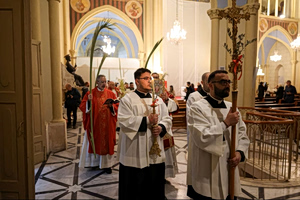
On Sunday, March 29, Israeli police stopped Cardinal Pizzaballa and Franciscan Custos of the Holy Land Father Francesco Ielpo — the official guardian of the Church of the Holy Sepulchre — as they made their way privately, without procession or ceremony, to celebrate Palm Sunday Mass. The two were turned back, making it, according to a joint statement from the Latin Patriarchate of Jerusalem and the Custody of the Holy Land, “the first time in centuries” that church leaders had been prevented from celebrating the Palm Sunday liturgy at the site.
“This incident is a grave precedent and disregards the sensibilities of billions of people around the world, who during this week, look to Jerusalem,” the statement said.
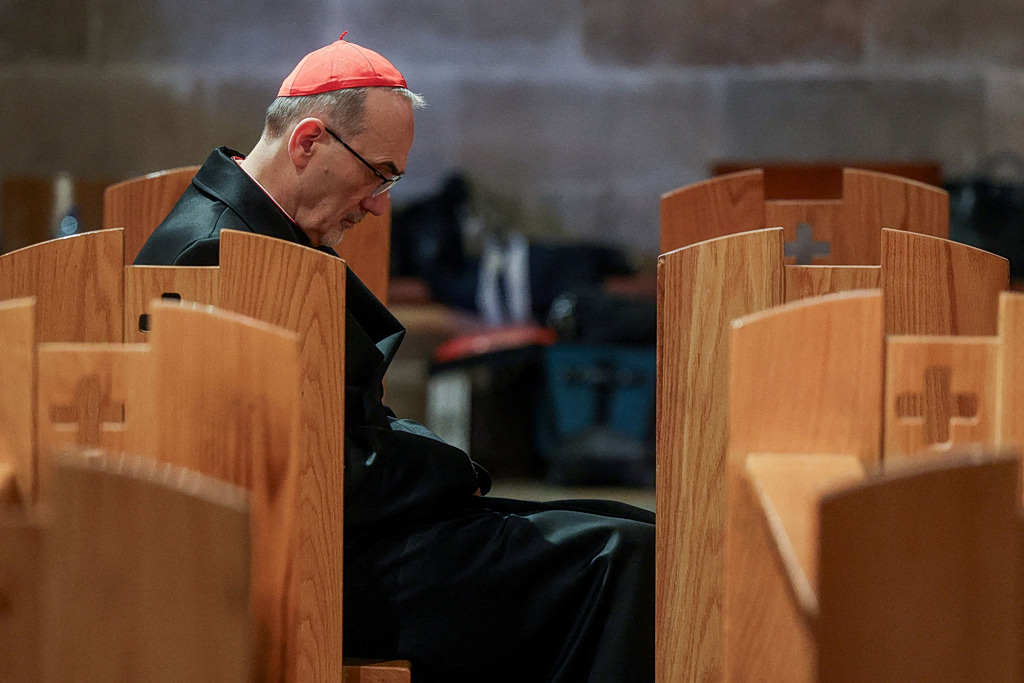
Cardinal Pierbattista Pizzaballa, the Latin Patriarch of Jerusalem, sits in the Church of All Nations on the day of a prayer service to mark Palm Sunday, following the cancellation of the traditional Palm Sunday procession from the Mount of Olives, amid restrictions on gathering in large groups and the U.S.-Israeli conflict with Iran, in Jerusalem, March 29, 2026. REUTERS/Ammar Awad/Pool TPX IMAGES OF THE DAY
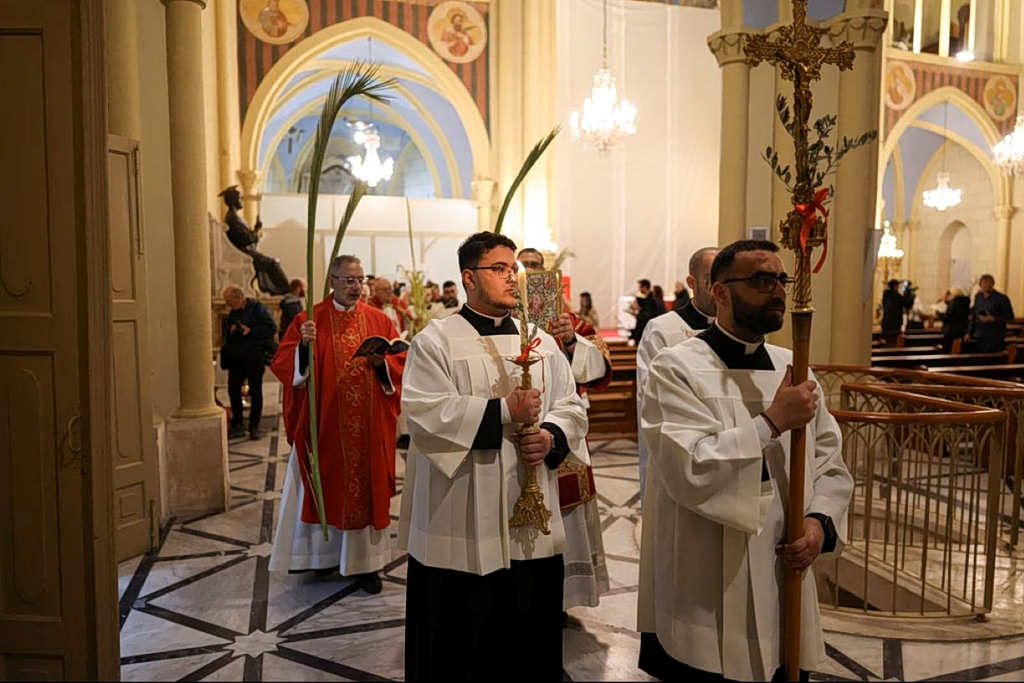
Palm Sunday opens Holy Week for Christians, commemorating Christ’s triumphal entry into Jerusalem days before his crucifixion and resurrection. The Latin Patriarchate had already canceled its traditional Palm Sunday procession from the Mount of Olives — an event that normally draws thousands of worshippers each year.
Israel’s Justification — and Reversal
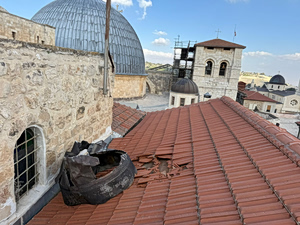
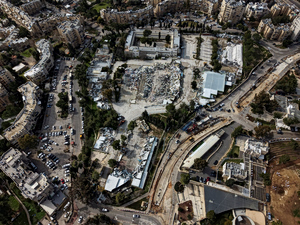
Israeli authorities cited security concerns, pointing to the narrow layout of Jerusalem’s Old City as an obstacle to emergency response in the event of an attack. Netanyahu elaborated that Iran had “repeatedly targeted the holy sites of all three monotheistic religions in Jerusalem with ballistic missiles,” with fragments from one strike landing meters from the Church of the Holy Sepulchre itself. Since late February, Israeli authorities have banned large gatherings, including in synagogues, churches and mosques, and capped public assemblies at roughly 50 people.
By Monday morning, Netanyahu reversed course. “I have instructed the relevant authorities that Cardinal Pierbattista Pizzaballa, the Latin Patriarch, be granted full and immediate access to the Church of the Holy Sepulchre in Jerusalem,” he wrote on X.
International Condemnation
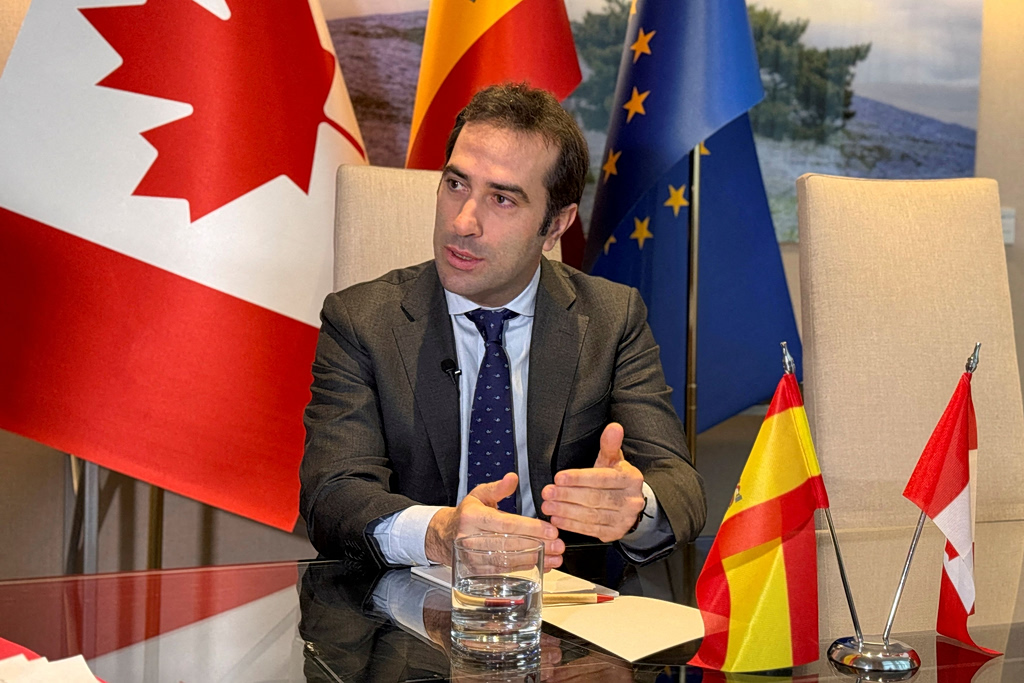
The incident drew swift and sharp criticism from across Europe and beyond. French President Emmanuel Macron called the Israeli police action a decision he “condemned,” warning it “adds to a worrying series of violations of the status of holy places in Jerusalem.” Italian Prime Minister Giorgia Meloni said the incident was “an offense not only to the faithful but to any community that respects religious freedom,” while Italian Foreign Minister Antonio Tajani summoned Israel’s ambassador in protest. Spain and Jordan also condemned the restriction.
The European Union’s foreign policy chief, Kaja Kallas, described the barring of the Patriarch as a “violation of religious freedom” and urged Israel to guarantee access to worship “for all faiths.”
Pope Leo XIV, speaking after the Angelus prayer in Rome on Sunday, paid tribute to “the Christians of the Middle East, who suffer the consequences of a terrible conflict and in many cases cannot fully live the rites of these holy days.”
Cardinal Pizzaballa ultimately celebrated Palm Sunday Mass at the Church of All Nations — also known as the Church of Gethsemane — on the Mount of Olives. “War will not erase the resurrection,” he said. “Grief will not extinguish hope.”
Sources: Greek FM, Le Monde