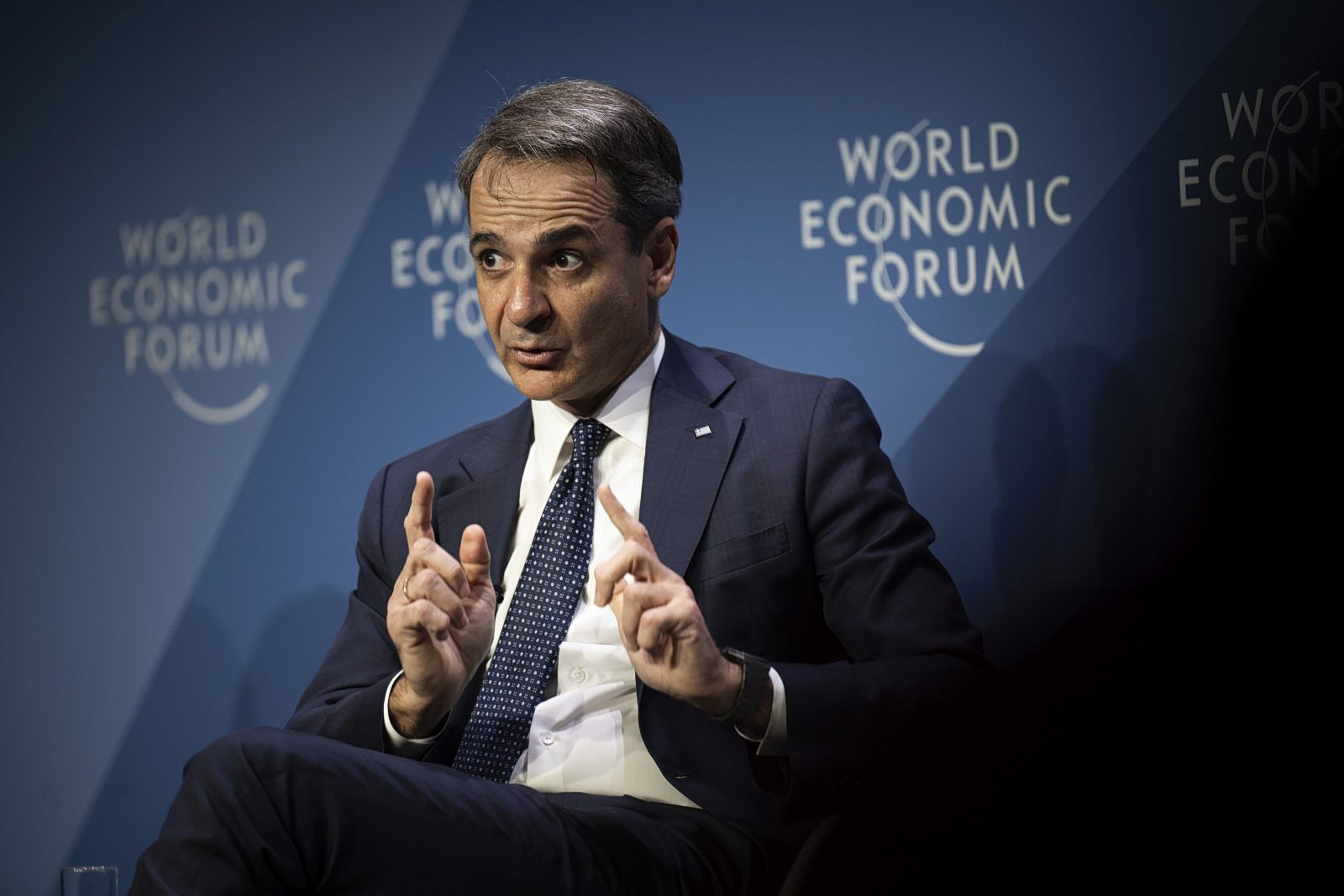
Prime Minister Kyriakos Mitsotakis is deeply concerned by the growing strain in relations between the European Union and the United States—a concern that has taken on renewed urgency as global geopolitical and geoeconomic challenges intensify.
With this anxiety clearly reflected in his public statements, Mitsotakis is travelling today to Davos, Switzerland, to attend the World Economic Forum, which in recent days has once again become a focal point of global political and economic attention.
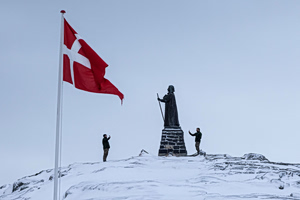
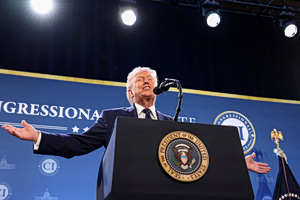
However, unfolding international developments have forced the prime minister to revise his planned schedule of meetings at the Swiss forum. On Thursday, he will travel instead to Brussels to take part in an extraordinary informal European Council meeting. The emergency summit was convened so that the leaders of the EU’s 27 member states can discuss the crisis in Euro-Atlantic relations sparked by moves attributed to U.S. President Donald Trump regarding Greenland—a development that has unsettled European capitals.
“The Post-War Order Is Being Questioned”
On Tuesday, Mitsotakis shared his concerns with Greece’s President of the Republic, Konstantinos Tasoulas, during a meeting in Athens.
“2026 has begun with unprecedented challenges to the international geopolitical and economic framework as it was essentially built after World War II,” the prime minister said. “We should have no illusions: at this moment, fundamental pillars on which post-war peace and prosperity were constructed are being openly questioned.”
A Call for Restraint: “Not to Cross the Rubicon”
The deterioration in EU–US relations has been weighing heavily on the prime minister, a topic he has repeatedly raised in recent meetings with his close aides at the Maximos Mansion, the seat of the Greek prime minister’s office.
“Reason must prevail—dialogue and open channels of communication—so that we can avoid the worst, especially when it comes to relations between Europe, the European Union, and the United States,” Mitsotakis stressed during his discussion with President Tasoulas.
Using a maritime metaphor to describe the moment, he added:
“I bring you news of turbulent seas and oceans. And in rough waters, first and foremost, the vessel of our country must be secure—but it must also maintain a steady course toward progress, stability, and security.”
“I hope,” he continued, “that in relations between the European Union and the United States, reason will ultimately prevail—that we will not cross the Rubicon through actions from which there would be no easy return.”
(The phrase “crossing the Rubicon” is commonly used in Greek political discourse to describe taking an irreversible step.)
Greece’s Strategic Balancing Act
Mitsotakis also underlined Greece’s delicate diplomatic positioning.
“Greece is a country with strategic relations with the United States,” he noted, while at the same time being “a member of the European Union, a non-permanent member of the United Nations Security Council, and a country that has consistently fought to defend multilateralism and international law as the sole reference point for resolving international disputes.”
“This,” he concluded, “is a position we will not abandon.”
Optimism on the Economic Front
Despite his concerns over the geopolitical landscape, the prime minister struck a notably optimistic tone regarding Greece’s economic prospects, particularly during his engagements in Davos today and tomorrow.
“Davos is always a place—and an opportunity—where we can position Greece within the international economic framework and attract investments,” Mitsotakis said.
“Investments are crucial if we are to continue on this path of progress,” he added, noting by way of example that “2025 was a record year for attracting foreign direct investment, and clearly we want 2026 to be another very strong year.”