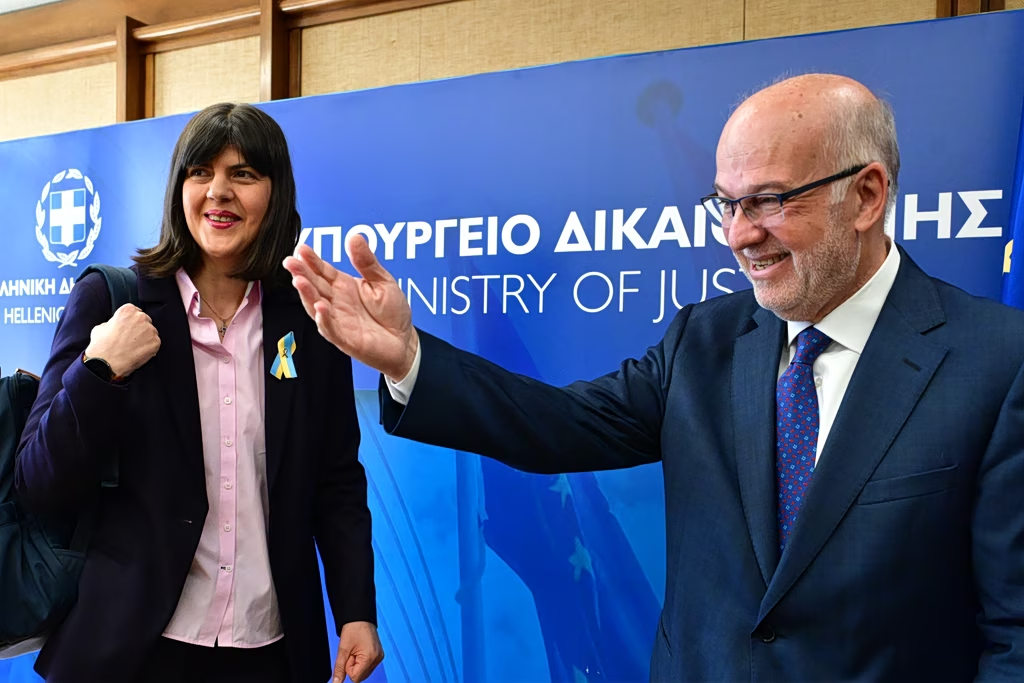
A widening disagreement between the Greek government and the European Public Prosecutor’s Office (EPPO) has come into focus following the publication of two letters sent by European Chief Prosecutor Laura Kövesi to Greece’s Justice Minister, revealing a marked shift in tone between the two communications.
The first letter, dated April 24 and sent after Kövesi’s visit to Athens, reportedly adopted a constructive and institutional approach. It outlined proposals aimed at facilitating the work of the EPPO in Greece and strengthening cooperation between European prosecutors and the Greek authorities.
However, a second letter, sent urgently after the introduction of a surprise legislative amendment, reflected significantly greater concern.
According to the report, the amendment introduced special judicial procedures for cases involving political figures and sought to exclude delegated European prosecutors from conducting investigations related to them. Kövesi argued that such restrictions are incompatible with existing European Union law.
The letter also reportedly expressed dissatisfaction with the manner in which the amendment was introduced, criticizing the unexpected nature of the late-stage legislative change.
Following criticism and reactions to the proposal, Justice Minister Giorgos Floridis proceeded with a corrective addition to the legislation. The revision clarified that the investigative powers of the European Public Prosecutor’s Office would not be called into question.
The subsequent amendment has been interpreted by observers as evidence that the concerns raised by the European Chief Prosecutor had a substantive basis.
The episode has underscored ongoing sensitivities surrounding the relationship between Greece and the EPPO, particularly regarding the independence and authority of European prosecutors in cases that may involve political officeholders.
While the legislative correction eased immediate concerns, the exchange of letters has highlighted the challenges that can emerge when national legal initiatives intersect with European judicial oversight.