 Μake us preferred on Google
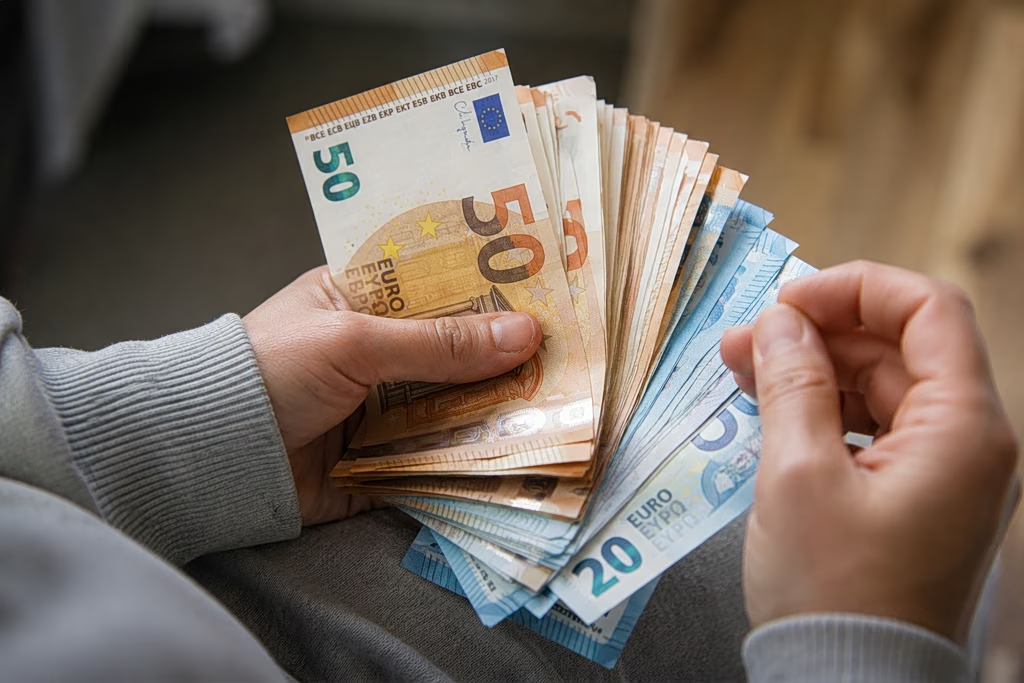
 The European Union is set to introduce one of its most significant changes to financial transactions in recent years, banning cash payments exceeding €10,000 for commercial transactions across all member states from July 10, 2027.
The measure forms part of the EU’s broader strategy to combat money laundering, tax evasion, terrorist financing and organized crime. European authorities argue that large cash transactions remain one of the easiest ways to conceal illicit activities because they are difficult to track and monitor.
The new rules are included in the Anti-Money Laundering Regulation (EU 2024/1624), adopted in 2024 as part of a wider legislative package. Although the regulation has already been published in the Official Journal of the European Union, its full implementation has been delayed until the summer of 2027 to allow governments, banks and businesses time to adapt.
Traceable Payments Required
Under the new framework, businesses and professionals will no longer be permitted to accept or make cash payments above the €10,000 threshold. Transactions exceeding that amount must be conducted through traceable payment methods, such as bank transfers, payment cards or other electronic systems that leave a digital record.
The EU believes that increasing the use of traceable payments will strengthen oversight of financial flows and make it easier for authorities to identify suspicious transactions.
Tighter Controls for Mid-Range Cash Transactions
The regulation also introduces stricter monitoring requirements for cash transactions between €3,000 and €10,000. In many cases, identity verification and record-keeping measures will be required to improve transparency and enhance the detection of potentially illicit financial activity.
However, EU institutions have clarified that the restrictions do not apply to all cash payments. Private transactions between individuals acting outside a business or professional capacity will remain exempt from the ban.
As a result, cash will not disappear entirely from everyday use, but its role in large commercial transactions will be significantly reduced.
A Common European Framework
According to the European Commission, the objective is to establish a uniform regulatory framework across the bloc and eliminate loopholes created by differing national rules.
Member states will still be allowed to impose lower cash-payment limits if they consider stricter measures necessary. Portugal, for example, already operates under tighter restrictions and is regarded as largely aligned with the new European approach.
Debate Over Privacy and Transparency
The decision is expected to fuel debate across Europe. Supporters argue that the measure will improve transparency and help reduce the shadow economy, while critics warn that it could erode financial privacy and contribute to the gradual decline of cash as a means of payment.