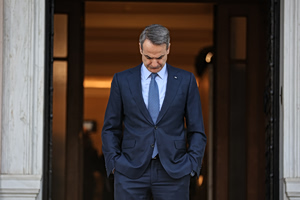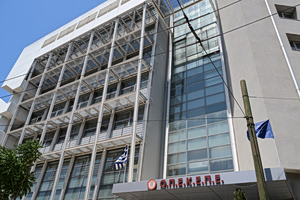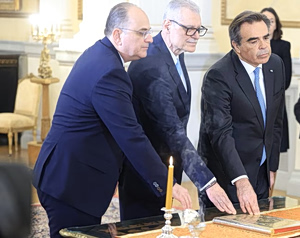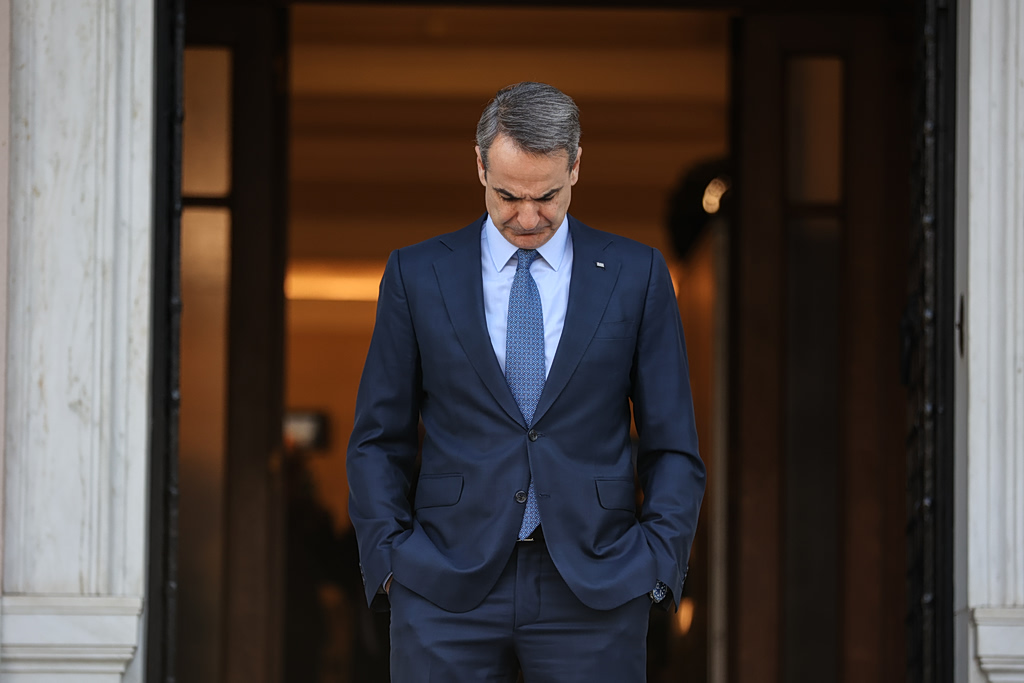
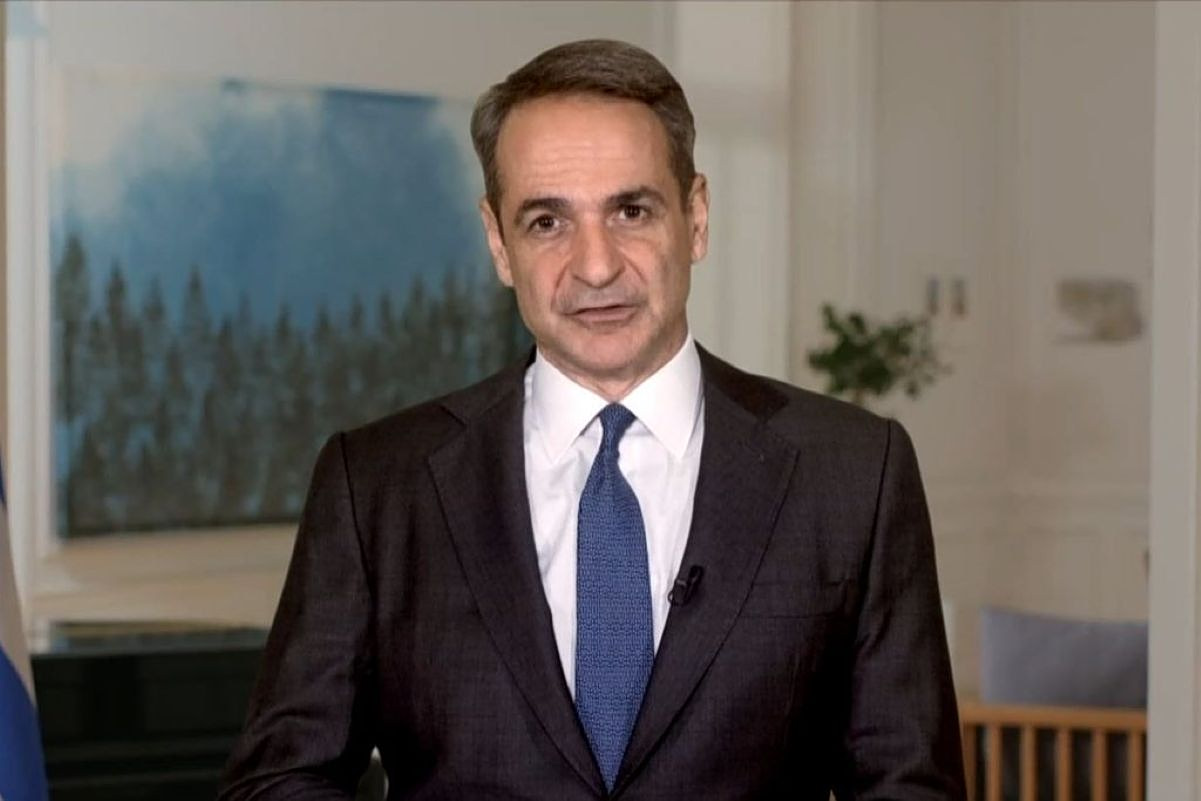
Kyriakos Mitsotakis delivered a televised address Monday in response to the OPEKEPE agricultural subsidy scandal, after case files naming 11 of his own lawmakers reached parliament Friday, triggering the most serious political crisis of his tenure.
The Prime Minister opened with a pledge of straight talk, while the statement that followed was a carefully constructed political defense that invoked decades of systemic corruption across all parties, called for prosecutors to move fast on his lawmakers’ behalf, and proposed constitutional reforms that would take effect after the next election. What it did not do was answer the central question hanging over his government: how 11 of his own members of parliament ended up in a European prosecutor’s case files in the first place.
On the Lawmakers: Presumed Innocent Until Proven Otherwise
Mitsotakis made three points, which he laid out in order.
The first concerned the case files themselves. He reminded his audience that it was his own government that established the legal and technical infrastructure now being used against his party. The EPPO, he noted, was institutionalized in 2020 with his government’s full support. The wiretaps that produced the evidence in the case files were ordered by law enforcement authorities under his watch and without political interference, he said. The events in question, he added, date to 2021.
He stressed that not one of his lawmakers is accused of having personally profited financially and that not all cases carry the same weight.
With that framing established, Mitsotakis turned to the EPPO directly, calling on prosecutors to move swiftly once parliamentary immunity is lifted. “When I say fast, I mean it,” he said. “Because we are talking about our lawmakers who have already suffered personal and political damage. They have, at the very least, the right to defend themselves.”
On Clientelism: A Rare Moment of Self-Criticism
His second point was a broader reckoning with the culture of political favors that has shaped Greek public life for generations.
“Enough with the hypocrites who suddenly discovered that political patronage in this country began in 2019,” he said. “These clientelist relationships have existed since the founding of the Greek state. They are one of the main reasonswe have lagged behind Europe.”
“I did not emerge from political immaculate conception,” he continued. “Any lawmaker who wins votes, runs a political office, and claims they have never done a favor for anyone is simply a liar.”
He pointed to the abolition of OPEKEPE as evidence that reform is underway. The agency’s responsibilities have been transferred to the Independent Authority for Public Revenue, the body that manages taxation. “Just as we don’t ask for favors from the tax authority for our tax affairs,” he said, “the same will now apply to subsidies.”
He also argued that the government’s digital modernization drive is designed precisely to remove the human factor from public administration — and with it, the opportunity for corruption. “Mentalities of centuries do not change, unfortunately, from one moment to the next,” he acknowledged.
A Constitutional Reform Proposal
His third point was a structural proposal with significant implications for how Greek politics operates. Mitsotakis called for a constitutional change that would make holding a ministerial post incompatible with a parliamentary seat — something that does not currently exist in Greece, where cabinet members routinely retain their place in the chamber. He said the change should take effect after the 2027 elections, subject to parliamentary approval.
Under the proposal, a minister joining the cabinet would be replaced in parliament by the next candidate on their party’s electoral list — a change he argued would sharpen the separation between executive and legislative power, allow ministers to govern free of constituency pressures, and give lawmakers the space to hold the government to account.