
 Μake us preferred on Google
 Greek Prime Minister Kyriakos Mitsotakis departed Tuesday on a two-day diplomatic tour of the Middle East and Gulf, as the risk of a broader regional conflict continues to mount.
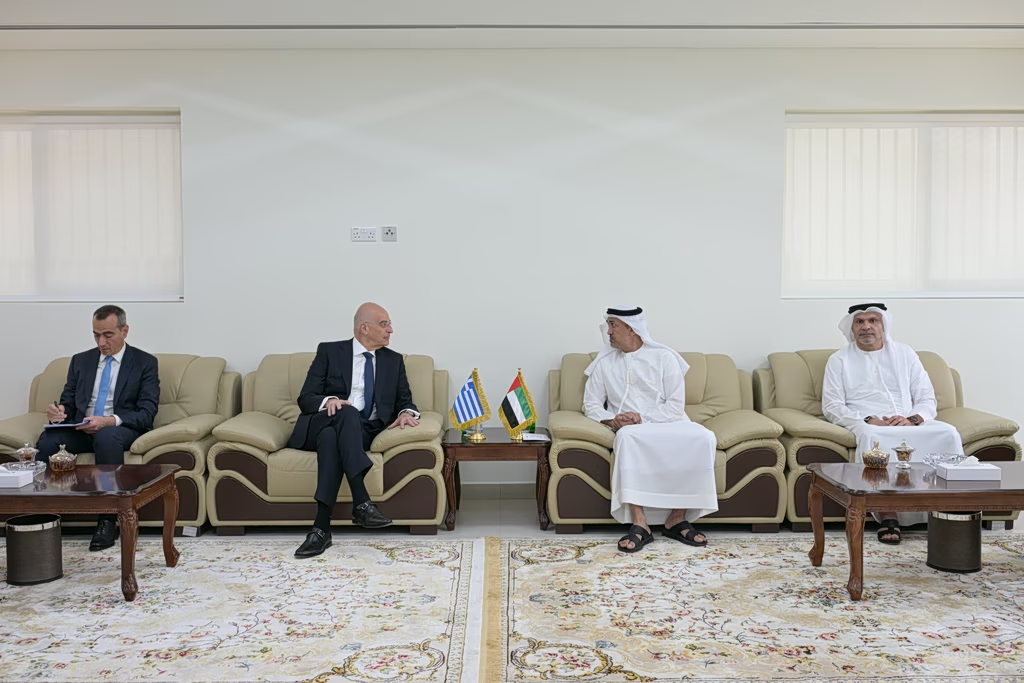
The Prime Minister is scheduled to meet UAE President Sheikh Mohammed bin Zayed Al Nahyan in Abu Dhabi on Tuesday afternoon. Greek government officials were quick to frame the visit in the context of Monday’s attacks on UAE installations, noting that Mitsotakis would be the first European Union leader to set foot in the region since the strikes. Athens, they said, was sending a message of support and solidarity to Abu Dhabi.
The two countries formalized a Strategic Partnership in 2020 covering foreign policy and defense cooperation. Tuesday’s meeting marks Mitsotakis’ fifth visit to the UAE since taking office.
On Wednesday, Mitsotakis will travel to Amman, Jordan in order to attend the 5th Greece-Cyprus-Jordan Trilateral Summit, a recurring diplomatic forum bringing together the leaders of Greece, Cyprus and Jordan to coordinate on shared regional interests. Cyprus, has long partnered with Athens in multilateral diplomacy across the Eastern Mediterranean and beyond.
The Strait of Hormuz at the Center
Athens has condemned the attacks on Gulf states from the outset — including Monday’s strikes on the UAE — while pressing for a diplomatic resolution. The question of freedom of navigation through the Strait of Hormuz sits at the center of those efforts. The narrow waterway, through which a significant share of global oil and liquefied natural gas exports pass, has become a focal point of Greece’s regional diplomacy, reflecting Athens’ direct stake as home to the world’s largest commercial shipping fleet.
Greece’s Position
Greek officials are making a deliberate case that Athens can serve as a stable, reliable interlocutor between Europe and the Middle East — a role that carries more weight given the current trajectory of events in the Gulf.