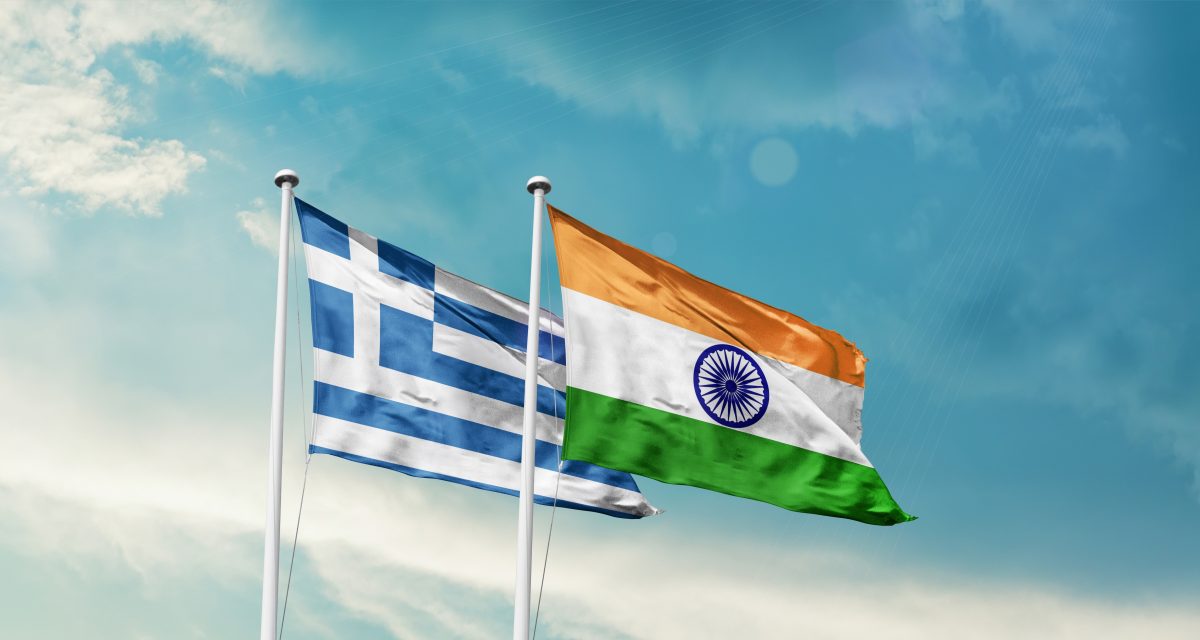
While the broad India–EU free trade agreement, also referred to as “the mother of all agreements,” marks yet another step in the Old Continent’s effort to achieve greater strategic autonomy, the momentum of Greek–Indian relations, according to a briefing note by the Office of Economic and Commercial Affairs of the Greek Embassy in New Delhi, appears to be entering a milestone period—into a new phase of Strategic Partnership, with emphasis on strengthening cooperation in trade, investment, and tourism.
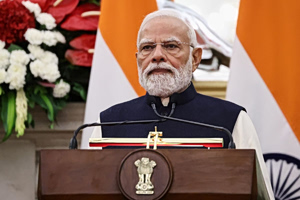
Prime Minister Kyriakos Mitsotakis plans to visit India on February 19 following an invitation from his counterpart Narendra Modi, while on the sidelines of an international conference the two are expected to hold a bilateral meeting, within the framework of strengthening Athens’ ties with New Delhi.
Strategic Orientation
According to the note by the Greek Embassy in India, the objective is for currently weak trade exchanges to more than double by 2030, surpassing USD 5 billion, through strategic targeting of high-quality products. Greece is also promoting its role as India’s gateway to the EU via the IMEC corridor, focusing on connectivity and infrastructure, at a time when the Indian economy is consolidating its position as a global superpower, driven by domestic consumption and infrastructure investments.
To maximize results, it is proposed that the horizontal approach be abandoned in favor of a targeted, state-by-state strategy, leveraging the comparative advantages of each region. Specifically, outward-looking actions for technology and innovation should focus on Karnataka (Bangalore); for industry, shipping, and logistics on Tamil Nadu and Maharashtra; and for exports of agricultural products and food on the populous Uttar Pradesh and the commercial hub of Gujarat.
Structural Improvement
In bilateral trade, the period 2024–2025 records an expected statistical correction (–59.6% in exports) due to the cyclical decline in petroleum products. However, a clear qualitative and structural improvement is observed in high value-added and circular economy products, which now constitute the stable foundation of trade cooperation.
In the investment sector, India is strengthening its footprint in Greece through emblematic projects such as the Kastelli Airport, which could turn Crete into a hub capable of receiving direct flights from India. At the same time, increased activity is also observed in real estate, partly through the Golden Visa program, with purchases by Indian investors recording a 37% increase last summer.
The Switz Group (linked to the Indian Britannia Group) holds a strong position in the food and bakery sector in Greece through its subsidiaries, while UPL Hellas (a subsidiary of the Indian multinational United Phosphorus Limited) holds a dominant position in the agrochemicals market, covering a significant share of Greek agricultural production.
It should be noted that Eurobank maintains a Representative Office in Mumbai, while AEGEAN and the Indian airline IndiGo have entered into a strategic partnership for code-share flights. A few days ago, the Salamis Shipyards signed a Memorandum of Understanding (MoU) with the Indian company ACT Infraport.
Greece is explicitly recognized in IMEC planning as India’s strategic “Gateway to Europe.” The Port of Piraeus constitutes the natural entry point of the corridor into the European continent, while Greek ports are in a strategically advantageous position, at the crossroads of three continents.
In the logistics sector, Greece is called upon to function as a transshipment and assembly hub, leveraging the ports of Piraeus, Thessaloniki, and Alexandroupoli, although the success of this endeavor requires the upgrading of the Greek railway network.
Greece–India bilateral relations have entered a phase of growth. Trade volume in 2023 reached a historic high of USD 1.94 billion, recording an average increase of 31% over the past four years. In 2024–2025, an expected statistical correction was observed, mainly due to the slowdown in petroleum product exports, which had inflated figures in previous years.
Circular economy products (aluminum, copper, and paper scrap) now constitute the backbone of Greek exports, supplying Indian industry, while the performance of marble (+33%) and Corinthian currants (+85%) has been particularly positive.
Imports from India remained stable at USD 1.05 billion, with main products being aluminum, organic chemicals, electrical equipment, and pharmaceuticals. The Services Balance has consistently remained in surplus in Greece’s favor, primarily due to the maritime transport sector, as the Greek-owned merchant fleet carries a significant portion of Indian exports and imports of energy products.