President Konstantinos Tasoulas marked the 52nd anniversary of the restoration of democracy in Greece on Thursday with a message that paired celebration of the country’s postwar political stability with a warning about what democratic government demands of its citizens.
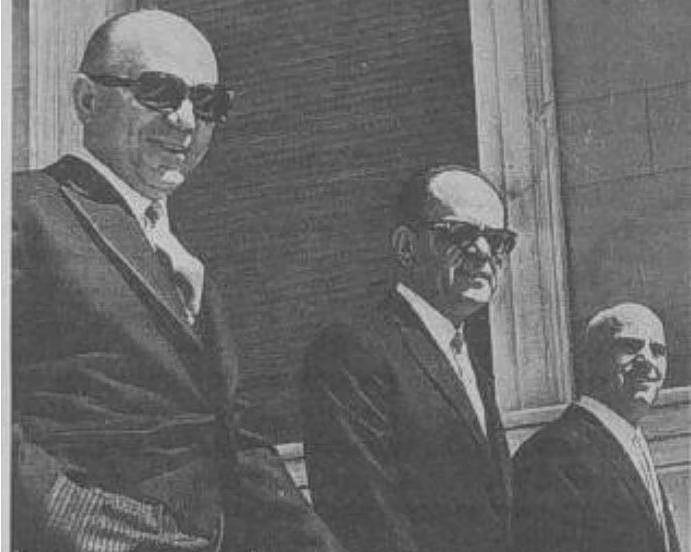
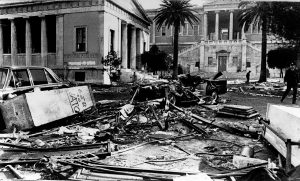
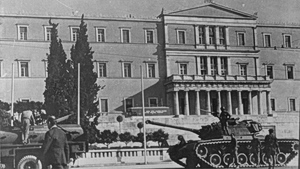
July 24, 1974 is one of the defining dates in modern Greek history. It was the day the military dictatorship that had ruled Greece since 1967 handed power back to civilian politicians, ending seven years of authoritarian rule and beginning the period Greeks call the Metapolitefsi, or regime change. Konstantinos Karamanlis returned from exile in Paris to lead the transition and establish what is known as the Third Hellenic Republic.
Tasoulas opened his statement by invoking the poet George Seferis, the Nobel laureate who denounced the colonels in March 1969. “I see before me the precipice toward which the oppression that has engulfed the country is leading us,” Seferis said at the time.
“Fifty-two years ago, on July 24, 1974, democracy returned to Greece, but Cyprus had fallen into the precipice of the junta’s coup and the Turkish invasion,” Tasoulas said. Greece, he added, continues to seek a “just, viable and functional solution” to the Cyprus issue.
A mature democracy, tested by crisis
Tasoulas said the Third Hellenic Republic — the democratic order established by Konstantinos Karamanlis after the junta’s collapse — had delivered an extended period of political stability despite the crises and setbacks Greece has faced over the past five decades. “Although we have not avoided periods of serious crisis and regression, parliamentary government and democratic institutions have managed to respond to the demands of the times,” he said.
Greece now has an “experienced and mature democracy,” Tasoulas said, but one that must contend with a more uncertain international environment marked by conflict and instability. He described parliamentary democracy as the best political system realistically available and pointed to Greece’s longer democratic tradition, dating back to the country’s first constitution, adopted by the National Assembly of Epidaurus in 1822.
“Democracy also makes claims”
Tasoulas also emphasized that democratic government brings responsibilities as well as rights. “The democracy we consolidated 52 years ago does not merely provide rights. It makes demands, too,” he said. Those demands, he added, include a less confrontational political climate, broad agreement over Greece’s long-standing international orientation and unity when the country is confronted with major challenges.
Greece’s security and prosperity within Europe depend on preserving those conditions, Tasoulas said. “These are the conditions we should continue to safeguard in the name of the most stable and creative democracy we have ever had — the democracy restored 52 years ago,” he concluded.
Wreath at the former ESA detention cells
Earlier on Thursday, Tasoulas visited the former detention cells of the ESA military police in Athens’ Freedom Park, where opponents of the dictatorship were held and tortured. He laid a wreath at the bust of Spyros Moustaklis, an army officer whose resistance to the junta and the injuries he suffered in custody made him one of the most recognizable figures of the anti dictatorship movement.
He was received by Evangelos Gkiougkis, president of the Association of Imprisoned and Exiled Resistance Fighters 1967-1974, members of the association’s board, and Christina Moustakli.