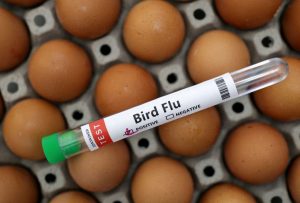
The Australian Antarctic Division has made an unusual and debated call to pull its staff off a remote sub-Antarctic outpost, worried that a highly pathogenic strain of H5N1 bird flu, known as clade 2.3.4.4b, is about to reach the island. Macquarie Island sits in the Southern Ocean roughly halfway between Tasmania and Antarctica. While officials say the danger to human health there is low, they’re far more concerned about what could happen to the thousands of southern elephant seal pups born each year on beaches right next to the station, and the toll that watching a mass die-off could take on staff. The agency plans to send Australia’s only polar vessel, the icebreaker RSV Nuyina, to pull all 24 workers off the island in September or early October, ahead of the busy summer field season.
Roxanne Beltran, a biologist at UC Santa Cruz who has studied a similar H5N1 outbreak among northern elephant seals in California, said she found it notable that officials were factoring in staff wellbeing at all.
Officials also pointed to logistical concerns: pulling the Nuyina off its usual duties on short notice to stage an emergency evacuation later on would disrupt resupply runs to Australia’s other three Antarctic stations. Marcela Uhart, a wildlife veterinarian at UC Davis, called the decision reasonable, noting that a rushed evacuation would be disruptive and that virus shed by dying animals could even threaten the station’s drinking water supply. Uhart, who witnessed catastrophic elephant seal losses in Argentina, said she understands firsthand how psychologically taxing it can be for researchers to watch large numbers of animals die in a short span of time.
Sean Sullivan, deputy secretary at Australia’s Department of Climate Change, Energy, the Environment and Water, described the move as unprecedented but said staff safety was the department’s top priority. He noted that unlike Australia’s other Antarctic bases, the Macquarie station sits right inside the seal colony, making any outbreak there especially direct and hard to avoid. Australia has maintained a continuous, year-round presence on the island since 1948, hosting researchers from multiple agencies, including the Bureau of Meteorology and Geoscience Australia.
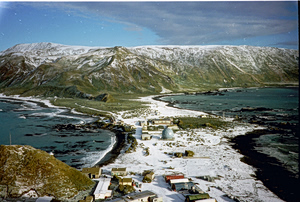
The Australian research station on the island of Macquarie has been in operation since 1948. Source: Wikimedia Commons
The concern isn’t hypothetical. In June 2026, officials reported that thousands of elephant seal pups had already died of bird flu on Heard and McDonald Islands, another remote Australian territory. Until recently, Australia was the last continental landmass free of the H5 strain, which has caused mass deaths in wild birds and poultry across the globe since 2020. As of late August, the country had recorded 341 confirmed or suspected H5 bird flu cases, though none yet in poultry or commercial agriculture.