 Μake us preferred on Google
 An intense diplomatic contest with far-reaching geopolitical stakes is unfolding behind the scenes in Greece and Turkey, centered on energy and the alternative routes for supplying natural gas to Europe.
At its heart is a simmering rivalry between competing American interests. On one side are those seeking to strengthen the Vertical Corridor, which runs from Greece through the Balkans to Eastern Europe, by supplying it with liquefied natural gas (LNG). On the other are those pushing to revive the Qatar–Turkey overland pipeline, known as the Development Road, which would carry gas from the vast North Dome field. If the project goes ahead, the pipeline would run from Qatar through Saudi Arabia, Jordan or Iraq, and Syria.
According to sources in energy diplomacy circles, the two US ambassadors in the region, Kimberly Guilfoyle in Athens and Tom Barrack in Ankara, each worked to advance opposing sets of American interests. The same sources link Guilfoyle’s removal to this high-stakes contest.
Venture Global, the Virginia-based LNG giant, is the leading player promoting liquefied gas through the Vertical Corridor. It has signed long-term supply agreements with Atlantic SEE LNG Trade, a joint venture of AKTOR (60%) and DEPA Commercial (40%).
Across the Aegean, according to analyses and media reports, the revival of the pipeline, which would stretch more than 2,000 kilometers, is being championed by Texas-based Chevron, Qatar’s UCC and the investment firm TI Capital, whose founder reportedly has close business ties to Barrack. More specifically, an investigation by Reuters found that Barrack allegedly lobbied hard for TI Capital to be awarded another pipeline that could form part of the Development Road: the Kirkuk–Banias line linking Iraq and Syria. Published on October 9, 2026, the Reuters report examined the US envoy’s ties to a company seeking a stake in the project, which is valued at roughly $15 billion.
Overall, the Development Road appears to be a highly complex undertaking that will be difficult to bring to fruition.
The Vertical Corridor and the surge in exports
Of the two competing routes, the Vertical Corridor holds a clear lead, enjoying the firm public backing of both Greece and the United States.
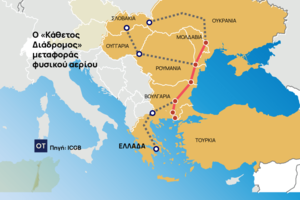
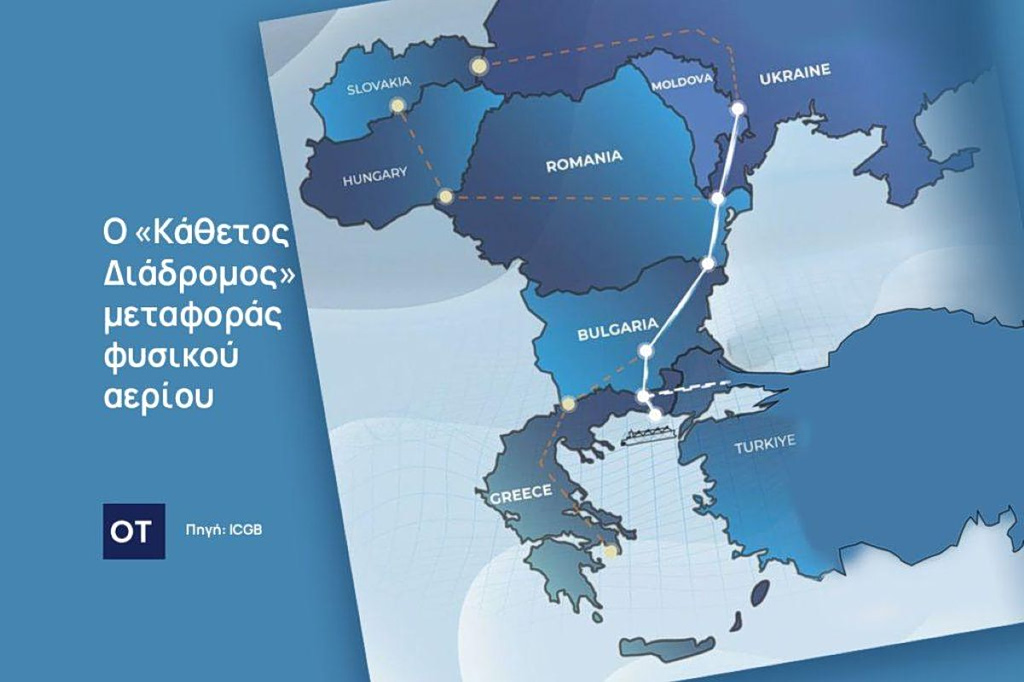
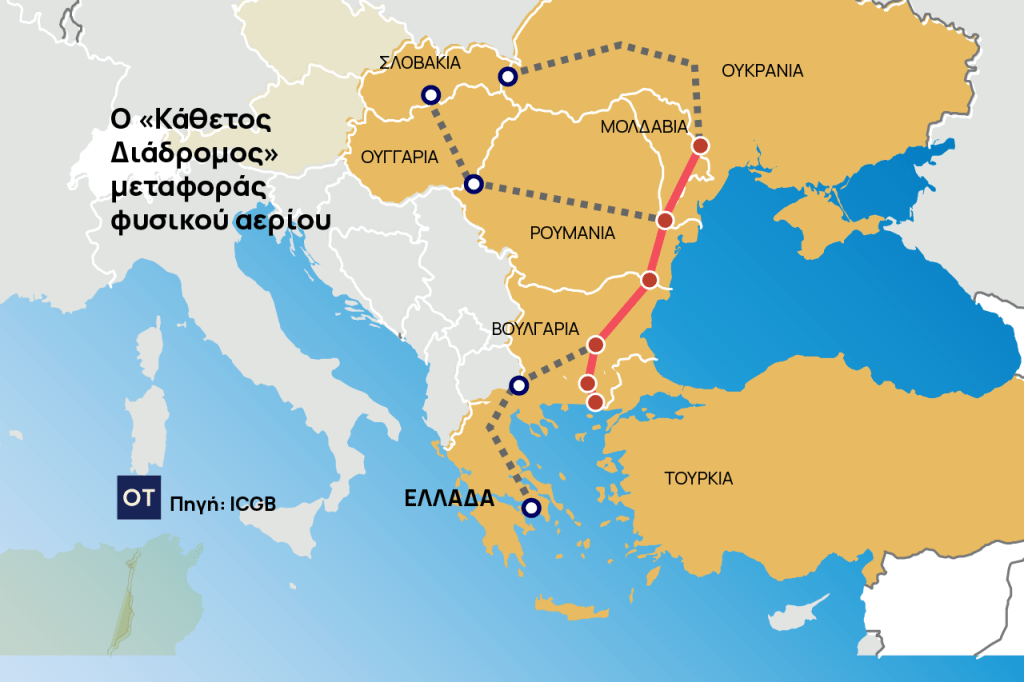
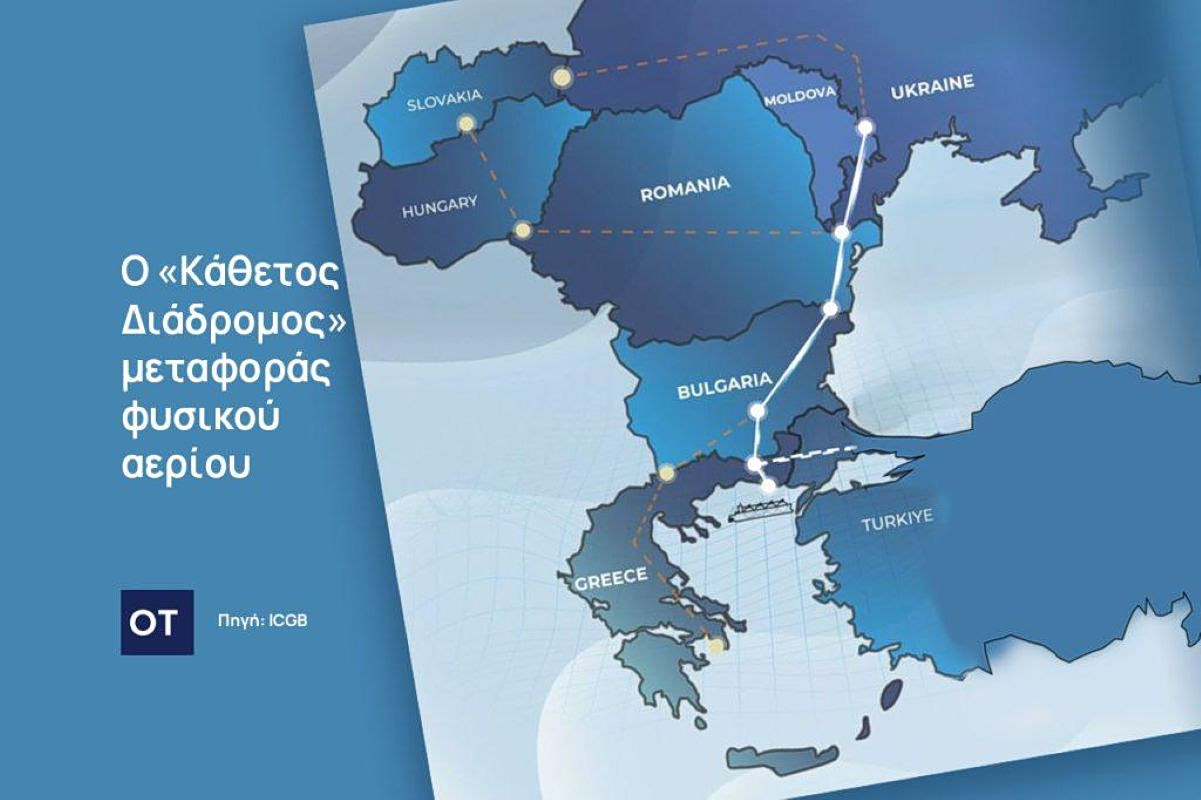
Unlike its rival, the Vertical Corridor already exists. It is essentially a network of pipelines and infrastructure spanning Southeastern Europe. Greece anchors it with the Revithoussa LNG terminal, the floating storage and regasification unit (FSRU) off Alexandroupolis and an existing pipeline that uses Sidirokastro as the exit point for American gas. From there it extends through Bulgaria, Romania and Moldova to Ukraine, a promising market. Recent agreements have also brought Albania, Serbia and North Macedonia into the picture.
The corridor took shape following the European Commission’s decision to ban imports of Russian natural gas from 2027. Russian gas had been reaching Europe via TurkStream, a pipeline serving Turkish interests, effectively disguised as Azerbaijani supply. The race to secure alternative sources is now in full swing, with American LNG vying for a share of the market.
Europe is hungry for energy, and this route serves a market of 100 million people. According to government sources, bringing the Vertical Corridor fully online would curb Turkey’s energy influence in the region.
Greece’s Minister of Environment and Energy, Stavros Papastavrou, made the point in remarks to the Open television network just last Thursday, October 15. “The Vertical Corridor is here and it is working in practice,” he said. “Comparing September 2026 with September 2025, Greek natural gas exports have risen by 169%, and the overwhelming share is flowing north through the Vertical Corridor. Greece’s energy infrastructure is being used to the fullest. So what are we debating? There are countries that want natural gas, and they will get it; the numbers confirm that. The question is this: do we want them to get it through Greece or through Turkey? We must take a position. As a minister in the Greek government, I am working precisely to ensure they get it from Greece.”
The energy route is a project of national strategic importance that significantly enhances Greece’s geostrategic standing, with the United States as its strategic partner. Secretary of State Marco Rubio reaffirmed this during his visit to Athens roughly ten days ago, and American officials echo it at every opportunity.
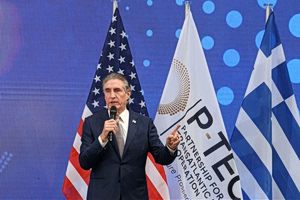
The Vertical Corridor, which continues to expand, had been taking shape in American planning for years. Implementation began with the visit of Interior Secretary Doug Burgum, who also chairs the US National Energy Dominance Council, to Greece on September 11–12, 2025, when he toured the Revithoussa LNG terminal alongside Papastavrou.
Talks followed between Papastavrou and his American counterpart, Energy Secretary Chris Wright, who agreed to place the Vertical Corridor at the top of the agenda of the Partnership for Transatlantic Energy Cooperation (P-TEC) meeting held in Athens at the Zappeion on November 7, 2025.
The role of AKTOR and Atlantic SEE LNG Trade
As part of this effort, the Greek AKTOR Group has, by its own account, launched initiatives to promote the Vertical Corridor through LNG trading via Atlantic SEE LNG Trade.
According to the group’s announcements, the venture’s binding agreements cover both ends of the chain. On the supply side, it has a long-term deal with Venture Global, which has struck similar agreements internationally, even with its American competitors. On the sales side, it has secured two binding 20-year contracts, one with Albania and one with Bosnia and Herzegovina. Memoranda of understanding have also been signed with a number of other countries, and talks to finalize them into definitive agreements are under way.
AKTOR’s leadership, under Chairman and CEO Alexandros Exarchou, has repeatedly urged European leaders to take action in support of long-term contracts over spot-market cargo purchases.